Post by : Saif
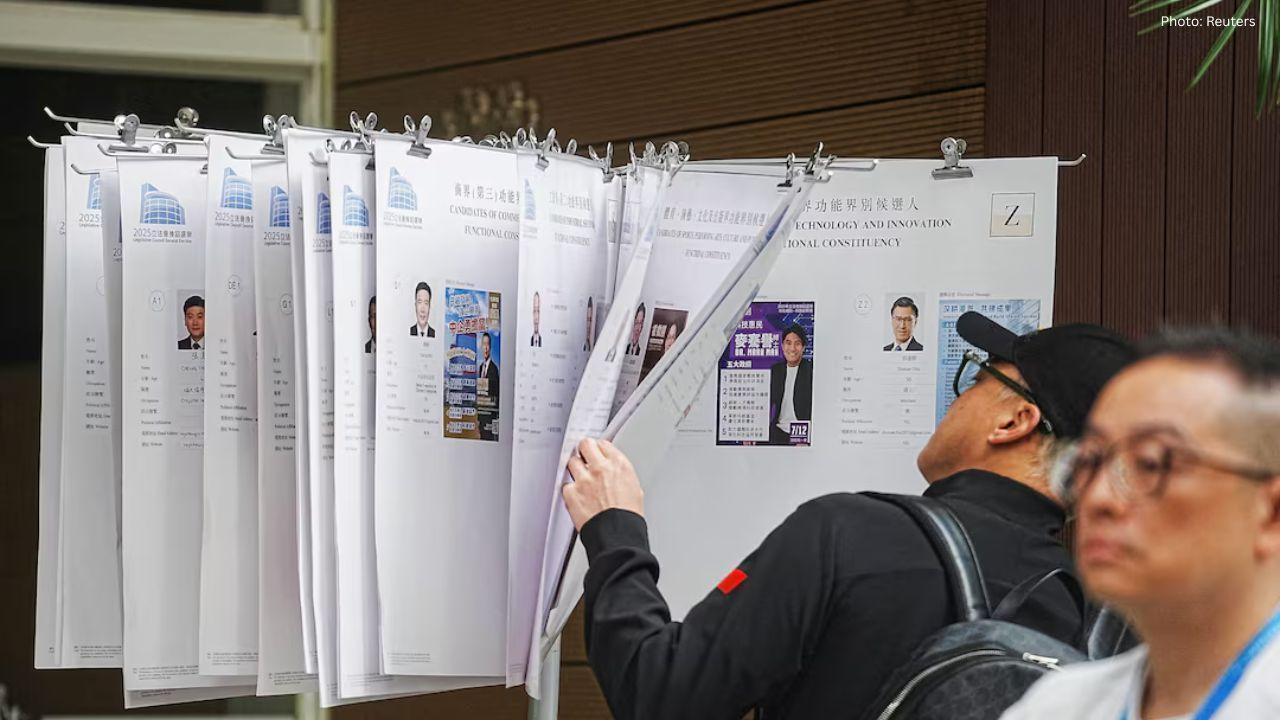
Hong Kong’s latest legislative election has exposed deep cracks in public trust, as voter turnout stayed near record lows following the city’s deadliest fire in almost 80 years. The public mood was not shaped by political debate, but by grief, anger, and fear after a tragedy that killed at least 159 people.
The election saw a turnout of 31.9%, only slightly higher than the last election in 2021. However, the actual number of votes was lower than four years ago. This shows that even though the percentage increased a little, fewer people truly felt motivated to take part in the process. Many citizens chose to stay away from the polls, not because of laziness, but because of disappointment and distrust.
One major reason for this dissatisfaction is the structure of the election itself. Out of 90 seats in the legislature, only 20 were directly elected by the public. The rest were filled by an election committee that is mostly made up of people loyal to Beijing or connected to powerful interest groups. Only candidates labeled as “patriots” were allowed to run, meaning voices that support stronger democracy were largely excluded from the process.
The tragic fire that broke out on November 26 completely changed the public atmosphere. Flames engulfed seven residential towers in Tai Po. The blaze took nearly two days to control and left hundreds of families destroyed. Authorities later said that poor construction materials used during renovation helped the fire spread so quickly.
For many residents, this was not just an accident. It was seen as a failure of government oversight. People questioned why safety rules were not followed and why inspections did not catch the danger earlier. Local resident Cheng, a man in his late 70s, shared his quiet protest by refusing to vote. He said he was deeply upset and could not support politicians who had failed to protect people’s lives.
Instead of allowing public mourning to take place naturally, authorities took steps that increased tension. Police presence was heavy in affected areas. Flowers and memorial items placed by grieving residents were removed from a nearby park late at night. Many people saw this as an attempt to control public emotion rather than respect it.
At the same time, arrests were made. Four men were detained for allegedly encouraging others online not to vote or to spoil their ballots. Another man was also targeted for a similar social media post. Under new laws, encouraging a vote boycott is now a crime. These actions made many citizens feel that fear, not trust, was being used to manage public response.
Chief Executive John Lee promised that the government would push forward with reforms and improve safety in the construction industry. Authorities said they are launching criminal and corruption investigations to find out who was responsible for the disaster. While these promises sound strong, many residents remain doubtful, waiting to see real accountability instead of words.
This election and the fire tragedy have become a major test for Beijing’s control over Hong Kong. After the mass protests of 2019, strong national security laws were introduced, changing how the city is governed and how elections are run. Known pro-democracy voices have largely disappeared from the political system. As a result, many citizens feel they no longer have a real voice.
The falling number of registered voters also tells a sad story. Each year since 2021, fewer people have even stayed on the voter rolls. This slow retreat from the political process is a quiet message of frustration and loss of hope.
Democracy is not only about voting. It is about feeling heard, feeling safe, and believing that leaders care about people’s lives. When trust is broken, elections become empty rituals instead of real choices.
Hong Kong stands at a difficult point in its history. Healing will not come from arrests or strict controls. It will come from honesty, openness, and respect for the public’s pain and voice.
#trending #latest #HongKongElection #LowTurnout #PublicAnger #DeadlyFire #DemocracyInCrisis #WorldNews



Advances in Aerospace Technology and Commercial Aviation Recovery
Insights into breakthrough aerospace technologies and commercial aviation’s recovery amid 2025 chall

Defense Modernization and Strategic Spending Trends
Explore key trends in global defense modernization and strategic military spending shaping 2025 secu

Tens of Thousands Protest in Serbia on Anniversary of Deadly Roof Collapse
Tens of thousands in Novi Sad mark a year since a deadly station roof collapse that killed 16, prote

Canada PM Carney Apologizes to Trump Over Controversial Reagan Anti-Tariff Ad
Canadian PM Mark Carney apologized to President Trump over an Ontario anti-tariff ad quoting Reagan,

The ad that stirred a hornets nest, and made Canadian PM Carney say sorry to Trump
Canadian PM Mark Carney apologizes to US President Trump after a tariff-related ad causes diplomatic

Bengaluru-Mumbai Superfast Train Approved After 30-Year Wait
Railways approves new superfast train connecting Bengaluru and Mumbai, ending a 30-year demand, easi




