Post by : Amit
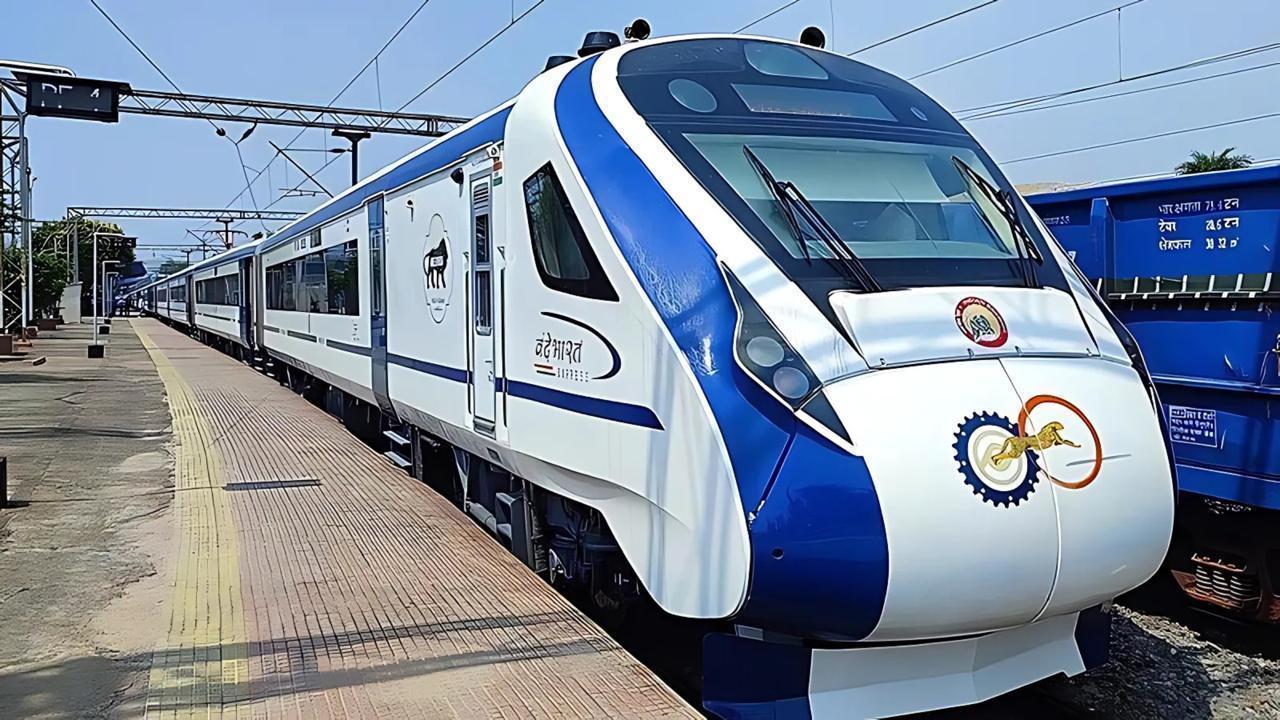
Photo: Linkdin / Sanjeet Sharma
A Leap Beyond Conventional Express Travel
As India inches closer to launching its first bullet train service between Ahmedabad and Mumbai, comparisons with the country’s fastest trains—like the Rajdhani Express, Vande Bharat Express, and Shatabdi Express—are gaining traction. The bullet train, inspired by Japan’s famed Shinkansen model, is not just another high-speed addition to Indian Railways. It’s a technological and infrastructural revolution poised to redefine rail travel in the country.
From travel time and operational speed to safety, design, and passenger experience, the bullet train stands in stark contrast to existing trains like Duronto, Tejas, Jan Shatabdi, and Gatimaan Express. With construction now underway at a steady pace and sections of the dedicated corridor nearing completion, anticipation is building around how the bullet train will transform the Indian railway narrative.
Speed: The Defining Feature
The standout metric of the upcoming Mumbai-Ahmedabad bullet train is its speed. Capable of reaching up to 320 km/h, the bullet train will cut travel time between the two cities to just 2 hours and 7 minutes, depending on the number of stops. Compare that to the Rajdhani Express, which takes nearly 6.5 hours, or the Vande Bharat Express, which currently completes the route in approximately 5 hours and 25 minutes.
Even Gatimaan Express, India’s first semi-high-speed train (peaking at 160 km/h), or the luxurious Tejas and Shatabdi services, cannot come close to matching the time-saving capabilities of the bullet train. The reduction in travel time has significant implications for business travelers, daily commuters, and even tourism along the western economic corridor.
A Dedicated Corridor: Uninterrupted Efficiency
Unlike other trains that operate on shared tracks with mixed-traffic constraints—including goods trains and local services—the bullet train will run on an exclusive high-speed rail corridor. This ensures a smooth, uninterrupted journey, free from signal halts, congestion delays, or overtaking bottlenecks that frequently plague India’s existing rail services.
This dedicated infrastructure is being developed with Japanese assistance and includes elevated tracks, advanced seismic resilience, tunnel sections (including India’s first undersea rail tunnel near Thane), and state-of-the-art stations designed to mirror Japanese precision and cleanliness.
Passenger Comfort and Design Innovation
India’s bullet train will mirror the sleek Shinkansen models used in Japan, with world-class interiors focused on safety, comfort, and aesthetics. Features expected on board include pressurized cabins for noise insulation, vibration control, automatic doors, reclining seats, digital route displays, restrooms modeled on aircraft standards, and accessible facilities for differently-abled passengers.
In contrast, existing express services—while constantly being upgraded—still lack consistency in comfort and cleanliness. While Tejas and Vande Bharat have introduced airline-style seats and infotainment systems, they often fall short in long-term maintenance and infrastructure support.
Additionally, the bullet train’s design offers smoother acceleration and braking, eliminating the jerks and sudden halts passengers are accustomed to on even premium Indian trains.
Safety First: Tech that Leaves Others Behind
Perhaps the most significant advantage of the bullet train is its flawless safety record. Japan’s Shinkansen system, the world’s most mature bullet train network, has not recorded a single passenger fatality in over five decades of operations. The Indian version will inherit this commitment to safety with Automatic Train Control (ATC), earthquake detection systems, track intrusion alerts, and crash-resistant designs.
Compare this to incidents involving other Indian trains—ranging from derailments to fire hazards and signal failures—and the difference in approach becomes evident. Vande Bharat trains, while modern, have reported several operational hiccups and animal collisions. Duronto, Rajdhani, and Shatabdi trains still rely on traditional signaling systems and human monitoring, increasing risk exposure.
Cost vs. Value: Justified Long-Term Gains
One frequent argument against the bullet train is its high cost, both in construction and operation. With an estimated project cost of ₹1.1 lakh crore, critics question its economic feasibility. But experts argue that the long-term gains in efficiency, reduced emissions, urban development, and modal shift from road/air to rail will deliver substantial returns over time.
In comparison, India’s fastest trains—Shatabdi, Rajdhani, and Duronto—require continual rolling stock upgrades, suffer from overuse, and still contribute heavily to carbon emissions. The bullet train, powered by green energy sources and zero-emission electric traction, aligns with India’s sustainability goals.
Moreover, reduced congestion on parallel routes and shorter travel times will free up capacity for more affordable services catering to the broader population.
Technological Collaboration with Japan: A National Milestone
Japan’s involvement through JICA (Japan International Cooperation Agency) is not just financial; it includes technology transfer, capacity building, and training programs for Indian engineers and operators. Several Indian railway professionals have already undergone hands-on training in Japan, setting the stage for localized expertise and eventual domestic production of bullet train components.
This makes the project much more than a transport venture—it becomes a strategic knowledge partnership. In contrast, Vande Bharat Express trains, though indigenously designed, are limited in top speed (maximum 180 km/h) and rely on existing track conditions.
Impact on Regional Development
The Mumbai-Ahmedabad High-Speed Rail (MAHSR) corridor will stimulate economic activity around its 12 planned stations. These include growth opportunities in real estate, hospitality, logistics, retail, and last-mile transport services.
Similar to Japan’s experience, where bullet train stations triggered urban renewal and job creation in medium-sized towns, India too can expect ripple effects in regions like Vapi, Surat, Bharuch, and Sabarmati. No existing train—be it Tejas or Rajdhani—has had this level of regional impact tied directly to infrastructure development.
Competitive Pressure for Indian Railways
The arrival of the bullet train is likely to set new benchmarks in punctuality, customer experience, and reliability. This creates positive pressure on existing services like Rajdhani, Shatabdi, and even the newer Vande Bharat trains to elevate their standards.
Already, Indian Railways is working on upgrading routes for semi-high-speed services up to 200 km/h. More Vande Bharat corridors are being introduced, and discussions on dedicated freight corridors and digital signalling systems are accelerating. The bullet train will act as a catalyst, pushing the entire network toward modernization.
Public Sentiment and Awareness Still Catching Up
Despite the buzz, a significant portion of the public remains unaware or skeptical of the bullet train’s transformative potential. For decades, trains like the Rajdhani and Shatabdi have defined Indian rail prestige. Vande Bharat's sleek look and fast service have only recently gained traction. But the bullet train represents a generational leap, and it may take time before it becomes part of the national consciousness.
Experts suggest that marketing campaigns, fare comparisons, and trial journeys could help bridge the awareness gap. Once the first phase is operational and passengers experience the shift firsthand, public perception is likely to evolve dramatically.
A Journey Beyond Speed
The bullet train project is not just a tale of high speed—it’s about vision, reliability, sustainability, and future-readiness. While Rajdhani, Shatabdi, Duronto, and Vande Bharat trains have each played historic roles in reshaping India’s rail ecosystem, the bullet train marks a new era.
It promises to not only redefine intercity travel but also set new expectations for how India thinks about mobility, infrastructure, and regional development. The competition isn't just with other trains—it’s with time itself. And for the first time, Indian Railways is preparing to win that race at 320 km/h.
India, Ahmedabad, Mumbai, Railways



Advances in Aerospace Technology and Commercial Aviation Recovery
Insights into breakthrough aerospace technologies and commercial aviation’s recovery amid 2025 chall

Defense Modernization and Strategic Spending Trends
Explore key trends in global defense modernization and strategic military spending shaping 2025 secu

Tens of Thousands Protest in Serbia on Anniversary of Deadly Roof Collapse
Tens of thousands in Novi Sad mark a year since a deadly station roof collapse that killed 16, prote

Canada PM Carney Apologizes to Trump Over Controversial Reagan Anti-Tariff Ad
Canadian PM Mark Carney apologized to President Trump over an Ontario anti-tariff ad quoting Reagan,

The ad that stirred a hornets nest, and made Canadian PM Carney say sorry to Trump
Canadian PM Mark Carney apologizes to US President Trump after a tariff-related ad causes diplomatic

Bengaluru-Mumbai Superfast Train Approved After 30-Year Wait
Railways approves new superfast train connecting Bengaluru and Mumbai, ending a 30-year demand, easi




