Post by : Saif
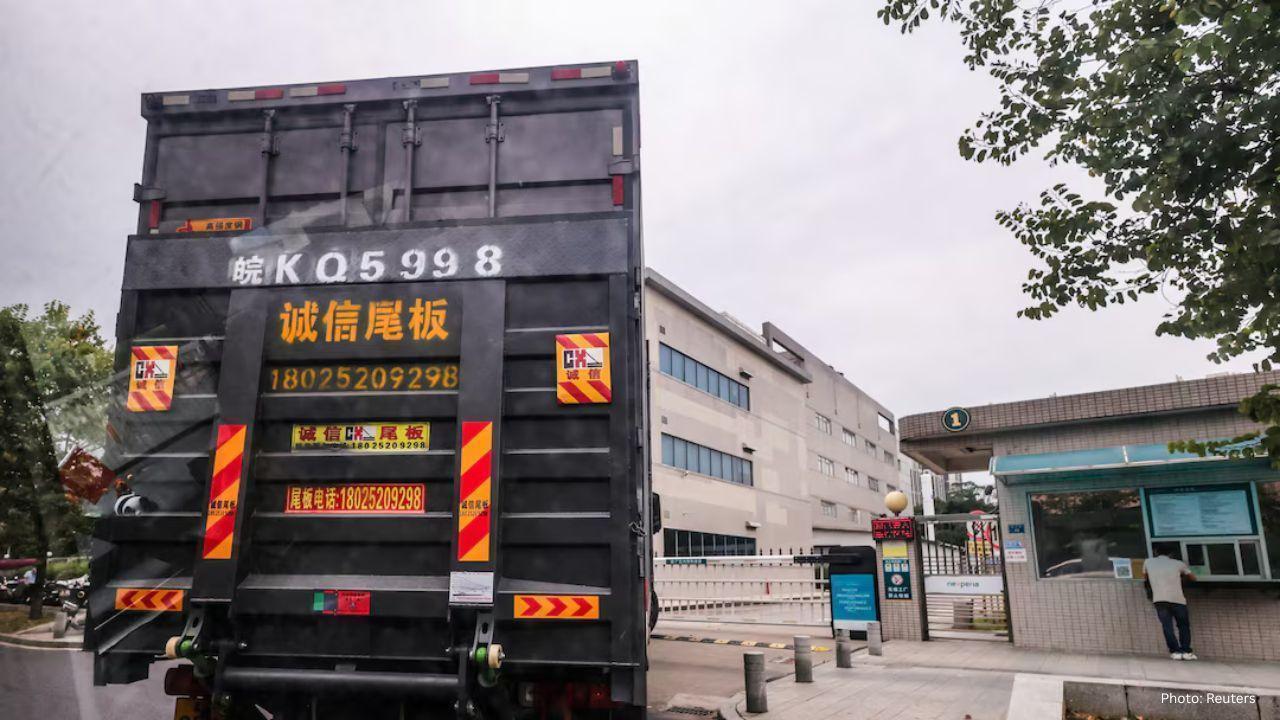
The global automobile sector is once again facing a major supply crisis because of the Dutch chipmaker Nexperia. A factory in Dongguan, China, has become the center of this issue, and its impact has spread across the world. Even though the chips made here are simple and inexpensive, their shortage has stopped production lines at major companies. This situation has proved that despite previous supply disruptions, the auto industry is still not fully prepared for sudden global shocks.
After the COVID-19 pandemic and a major chip production fire in Japan in 2021, car manufacturers had promised stronger supply chain protection. Many experts believed that lessons had been learned and that companies had improved their systems to avoid future disruptions. However, this new crisis has shown that automakers focused on production risks but did not consider political risks. When the Dutch government took control of Nexperia over concerns that its technology could be transferred to Chinese owner Wingtech, China reacted by blocking exports of completed chips. This single move was enough to create problems for car companies worldwide.
The chips made by Nexperia are used in basic vehicle functions such as power control, brakes, and electric windows. Although they cost very little, without them factories cannot complete assemblies. As a result, companies like Nissan and Honda had to cut production. Bosch, which buys around 200 million euros worth of Nexperia chips every year, also reduced working hours at some of its plants. Many companies tried to solve the problem by sourcing chips locally in China and paying in yuan, but this caused delays and confusion. Reports indicated that finished chips were stuck at warehouses because transactions could not be processed fast enough.
Some relief came after a recent meeting between U.S. President Donald Trump and Chinese President Xi Jinping, after which China allowed some exports to resume. This helped major suppliers avoid shutting down operations at the last moment, but the situation still highlighted how dependent the auto industry is on just-in-time production. Most car companies keep small inventories to reduce costs. When supplies stop even briefly, production lines are left without essential parts. Analysts said that companies should have kept weeks or months of emergency stock. Toyota did this after the 2011 earthquake in Japan, and as a result, it has been less affected during recent disruptions. Other companies found themselves without backup suppliers or spare parts.
Replacing Nexperia chips is not simple. Many of these components are directly soldered into automotive systems, which means new parts need testing and approval before use. This process can take months, making it impossible to switch suppliers quickly. Some companies are now testing alternative suppliers, but experts believe that it may take up to a year to fully approve new components.
This event has also shown how strong China’s manufacturing influence is. Many Western policymakers believed that dependence existed only in high-tech areas, but this crisis proved that even basic and low-cost components can become tools in geopolitical conflict. One analyst said that even if Western nations take control of a company’s headquarters, they may still be powerless if the factories remain in China. This is because the real control lies with the country that holds the production facilities.
Although chip exports have partially restarted and the situation has improved, the crisis is not fully over. Many experts believe the auto industry must now take political risk as seriously as natural disasters, factory incidents, or pandemics. Automakers may need to diversify suppliers, keep larger stocks, and accept higher operational costs to protect themselves from sudden disruptions in the future. Otherwise, similar crises may repeat again whenever global tensions rise.
#trending #latest #AutoIndustry #ChipCrisis #Nexperia #SupplyChain #China #AutomotiveNews #Semiconductors #GlobalEconomy #armustnews



Advances in Aerospace Technology and Commercial Aviation Recovery
Insights into breakthrough aerospace technologies and commercial aviation’s recovery amid 2025 chall

Defense Modernization and Strategic Spending Trends
Explore key trends in global defense modernization and strategic military spending shaping 2025 secu

Tens of Thousands Protest in Serbia on Anniversary of Deadly Roof Collapse
Tens of thousands in Novi Sad mark a year since a deadly station roof collapse that killed 16, prote

Canada PM Carney Apologizes to Trump Over Controversial Reagan Anti-Tariff Ad
Canadian PM Mark Carney apologized to President Trump over an Ontario anti-tariff ad quoting Reagan,

The ad that stirred a hornets nest, and made Canadian PM Carney say sorry to Trump
Canadian PM Mark Carney apologizes to US President Trump after a tariff-related ad causes diplomatic

Bengaluru-Mumbai Superfast Train Approved After 30-Year Wait
Railways approves new superfast train connecting Bengaluru and Mumbai, ending a 30-year demand, easi




