Post by : Amit
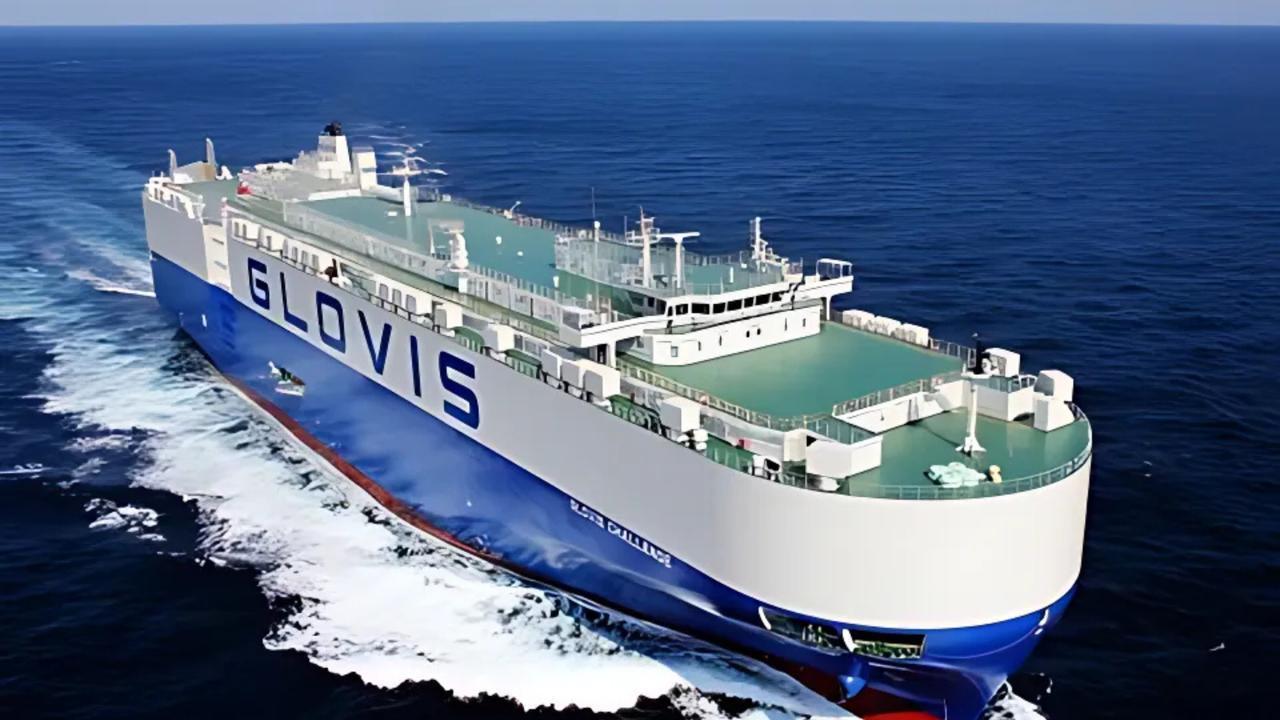
Photo : X / Brian Basson
Hyundai Glovis to Deploy Avikus AI-Driven Autonomous Navigation on Seven Car Carriers, Pioneering the Future of Smart Shipping
In a groundbreaking development for the maritime industry, Hyundai Glovis, the logistics arm of South Korea’s Hyundai Group, has announced that it will deploy Avikus AI-driven autonomous navigation systems across seven of its Pure Car and Truck Carriers (PCTCs). This bold move marks a significant step towards autonomous shipping, combining artificial intelligence with cutting-edge navigation to improve safety, efficiency, and environmental performance on the high seas.
The project positions Hyundai Glovis at the forefront of the maritime sector’s digital transformation, leveraging artificial intelligence to reduce operational risks, optimize routes, and lower fuel consumption.
Avikus NeuBoat: Charting a Course for Autonomous Shipping
The advanced navigation system, known as Avikus NeuBoat, uses AI and machine learning algorithms to analyze real-time marine traffic, weather patterns, sea conditions, and vessel performance. By processing this complex data, the system enables Level 2 autonomous navigation, where ships can execute voyage routes, speed adjustments, and collision avoidance with minimal human intervention.
The technology is not fully replacing human crews but is designed to work alongside them, acting as a decision-support tool that enhances situational awareness and reduces the potential for human error—a key cause of maritime accidents globally.
Hyundai Glovis Leading Digital Innovation in Shipping
By choosing to equip seven PCTCs with this advanced navigation system, Hyundai Glovis underscores its commitment to technological leadership and sustainability in global logistics. The vessels, primarily used to transport automobiles and heavy vehicles, will benefit from optimized routing that reduces both fuel consumption and greenhouse gas emissions—key priorities as the shipping industry faces increasing regulatory scrutiny over its environmental impact.
The company’s move aligns with South Korea’s broader ambition to become a global hub for smart shipping and autonomous maritime technologies, an area in which government support, academic research, and industrial investment are converging rapidly.
Enhancing Safety and Operational Efficiency
One of the standout features of the Avikus NeuBoat system is its ability to significantly enhance navigational safety. Through real-time monitoring and predictive analytics, the system can detect potential collision risks earlier than traditional human-operated systems. It provides automated alerts, course corrections, and emergency response recommendations, helping crews make faster, more informed decisions.
The system also automates optimal voyage planning, taking into account fuel efficiency, speed optimization, and port arrival windows, which can translate into measurable cost savings and better adherence to tight shipping schedules.
Decarbonization Through Smarter Navigation
The adoption of AI-powered autonomous navigation is part of Hyundai Glovis' larger strategy to meet decarbonization goals set by the International Maritime Organization (IMO). The company aims to reduce its fleet’s carbon footprint by improving voyage efficiency and minimizing unnecessary fuel burn, which contributes to lower CO₂ emissions.
According to early estimates, AI-based voyage optimization can help reduce fuel consumption by as much as 5% to 15%, depending on route conditions and vessel type—a significant contribution in an industry responsible for approximately 3% of global greenhouse gas emissions.
Global Interest in AI-Powered Maritime Technologies
The Hyundai Glovis-Avikus partnership comes at a time when global interest in AI-driven maritime systems is surging. Shipowners and operators around the world are exploring autonomous navigation as a solution to multiple industry challenges, including:
The Avikus NeuBoat system has already been successfully trialed in various ocean settings, including a recent transoceanic crossing with minimal human intervention—setting the stage for wider adoption across different vessel classes.
Regulatory and Operational Considerations
While the technology is ready, regulatory frameworks for autonomous shipping remain a work in progress. Hyundai Glovis is actively working with classification societies, maritime authorities, and international regulators to ensure that the deployment of AI navigation complies with emerging safety and legal standards.
Operationally, the integration of AI systems also requires crew training, both to manage the new digital tools and to understand how to transition between autonomous and manual operations when needed.
South Korea’s Vision for Smart Maritime Leadership
Hyundai Glovis' adoption of AI navigation technology also reflects South Korea's strategic push to lead the global smart shipping revolution. The South Korean government has laid out ambitious plans to foster the development of autonomous vessels, digital ports, and green fuels, with substantial funding allocated to research and infrastructure.
Companies like Hyundai Glovis, alongside technology partners such as Avikus (a subsidiary of HD Hyundai Heavy Industries), are crucial players in realizing this vision and setting new global benchmarks for maritime innovation.
A Gradual Shift to Autonomy
Although the maritime industry is still in the early stages of autonomous operations, the Hyundai Glovis initiative demonstrates that practical applications of AI in real-world shipping are now commercially viable. Industry experts predict that by the mid-2030s, many major shipping lanes could see vessels operating at higher levels of autonomy, supported by shore-based control centers and satellite-linked AI systems.
The gradual adoption of such technologies is expected to reshape the economics of shipping, drive safer navigation practices, and accelerate the industry's transition to low-carbon operations.
Hyundai Glovis Sets Sail Toward Autonomous, Sustainable Shipping
The decision by Hyundai Glovis to deploy Avikus AI-driven navigation on seven of its car carriers is a landmark moment for the global shipping sector. It reflects a bold vision where autonomous technologies, environmental stewardship, and digital innovation converge to create a safer, more efficient, and more sustainable maritime future.
As AI continues to chart new waters in marine navigation, Hyundai Glovis is not just keeping pace—it is leading the way.
Hyundai Glovis, Marintime, Shipping



Advances in Aerospace Technology and Commercial Aviation Recovery
Insights into breakthrough aerospace technologies and commercial aviation’s recovery amid 2025 chall

Defense Modernization and Strategic Spending Trends
Explore key trends in global defense modernization and strategic military spending shaping 2025 secu

Tens of Thousands Protest in Serbia on Anniversary of Deadly Roof Collapse
Tens of thousands in Novi Sad mark a year since a deadly station roof collapse that killed 16, prote

Canada PM Carney Apologizes to Trump Over Controversial Reagan Anti-Tariff Ad
Canadian PM Mark Carney apologized to President Trump over an Ontario anti-tariff ad quoting Reagan,

The ad that stirred a hornets nest, and made Canadian PM Carney say sorry to Trump
Canadian PM Mark Carney apologizes to US President Trump after a tariff-related ad causes diplomatic

Bengaluru-Mumbai Superfast Train Approved After 30-Year Wait
Railways approves new superfast train connecting Bengaluru and Mumbai, ending a 30-year demand, easi




