Post by : Amit
Photo : Linkdin / Hyundai MOBIS
Hyundai Mobis Unveils Redundant Brake Control Modules for EVs
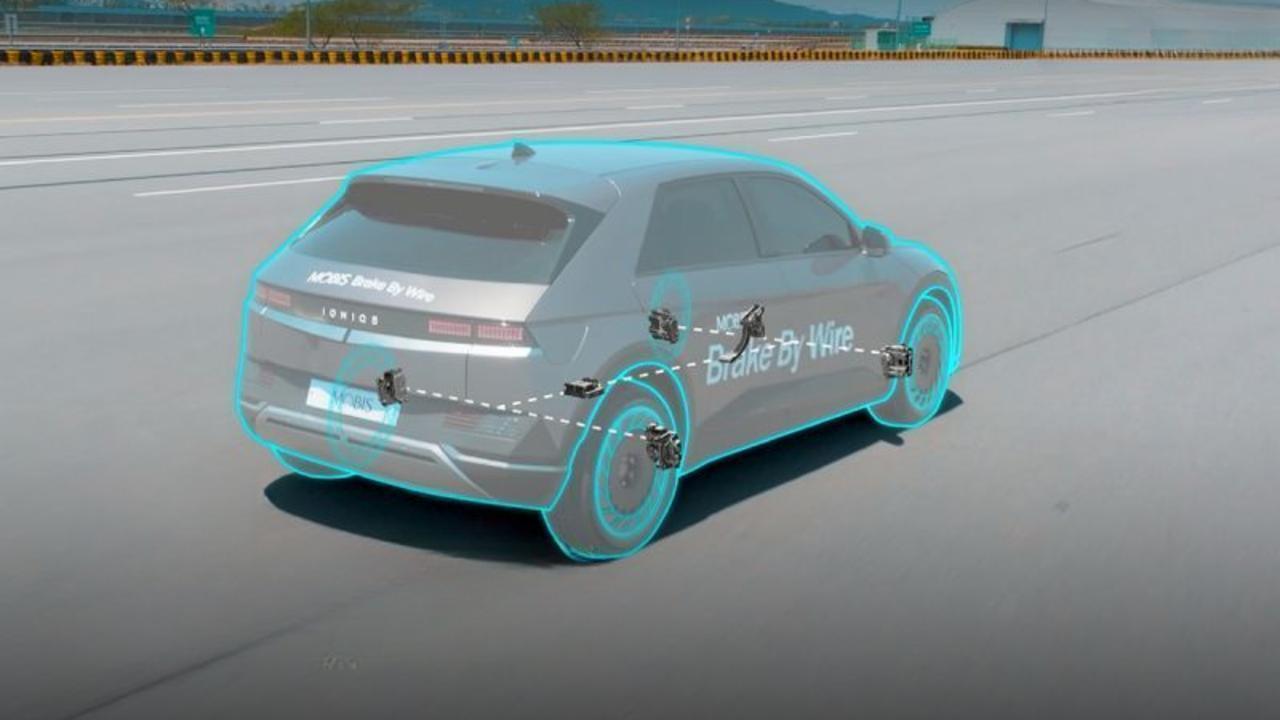
Hyundai Mobis has unveiled a new generation of redundant braking control modules aimed specifically at electric and hybrid vehicles. Developed with an emphasis on fail-operational performance, these modules are tailored for drive-by-wire architectures, which are increasingly becoming the backbone of electrified, software-defined mobility platforms. The system is currently undergoing validation within Hyundai Motor Group’s luxury Genesis EV lineup and is expected to set new industry benchmarks in brake safety assurance.
Pushing the Boundaries of Software-Defined Braking
Hyundai Mobis’ new brake module represents a significant evolution in electronic control systems, particularly in how they handle safety-critical operations. Traditional brake systems rely on hydraulic mechanisms as a fallback in case of electronic failure. However, in fully electronic brake-by-wire systems, redundancy must be built into the electronics themselves.
The newly developed module includes dual microcontroller units (MCUs), separate power supply paths, and independent actuation logic. This means that in the event of a primary system failure—whether due to electrical fault, software crash, or actuator malfunction—the secondary module instantaneously takes over without driver intervention. This seamless switchover enables the vehicle to maintain full braking capability and safely reach a stop or continue driving in limp mode until service is possible.
“Redundancy is not just a luxury—it’s a necessity in the era of autonomous and software-defined vehicles,” said Kim Seon-ho, Head of Brake Electronics at Hyundai Mobis. “We’ve engineered this module to provide zero-latency fault recovery while meeting global standards for cybersecurity, EMI resistance, and environmental durability.”
Targeted at EVs and Luxury Hybrids
The first real-world applications of this module will be in the Genesis GV90 and G80e—two of Hyundai’s flagship electric models set to debut in late 2025. These vehicles feature Level 3 autonomy, allowing hands-free highway driving under certain conditions. That functionality depends on a suite of redundant systems, not just in steering and propulsion, but especially in braking, which must respond independently of the driver in emergencies.
Mobis’ brake module integrates directly with the vehicle’s central vehicle control unit (VCU) and advanced driver assistance systems (ADAS). It works in parallel with the regenerative braking systems of the EV powertrain and is tuned to deliver consistent deceleration performance whether relying on friction or electronic braking modes.
“We needed a module that could manage complex braking logic in real-time—from autonomous cruise to emergency collision avoidance—and do it even if one half of the system failed,” noted an engineer on the Genesis platform team. “Mobis delivered that capability in a compact, production-ready unit.”
Meeting Global Safety and Compliance Standards
Safety regulators worldwide are moving toward mandating functional safety in critical EV systems under standards such as ISO 26262 ASIL-D. Hyundai Mobis has pre-certified its redundant brake control system at this highest automotive safety level. This not only ensures fault detection and mitigation in milliseconds but also addresses cybersecurity risks—an area of growing concern as vehicles become connected platforms.
The module has passed extensive hardware-in-the-loop (HIL) and software-in-the-loop (SIL) validation cycles, stress-tested under thermal, vibrational, and electromagnetic loads. It operates within a wide temperature envelope (−40°C to +125°C) and supports both 12V and 48V system architectures, making it compatible across passenger vehicle segments.
Additionally, the company emphasized that the module’s diagnostic algorithms have been optimized for over-the-air (OTA) updates. That enables automakers to deploy real-time firmware patches, brake logic enhancements, or system re-calibrations over the vehicle’s lifetime.
Designed with Future Autonomy in Mind
With the automotive industry’s growing transition toward Level 4 and Level 5 autonomous vehicles, brake control systems must evolve to handle non-driver-initiated responses, including path planning adjustments, obstacle avoidance, and emergency maneuvering. Unlike mechanical brake boosters that depend on pedal input, these new electronic systems must respond based on sensor fusion inputs and predictive control algorithms.
The Mobis redundant brake module is engineered with real-time Ethernet compatibility, ensuring ultra-fast data transmission between the vehicle’s radar, lidar, cameras, and the brake controller. This is crucial for split-second decisions in dense urban traffic scenarios.
Mobis also announced that the controller has been integrated into its Vehicle Motion Control System (VMCS) simulation lab, which uses digital twins to train braking response scenarios across diverse terrains, weather conditions, and fault scenarios. That simulation capacity is now being offered to OEMs developing advanced ADAS stacks or autonomous fleets.
Scalable for Mass Production and Affordability
One of the standout features of the new system is its modular scalability. Hyundai Mobis has designed the unit to be compact, with a 70% reduction in PCB area compared to its previous generation, and with 35% fewer moving components, reducing potential failure points. The system is also software-configurable, meaning the same hardware platform can be reprogrammed to suit different vehicle models—from compact EV sedans to luxury SUVs.
“We’ve created a high-integrity solution that’s cost-efficient to produce and flexible to deploy,” said Mobis R&D head Park Dong-woo. “Our goal is to enable OEMs to adopt this technology across a broad portfolio without expensive revalidation for each model.”
According to sources within Hyundai Mobis’ supply chain, the company has already begun tooling for high-volume production of the module at its Ulsan plant. Initial output is expected to reach 50,000 units per quarter by Q1 2026, with capacity ramping up based on global EV adoption rates.
Positioning Hyundai Mobis as a Global Tier-1 Innovator
With this innovation, Hyundai Mobis continues to sharpen its role as a Tier-1 systems supplier not just to Hyundai Motor Group, but to other global OEMs increasingly looking for plug-and-play electronic control units (ECUs) that meet future-proof safety standards. Mobis has also secured interest from two unnamed European automakers for pilot trials of the brake module in 2026 model-year vehicles.
This launch comes on the heels of Mobis' other recent innovations in steer-by-wire and battery thermal management systems, further solidifying its stake in the architecture of the software-defined vehicle (SDV).
Mobis’ leadership believes the redundant brake module could become a reference design for OEMs navigating evolving UNECE and NHTSA safety regulations. With autonomous mobility, e-mobility, and AI control systems merging rapidly, fail-operational modules like these will be non-negotiable.
A Sign of What’s to Come
While many automakers are still trying to meet basic functional safety targets in EVs, Hyundai Mobis is leapfrogging toward a future where safety-critical systems function autonomously, intelligently, and reliably—without dependence on driver inputs or single points of failure.
As more vehicles transition toward software-controlled architectures with increasing levels of autonomy, suppliers who can deliver redundancy, OTA compatibility, modularity, and high-volume reliability will set the tone for the next decade of mobility.
With this move, Hyundai Mobis not only strengthens its technical portfolio but sends a clear message to the industry: the time for redundant, intelligent, and fail-operational braking systems is now.
Hyundai Mobis, Redundant Brake Control, EV



Advances in Aerospace Technology and Commercial Aviation Recovery
Insights into breakthrough aerospace technologies and commercial aviation’s recovery amid 2025 chall

Defense Modernization and Strategic Spending Trends
Explore key trends in global defense modernization and strategic military spending shaping 2025 secu

Tens of Thousands Protest in Serbia on Anniversary of Deadly Roof Collapse
Tens of thousands in Novi Sad mark a year since a deadly station roof collapse that killed 16, prote

Canada PM Carney Apologizes to Trump Over Controversial Reagan Anti-Tariff Ad
Canadian PM Mark Carney apologized to President Trump over an Ontario anti-tariff ad quoting Reagan,

The ad that stirred a hornets nest, and made Canadian PM Carney say sorry to Trump
Canadian PM Mark Carney apologizes to US President Trump after a tariff-related ad causes diplomatic

Bengaluru-Mumbai Superfast Train Approved After 30-Year Wait
Railways approves new superfast train connecting Bengaluru and Mumbai, ending a 30-year demand, easi




