Post by : Amit
South Korea Powers Ahead in Port Automation with Hyundai Rotem’s New AGVs
South Korea has commissioned Hyundai Rotem to deliver 57 autonomous guided vehicles (AGVs) for its flagship Busan Port container terminal. This high-profile deployment is not only a milestone for the port’s expansion and digitalization but also signals a significant leap in the country’s ambition to lead the smart port race in Asia.
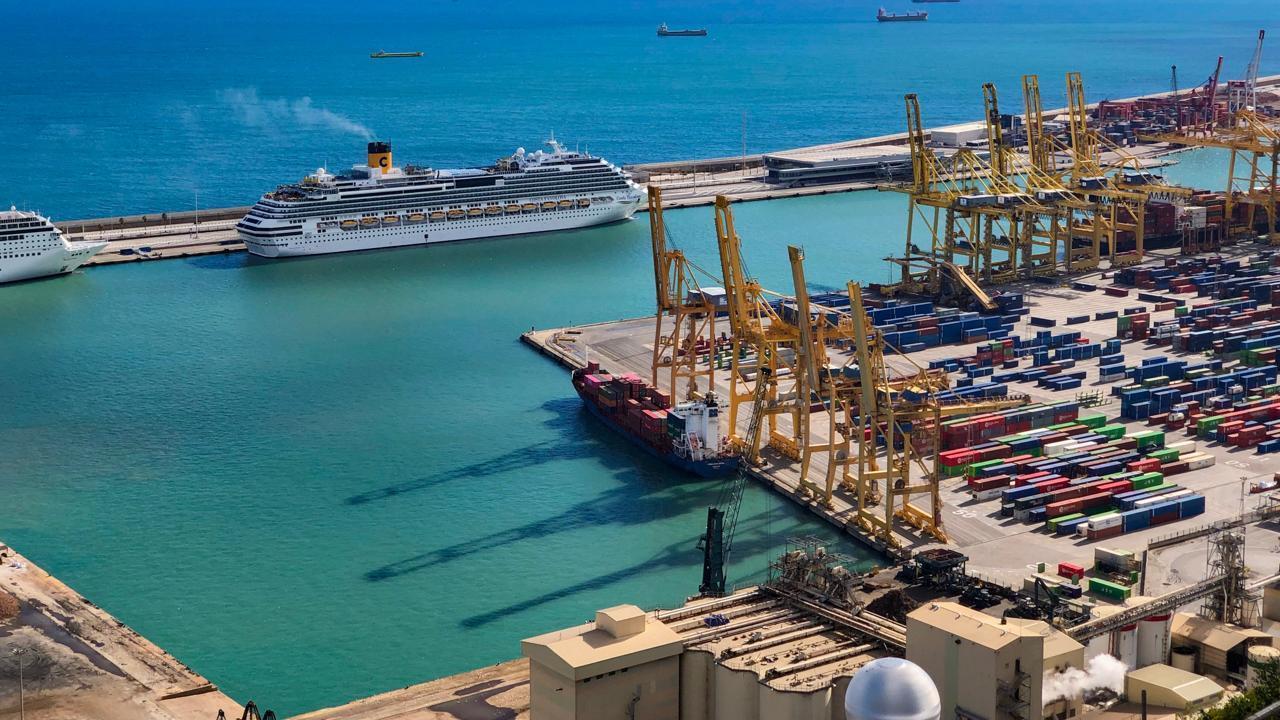
Announced by Hyundai Rotem on July 22, 2025, the contract outlines the supply of next-generation AGVs designed to operate seamlessly in fully automated port environments. These vehicles will be deployed at Busan New Port’s West Container Terminal Phase 2-1, a mega-infrastructure project aimed at positioning Busan as a next-gen global logistics hub. The AGVs will handle intermodal container transport within the terminal, moving containers between quay cranes and stacking yards—entirely without human drivers.
The Smart Port Race: South Korea’s Strategic Leap
South Korea’s push for smarter, more efficient ports is part of its larger digital infrastructure strategy, and Busan Port is at the center of this transformation. As the sixth-largest container port in the world, Busan has been undergoing continuous modernization, with its western terminal now at the core of automation efforts. The AGV contract with Hyundai Rotem represents the largest local deployment of such technology to date.
The vehicles will support 24/7 terminal operations, improving both efficiency and safety. Once operational, they will be coordinated by centralized control towers and integrated with the terminal operating system (TOS). With minimal human intervention, this setup is expected to significantly reduce turnaround times and labor costs while improving overall throughput capacity.
A Hyundai Rotem spokesperson emphasized the scale of the project, stating:
“Our AGVs will become a cornerstone of the West Container Terminal’s smart logistics operations. They are engineered for autonomous navigation, obstacle detection, and seamless interfacing with automated cranes and yard equipment.”
AGV Technology: The Core of Port Digitalization
AGVs are not a new concept in maritime logistics, but their technological maturity and integration into large-scale terminals are still gaining traction worldwide. The 57 vehicles to be delivered by Hyundai Rotem will come equipped with advanced LiDAR, GPS, RTK positioning systems, and onboard AI modules that allow them to autonomously navigate highly dynamic port environments.
Their control systems are designed to interface with automated gantry cranes (RMGs), enabling real-time adjustments in routing and speed. Each AGV will be battery-electric, in line with South Korea’s decarbonization goals, and capable of precise docking under container spreaders. Safety features include obstacle avoidance, emergency braking, and self-diagnostic modules.
These vehicles are not only a technological advancement but a key enabler for predictive maintenance and operational data analytics. Sensors embedded in the vehicles will constantly monitor terrain, loads, vehicle status, and routing efficiency, feeding real-time data back to centralized logistics software for optimization.
Hyundai Rotem’s Role in Korea’s Industrial AI Strategy
Hyundai Rotem’s involvement in the Busan Port upgrade is more than a simple product delivery—it’s part of a broader national strategy to promote domestic players in future-focused infrastructure. A subsidiary of Hyundai Motor Group, Rotem has been expanding its automation and robotics portfolio, notably through partnerships in rail, defense, and now marine logistics.
By winning this contract, the company has demonstrated its competitiveness against global AGV suppliers like Konecranes, Kalmar, and ZPMC. More importantly, it reinforces the South Korean government’s strategy of using industrial champions to localize and scale up strategic technologies such as AI-driven logistics, autonomous navigation, and energy-efficient transport.
This AGV contract builds on Hyundai Rotem’s earlier involvement in rail automation, where it supplied unmanned train cars for light metros. Now, it is repurposing its expertise into marine environments—a move that could open new export markets for Korea’s industrial tech sector.
Impact on Busan Port’s Operations and Global Position
For Busan Port Authority (BPA), the AGV deployment is a crucial element in meeting global standards for automation and competitiveness. Phase 2-1 of the West Container Terminal is scheduled to open in 2026, and these AGVs are expected to play a frontline role from day one.
The BPA has long aimed to compete with high-efficiency terminals like Rotterdam’s Maasvlakte II and China’s Yangshan Deep Water Port. With these AGVs in place, Busan will move closer to that tier, capable of faster vessel turnaround, fewer portside accidents, and lower emissions.
An internal report from BPA notes that AGV use could reduce container handling time by 20%, cut operational labor by up to 50%, and increase energy efficiency through electrification. The terminal will also benefit from predictive maintenance scheduling based on real-time performance data from the AGVs.
Moreover, the increased automation could allow Busan to become a testing ground for further innovations in digital twins, smart surveillance, and port AI analytics. Already, the government is exploring integration of 5G-based control towers and blockchain-based container tracking systems.
Local Workforce and Automation Concerns
As with any large-scale automation project, the rollout of AGVs raises questions about labor displacement. Port unions in Busan have previously expressed concern over job loss due to automation, particularly in traditional crane operation and container transport roles.
To mitigate backlash, the BPA and the Ministry of Oceans and Fisheries have launched upskilling programs for port workers, aiming to reallocate labor into supervisory, maintenance, and IT-based logistics roles. The AGV initiative is being pitched not as a labor-replacing project, but as one that will redefine the nature of port work in a smarter, safer, and more technical direction.
A BPA spokesperson remarked:
“While some manual roles will be reduced, there is a growing need for technical roles to manage automation, perform analytics, and conduct remote control functions. The port workforce is not being downsized—it’s being re-skilled.”
Regional Implications and Export Potential
South Korea’s investment in AGVs and smart port infrastructure could ripple across East Asia. As other regional ports—from Yokohama and Shanghai to Singapore—move toward similar upgrades, Hyundai Rotem’s successful execution in Busan could establish a model that’s exportable.
There is already speculation that Hyundai Rotem may pursue contracts in Southeast Asia and the Middle East, where port modernization is a key strategic objective. Busan’s operational success with AGVs could become a case study for these future deployments.
Additionally, the Korean government has hinted at integrating AGVs with its broader “K-Smart Port” branding, promoting domestic tech in port infrastructure the same way it has successfully done in consumer electronics and automotive.
Environmental and Regulatory Impact
In a global context increasingly concerned with emissions from logistics chains, Hyundai Rotem’s battery-powered AGVs offer a green alternative. According to government statements, each AGV will contribute to lowering the terminal’s carbon footprint by replacing diesel transport trucks.
The AGVs also comply with new maritime sustainability regulations set by the IMO and regional port authorities. They are expected to reduce noise pollution, eliminate tailpipe emissions, and work in synergy with Busan Port’s shore-to-ship electrification initiatives.
By embedding these clean AGVs into a core cargo port, Korea is taking a strong stance on environmental leadership in maritime logistics—one that could influence the global adoption of cleaner port equipment.
A Glimpse Into the Automated Future of Logistics
The AGV deal between Hyundai Rotem and Busan Port is more than a tech update—it’s a strategic move toward redefining how goods move in and out of Asia. In a world increasingly driven by speed, predictability, and efficiency, smart port logistics powered by autonomous vehicles could become the norm rather than the exception.
With 57 AGVs set to roll out across one of the busiest terminals in the region, South Korea is betting big on a future where humans and machines collaborate to move global trade faster, safer, and greener.
Hyundai,57 AGVs, Busan, Port Automation



Advances in Aerospace Technology and Commercial Aviation Recovery
Insights into breakthrough aerospace technologies and commercial aviation’s recovery amid 2025 chall

Defense Modernization and Strategic Spending Trends
Explore key trends in global defense modernization and strategic military spending shaping 2025 secu

Tens of Thousands Protest in Serbia on Anniversary of Deadly Roof Collapse
Tens of thousands in Novi Sad mark a year since a deadly station roof collapse that killed 16, prote

Canada PM Carney Apologizes to Trump Over Controversial Reagan Anti-Tariff Ad
Canadian PM Mark Carney apologized to President Trump over an Ontario anti-tariff ad quoting Reagan,

The ad that stirred a hornets nest, and made Canadian PM Carney say sorry to Trump
Canadian PM Mark Carney apologizes to US President Trump after a tariff-related ad causes diplomatic

Bengaluru-Mumbai Superfast Train Approved After 30-Year Wait
Railways approves new superfast train connecting Bengaluru and Mumbai, ending a 30-year demand, easi




