Post by : Amit
Growing Fragility in Global Trade Highlights India’s Exposure
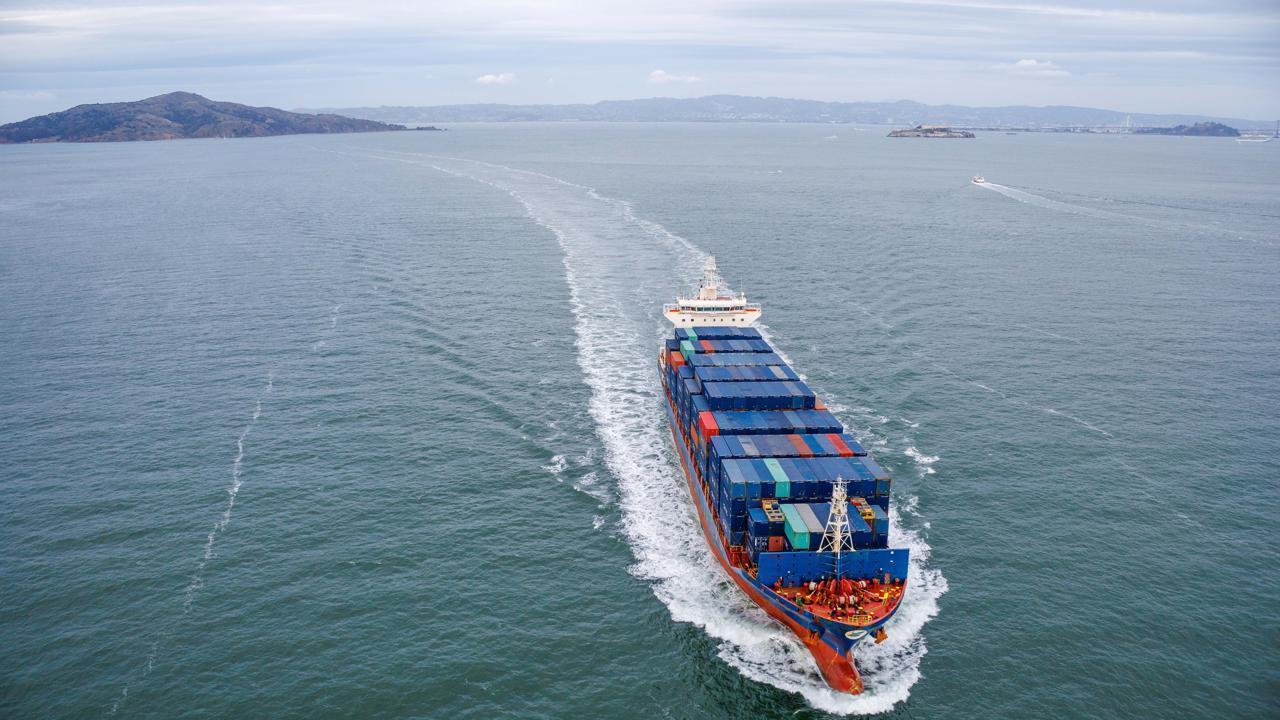
The intensifying series of global disruptions—from the COVID-19 pandemic and the Russia-Ukraine conflict to the recent Red Sea shipping crisis—has exposed deep vulnerabilities in global supply chains. For India, which is rapidly scaling its export economy, the maritime shipping ecosystem has become a strategic pressure point. In a candid address at a recent industry forum, Commerce Secretary Sunil Barthwal emphasized the urgent need to fortify India’s shipping and port logistics infrastructure to secure the country’s trade ambitions in the face of unpredictable global shocks.
Barthwal pointed out that India’s dependence on foreign carriers, congested port logistics, and limited maritime capacity create bottlenecks during crises—delaying exports, raising freight costs, and weakening India's competitiveness. “We need to strengthen the shipping ecosystem to reduce vulnerability in times of global crises,” he stated, urging both government and private stakeholders to collaborate on creating resilient, smart, and self-reliant maritime logistics networks.
India's Export Push Meets Maritime Reality
India is targeting $2 trillion in annual exports by 2030, with a major share dependent on sea freight. But recent disruptions like the Suez Canal blockage, Red Sea attacks, and global container shortages have shown that without a robust domestic shipping architecture, India’s rising export volumes remain exposed to external shocks.
Today, over 90% of India’s trade by volume and 70% by value moves via maritime routes, yet the country relies heavily on foreign-flagged vessels, especially for long-haul and transshipment traffic. This dependency makes Indian exporters susceptible to global freight rate volatility and capacity constraints, especially during emergencies.
Barthwal warned that weak last-mile connectivity, insufficient port automation, and underdeveloped multimodal integration further aggravate delays. These bottlenecks not only impact exporters but also erode trust with global buyers, especially in time-sensitive sectors like pharmaceuticals, electronics, and perishables.
Red Sea Crisis as a Wake-Up Call
The ongoing Red Sea crisis, driven by geopolitical tensions and attacks on commercial vessels, has sharply raised shipping insurance premiums and rerouted cargo traffic around the Cape of Good Hope—adding weeks of delay and significant cost. Indian exporters, especially from Gujarat and Tamil Nadu, have reported order cancellations and payment delays due to missed delivery timelines.
This real-world impact has reenergized India’s focus on building strategic trade resilience, starting with modernizing ports, upgrading shipping capacity, and localizing key logistics processes. The government sees this moment as a turning point to align maritime growth with national economic security.
Strengthening Coastal and Inland Waterways
Beyond ocean-bound shipping, the government is placing greater emphasis on coastal shipping and inland waterways to decongest roads, reduce carbon footprint, and build buffer capacity. The Sagarmala Project, India’s flagship port-led development plan, is now being reoriented with a crisis-resilience lens.
Barthwal highlighted how inland water transport (IWT) can become a game-changer for east-west cargo corridors, especially for bulk goods, agri-exports, and manufacturing components. Investments in riverine ports, cargo terminals, and containerized barges are being prioritized to reduce overdependence on traditional port bottlenecks.
Building Indigenous Shipping Capability
To cut reliance on foreign shipping lines, India is also revisiting policies that could incentivize the growth of Indian-flagged carriers, particularly for strategic and long-haul cargo. Discussions are underway to offer tax concessions, infrastructure support, and assured cargo contracts to Indian fleet operators willing to scale up.
Experts argue that without developing homegrown shipping lines, India’s logistics cost will remain vulnerable to external market dynamics. Developing a strong Indian merchant fleet would allow the country to better control capacity, reroute traffic in emergencies, and support bilateral trade agreements with trusted partners.
Digitalizing Ports for Smart Logistics
Another pillar of resilience is port digitalization and real-time cargo monitoring. The Ministry of Ports, Shipping and Waterways has begun implementing Port Community Systems (PCS) across major ports to streamline customs, cargo handling, and ship movement.
Smart logistics hubs—enabled with AI-based demand forecasting, IoT-based cargo sensors, and blockchain-led documentation—are being tested in key port clusters like Mumbai, Visakhapatnam, and Kochi. The goal is to reduce turnaround times, cut down manual paperwork, and increase throughput efficiency, even during global trade turbulence.
Private Sector & PPPs Crucial to Maritime Reform
Commerce Secretary Barthwal emphasized that the private sector must play a bigger role in strengthening port ecosystems. Through public-private partnerships (PPPs), India is pushing for faster terminal development, warehousing upgrades, and shipyard modernization.
Companies like Adani Ports, DP World, and JSW Infrastructure are already investing in port capacity and smart handling systems. However, Barthwal stressed the need for better coordination between central and state logistics agencies to ensure that investment translates into systemic efficiency, not just isolated upgrades.
Exporters Seek Predictability and Protection
Indian exporters, especially from MSME sectors, are lobbying for greater predictability in freight rates, container availability, and transit timelines. Many are also demanding government-backed shipping insurance or hedging instruments to mitigate international logistics risk.
In response, the government is considering measures such as export freight subsidies, emergency cargo routing protocols, and the creation of crisis-response port corridors that can be quickly activated during disruptions.
India’s Maritime Resilience: A Strategic Imperative
As global supply chains move from “just-in-time” to “just-in-case” models, India’s ability to deliver exports dependably—even during crises—will define its trade credibility. A robust shipping and port system is not just a logistics issue—it is a national strategic imperative, Barthwal affirmed.
India’s growing stature as a trusted alternative to China in global supply chains hinges on its ability to offer reliable and shock-proof trade infrastructure. Building such maritime resilience will be key to sustaining its growth momentum in a world that increasingly prizes dependability over mere efficiency.
Marintime, India, Cargo Ship



Advances in Aerospace Technology and Commercial Aviation Recovery
Insights into breakthrough aerospace technologies and commercial aviation’s recovery amid 2025 chall

Defense Modernization and Strategic Spending Trends
Explore key trends in global defense modernization and strategic military spending shaping 2025 secu

Tens of Thousands Protest in Serbia on Anniversary of Deadly Roof Collapse
Tens of thousands in Novi Sad mark a year since a deadly station roof collapse that killed 16, prote

Canada PM Carney Apologizes to Trump Over Controversial Reagan Anti-Tariff Ad
Canadian PM Mark Carney apologized to President Trump over an Ontario anti-tariff ad quoting Reagan,

The ad that stirred a hornets nest, and made Canadian PM Carney say sorry to Trump
Canadian PM Mark Carney apologizes to US President Trump after a tariff-related ad causes diplomatic

Bengaluru-Mumbai Superfast Train Approved After 30-Year Wait
Railways approves new superfast train connecting Bengaluru and Mumbai, ending a 30-year demand, easi




