Post by : Amit
Photo : X / Indian Infra Report
India’s Ropeway Revolution: 25 New Projects Across 10 States to Boost Transit and Tourism
In a bold move to reshape regional connectivity and promote tourism in hard-to-reach areas, the Government of India has greenlit the installation of 25 ropeway projects spanning 10 states. This ambitious undertaking, part of the National Ropeways Development Programme—also known as the "Parvatmala Pariyojana"—marks a significant leap in India’s strategy to diversify public transportation, especially in challenging terrains.
The ropeway projects, which will be developed through a combination of public-private partnerships and centrally funded schemes, are expected to offer a fast, eco-friendly, and reliable transport option for both local commuters and tourists. The Union Ministry of Road Transport and Highways (MoRTH), which oversees the initiative through the National Highways Logistics Management Limited (NHLML), has already identified states and corridors where these installations will come up over the next few years.
A Strategic Push Towards Alternative Transit
The decision to expand India’s ropeway infrastructure comes against the backdrop of rising congestion in hill towns, growing demand for last-mile transport, and the government’s broader emphasis on sustainable mobility solutions. Unlike conventional road construction, ropeways require minimal land acquisition and can be deployed rapidly in regions where terrain or environmental constraints make highways impractical.
Ropeways are particularly suitable for India's hilly states, which often suffer from poor connectivity, monsoon-triggered landslides, and overloaded road networks. The planned systems will not only ease these challenges but also help reduce carbon emissions by shifting commuters from fossil fuel-driven vehicles to clean, cable-driven systems.
Officials from the Ministry confirm that these ropeway corridors will be built in both urban and rural settings, including tribal belts, pilgrimage sites, tourist towns, and congested cities where conventional transport has failed to keep up with demand.
Targeted States and Corridors
Although the complete list of locations is still being finalized, the government has already indicated a preliminary allocation across 10 states. Himachal Pradesh, Uttarakhand, Jammu & Kashmir, and Arunachal Pradesh are expected to see the bulk of these projects due to their mountainous topography. Other states like Maharashtra, Sikkim, Jharkhand, Karnataka, and Assam are also in line for major ropeway routes, either to decongest urban areas or to offer improved access to tribal regions and heritage sites.
Among the standout corridors under consideration are Dehradun–Mussoorie in Uttarakhand, Dharamshala–McLeod Ganj in Himachal Pradesh, and the Srinagar–Shankaracharya route in Jammu & Kashmir. In the northeast, plans are underway to connect remote hill hamlets with district headquarters through aerial links in Arunachal Pradesh and Sikkim.
In Maharashtra, projects are being explored in the Western Ghats and coastal Konkan belt to improve tourist movement. Urban ropeways in cities like Pune and Bengaluru are also being evaluated as pilot models to reduce traffic on key arterial roads.
Fast-Track Implementation via PPP Model
To accelerate construction and ensure quality, the Centre is leveraging a hybrid development model, wherein ropeway developers are brought on board through competitive bidding. These private concessionaires will be responsible for building and operating the systems, while the government will extend viability gap funding (VGF) and provide necessary policy clearances and land support.
The National Highways Logistics Management Limited (NHLML), a special purpose vehicle under the NHAI, has already begun issuing tenders and pre-feasibility reports for select corridors. The agency is also collaborating with international consultants to adopt global best practices in safety, design, and operations.
According to a senior official at NHLML, the goal is to complete at least 10 ropeway projects in the first phase by the end of 2026, with the remainder to follow in a phased manner.
Cost-Effective, Eco-Friendly, and Tourism-Friendly
Ropeways offer several advantages over conventional infrastructure in difficult terrains. Construction timelines are shorter, cost per kilometer is significantly lower in mountainous regions compared to tunnels or highways, and environmental impact is minimal. A standard passenger ropeway can transport thousands of people per hour and is powered by electricity, making it a cleaner alternative to diesel-run jeeps or buses that dominate hill travel.
Tourism is another sector that stands to gain enormously. At destinations like Manali, Haridwar, or Shillong, ropeways could cut travel time drastically, offer panoramic views, and reduce vehicular congestion. Tourism departments in participating states are working closely with MoRTH to integrate the ropeways with surrounding attractions, including eco-parks, temples, forts, and museums.
Furthermore, ropeway cabins today are equipped with climate control, surveillance cameras, and automatic rescue systems—offering a level of comfort and safety that appeals to modern travelers.
Inclusion and Connectivity for Marginalized Areas
One of the standout objectives of the ropeway push is inclusivity. Many of India’s tribal and rural communities remain disconnected from mainstream economic activities due to lack of transportation. In states like Jharkhand and Chhattisgarh, ropeways can bridge this gap by connecting remote areas to markets, schools, and hospitals.
Planners also aim to integrate ropeway stations with bus stands, metro stations, and railway terminals to create multimodal hubs, particularly in tier-2 and tier-3 cities. This ensures that ropeways are not isolated marvels but fully functional parts of India’s integrated transport landscape.
Challenges and Regulatory Readiness
While the enthusiasm is high, implementing such a vast ropeway network does present technical and regulatory challenges. Terrain stability, wind conditions, wildlife movement, and disaster preparedness are crucial factors that need rigorous assessments.
Moreover, India’s regulatory framework for cable cars and aerial transport is still evolving. The Ministry has been working with the Bureau of Indian Standards (BIS) and international bodies to draft clear safety standards and operating procedures. Training programs for operators and emergency staff are also being set up to handle ropeway systems professionally.
Land acquisition, local opposition, and coordination among multiple agencies—especially in ecologically sensitive zones—may also create hurdles if not addressed through inclusive, transparent planning processes.
Future Outlook and Policy Support
The ropeway mission aligns seamlessly with India’s larger vision of multimodal connectivity under the PM Gati Shakti Master Plan, which aims to synchronize roads, railways, ports, and aviation with emerging transport modes. It also supports green mobility goals under India’s National Electric Mobility Mission and Sustainable Transport policy frameworks.
Experts believe that once the first few ropeways are operational and demonstrate commercial viability, more states will come forward with proposals. This could open up India’s vast hinterlands not just to tourists but also to economic development, healthcare delivery, and emergency services.
As India targets net-zero emissions by 2070, promoting aerial ropeways as a carbon-light transport alternative will become increasingly critical. By 2030, the government envisions ropeways becoming a mainstream part of regional transit, especially in areas where roads are impractical or ecologically harmful.
A New Chapter in India’s Mobility Story
India’s decision to build 25 ropeway projects across 10 states is more than just an infrastructure announcement—it’s a step toward reimagining how mobility works in a country with vast geographic, climatic, and socioeconomic diversity. With the right mix of technology, policy, and stakeholder collaboration, this ropeway revolution could transform everyday life in mountain regions, tribal belts, and traffic-choked cities alike.
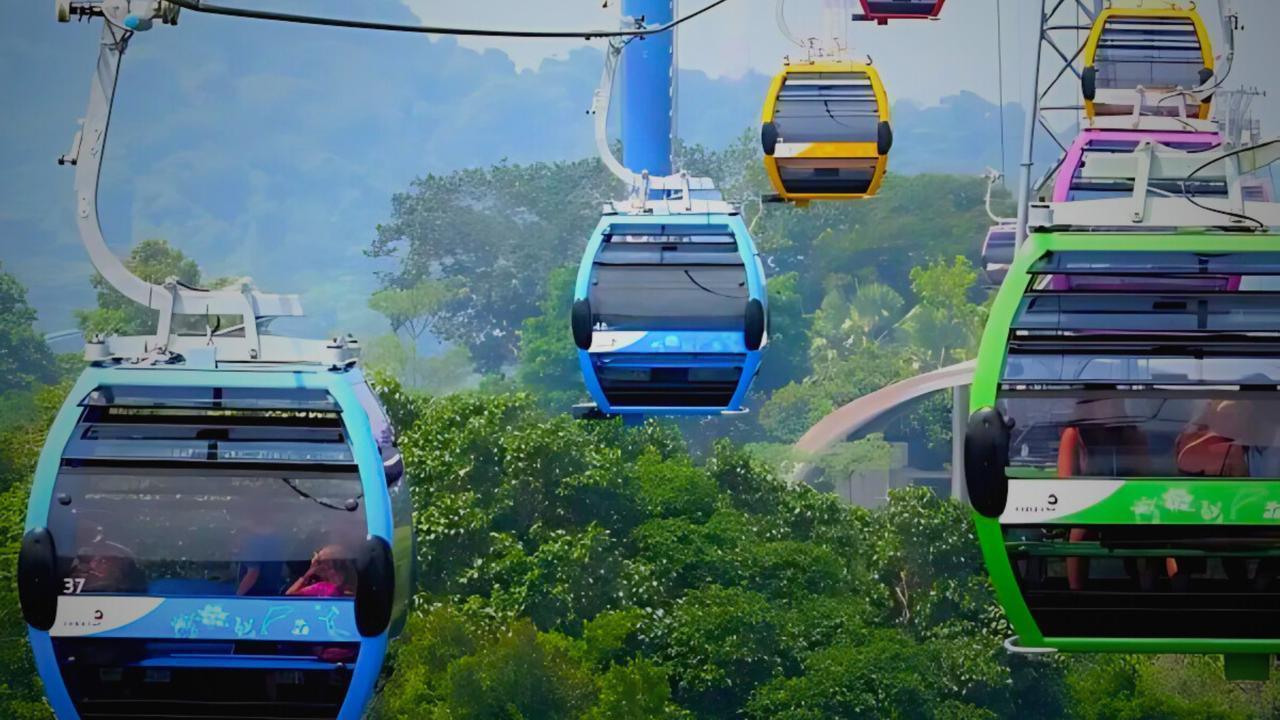
As cabins begin to glide silently over valleys, forests, and bustling towns, India’s aerial ambitions are no longer just tourist novelties—they’re evolving into lifelines of sustainable growth and inclusive development.
India, Ropeway, Tourism



Advances in Aerospace Technology and Commercial Aviation Recovery
Insights into breakthrough aerospace technologies and commercial aviation’s recovery amid 2025 chall

Defense Modernization and Strategic Spending Trends
Explore key trends in global defense modernization and strategic military spending shaping 2025 secu

Tens of Thousands Protest in Serbia on Anniversary of Deadly Roof Collapse
Tens of thousands in Novi Sad mark a year since a deadly station roof collapse that killed 16, prote

Canada PM Carney Apologizes to Trump Over Controversial Reagan Anti-Tariff Ad
Canadian PM Mark Carney apologized to President Trump over an Ontario anti-tariff ad quoting Reagan,

The ad that stirred a hornets nest, and made Canadian PM Carney say sorry to Trump
Canadian PM Mark Carney apologizes to US President Trump after a tariff-related ad causes diplomatic

Bengaluru-Mumbai Superfast Train Approved After 30-Year Wait
Railways approves new superfast train connecting Bengaluru and Mumbai, ending a 30-year demand, easi




