Post by : Amit
Photo : X / Tar21Operator
A Significant Leap for Indian Aerospace Ambitions
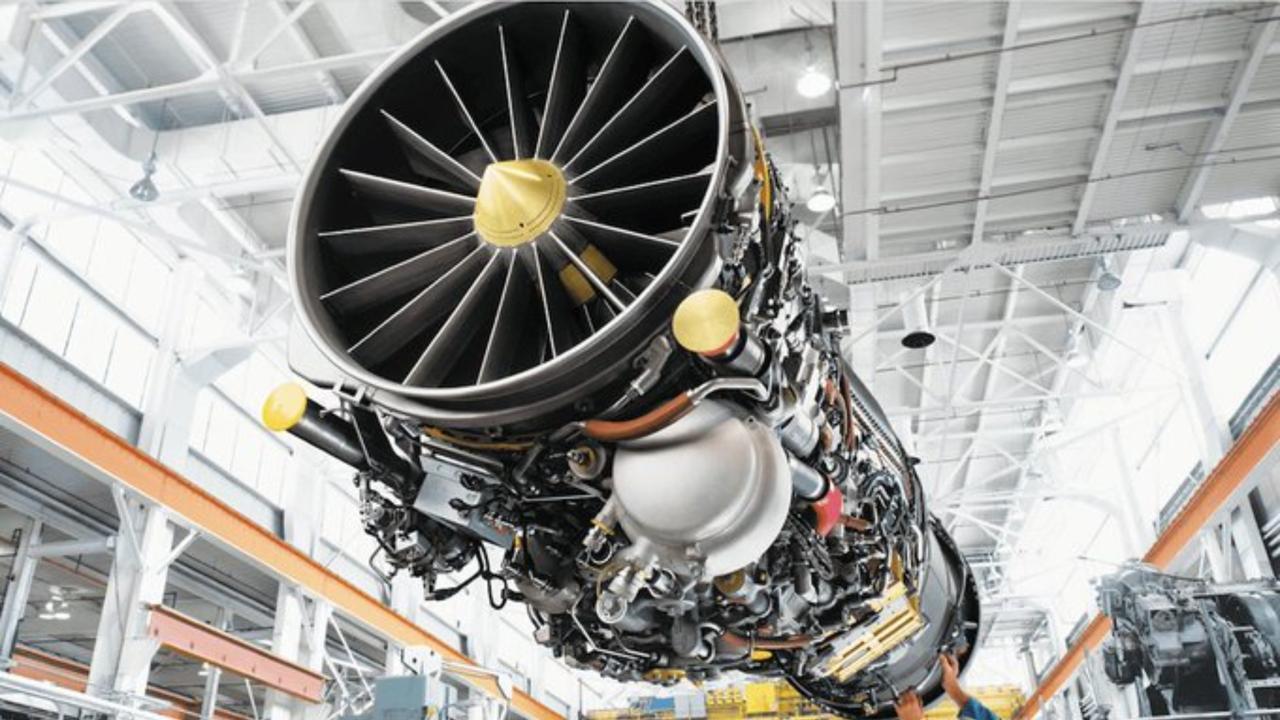
In a landmark development that underscores India’s accelerating journey toward self-reliance in defence manufacturing, the country has received its second General Electric F404-IN20 engine, which will power the Light Combat Aircraft (LCA) Tejas Mk1A. The delivery is part of a 14-engine deal signed with the U.S. aerospace giant GE Aviation, aimed at fueling the first batch of Tejas Mk1A jets scheduled for production and induction into the Indian Air Force (IAF). With this engine now on Indian soil, the wheels are turning more swiftly in Hindustan Aeronautics Limited’s (HAL) quest to operationalize the upgraded indigenous fighter.
Tejas Mk1A: From Design Board to the Runway
The Tejas Mk1A is a refined and combat-ready evolution of the original LCA Tejas platform. Designed for multirole capabilities, it has been equipped with a host of improvements including an AESA radar, beyond-visual-range missile integration, mid-air refueling capabilities, electronic warfare (EW) suites, and advanced cockpit systems. But none of these features would matter without a high-thrust, dependable powerplant—and that’s where the GE F404-IN20 engine comes in. This engine provides the muscle that brings the LCA Mk1A to life.
Why the F404 Engine Matters
The F404-IN20 is a variant of GE’s widely used F404 family of afterburning turbofan engines, known for their rugged performance and adaptability in frontline combat aircraft. Originally designed for the U.S. Navy’s F/A-18 Hornet, the F404 platform has clocked over 13 million flight hours worldwide, a testament to its reliability. For India, the IN20 variant has been customized to suit the Tejas platform with Full Authority Digital Engine Control (FADEC) systems, enhanced durability, and increased thrust. It’s a high-performance engine tailored for a lightweight fighter operating in challenging environments—exactly the conditions the IAF faces.
Reinforcing Serial Production: One Engine at a Time
With HAL poised to deliver the first Tejas Mk1A jet by early 2024, the engine supply schedule becomes critical. Each aircraft will be powered by one F404-IN20 engine, and the timely arrival of these units determines the pace at which production lines can move. Now with two engines delivered and 12 more in the pipeline, HAL’s Bengaluru-based assembly lines are preparing for simultaneous airframe and propulsion integration, moving the LCA Mk1A from hangars to airstrips faster than ever before.
HAL’s Growing Manufacturing Footprint
Hindustan Aeronautics Limited has invested significantly in expanding its manufacturing infrastructure to accommodate the Mk1A program. The Aircraft Division has implemented new production technologies including digitized assembly stations, integrated testing facilities, and AI-assisted quality control systems. With parallel workstreams activated for avionics, airframe fabrication, and now engine mounting, HAL’s progress mirrors India’s broader ambition to become not just a consumer but a producer of world-class combat aviation hardware.
A Defence Collaboration with the United States
The delivery of the GE engines isn’t merely a transactional event—it’s emblematic of a deeper strategic partnership between India and the United States in aerospace and defence. Over the past few years, bilateral engagements have evolved from mere supplier-customer dynamics to long-term collaboration frameworks. GE’s involvement in the LCA program, and the planned co-manufacturing of its more advanced F414 engines in India for the upcoming LCA Mk2 and TEDBF platforms, is a clear indicator of mutual trust and technological cooperation.
Future-Proofing India’s Combat Capability
The LCA Mk1A serves a dual role: meeting today’s defence requirements while building capacity for tomorrow’s needs. The Indian Air Force has committed to 83 units, with the first squadron expected to be stationed at Sulur Air Force Station in Tamil Nadu. The Mk1A’s versatility allows it to undertake interception, ground attack, reconnaissance, and maritime strike roles. Coupled with the reliability of the GE F404-IN20 engine, the aircraft can be deployed quickly with high availability rates—critical in an era of evolving threats and fast-paced regional conflicts.
Strategic Timing Amid Geopolitical Shifts
This engine delivery comes at a crucial geopolitical moment. With increasing tension along India’s borders, particularly in the north and northeast, and amid growing assertiveness from neighboring powers, the need for a self-reliant, combat-ready fleet is urgent. The LCA Mk1A program, boosted by timely engine deliveries, strengthens India's ability to maintain air superiority and deterrence. It also sends a message to regional and global powers alike—India is serious about safeguarding its sovereignty with indigenous tools backed by trusted global allies.
The Journey from Prototype to Powerhouse
The Tejas program has faced its share of criticism and delays since its inception in the 1980s. Initial timelines were overly ambitious, and the complexity of designing a fourth-generation fighter from scratch exposed critical gaps in India’s defence R&D capabilities. But with consistent policy support, budget allocations, and the addition of private-sector suppliers and international partners, the program has gained significant momentum. The Mk1A variant represents not just a technological upgrade, but a shift in confidence—from developmental skepticism to production optimism.
Training, Testing, and Tactical Readiness
As more engines arrive, HAL and the IAF are simultaneously ramping up training and flight testing. Test pilots are already validating the integration of the F404-IN20 engine with new avionics packages, flight control laws, and weapons systems. Ground support teams are also undergoing upskilling to handle the engine’s FADEC interface, predictive maintenance analytics, and new operational checklists. The training phase ensures that when the first Tejas Mk1As roll out, they’ll be ready not just for flight, but for combat deployment.
India’s Emerging Defence Industrial Ecosystem
Beyond HAL and GE, this development is a win for India’s growing aerospace supply chain. Companies involved in machining, electronics, software simulation, composite materials, and engine components are now tied into the LCA Mk1A ecosystem. HAL’s decision to work with over 500 MSMEs across India creates a ripple effect of technological and economic growth, turning the Tejas project into a vehicle of industrial transformation. Every engine that arrives feeds not just a jet but an entire value chain of skilled jobs and innovation.
Export Possibilities: Tejas Goes Global
India is also eyeing the international market with the Tejas Mk1A. Countries in Southeast Asia, Latin America, and Africa have shown interest in acquiring a lightweight, affordable multirole fighter backed by dependable engines and supported by a sovereign government. The success of the GE F404 engine in powering these jets enhances their export appeal. The presence of a trusted U.S. engine brand adds an extra layer of confidence for foreign buyers considering Tejas as an alternative to more expensive Western platforms.
F414 Engines and Mk2 Evolution
While the current focus remains on fulfilling the F404-IN20 deliveries for Mk1A, the path ahead is even more ambitious. India and GE have already signed a memorandum of understanding to manufacture GE F414 engines in India—a more powerful variant that will drive the LCA Mk2 and India’s futuristic Twin Engine Deck Based Fighter (TEDBF) for the Navy. Co-production of the F414 is expected to begin within the next few years, possibly under a joint venture or public-private model that will further deepen India’s defence industrial base.
Indigenous Engine Development: A Long-Term Goal
India is also investing in its own indigenous jet engine development through the Kaveri project, spearheaded by DRDO’s Gas Turbine Research Establishment (GTRE). While the Kaveri engine has faced technical challenges and timeline overruns, lessons learned from its development continue to inform future indigenous engine programs. The blend of foreign engine procurement, joint production, and homegrown R&D forms a multi-pronged strategy aimed at achieving true aerospace autonomy by the 2030s.
A Small Shipment, A Giant Leap
At first glance, the delivery of a single jet engine might appear as a routine logistical update. But in the context of India’s defence modernization journey, it marks an inflection point. With the second GE F404-IN20 engine now delivered, the Tejas Mk1A program gains further momentum, HAL ramps up toward serial production, and India inches closer to a time when it no longer has to rely on legacy platforms for frontline combat roles. It's a sign that global partnerships and national aspirations can converge powerfully in one carefully engineered piece of aerospace hardware.
India,GE-404 Engine, LCA Mk1A



Advances in Aerospace Technology and Commercial Aviation Recovery
Insights into breakthrough aerospace technologies and commercial aviation’s recovery amid 2025 chall

Defense Modernization and Strategic Spending Trends
Explore key trends in global defense modernization and strategic military spending shaping 2025 secu

Tens of Thousands Protest in Serbia on Anniversary of Deadly Roof Collapse
Tens of thousands in Novi Sad mark a year since a deadly station roof collapse that killed 16, prote

Canada PM Carney Apologizes to Trump Over Controversial Reagan Anti-Tariff Ad
Canadian PM Mark Carney apologized to President Trump over an Ontario anti-tariff ad quoting Reagan,

The ad that stirred a hornets nest, and made Canadian PM Carney say sorry to Trump
Canadian PM Mark Carney apologizes to US President Trump after a tariff-related ad causes diplomatic

Bengaluru-Mumbai Superfast Train Approved After 30-Year Wait
Railways approves new superfast train connecting Bengaluru and Mumbai, ending a 30-year demand, easi




