Post by : Amit
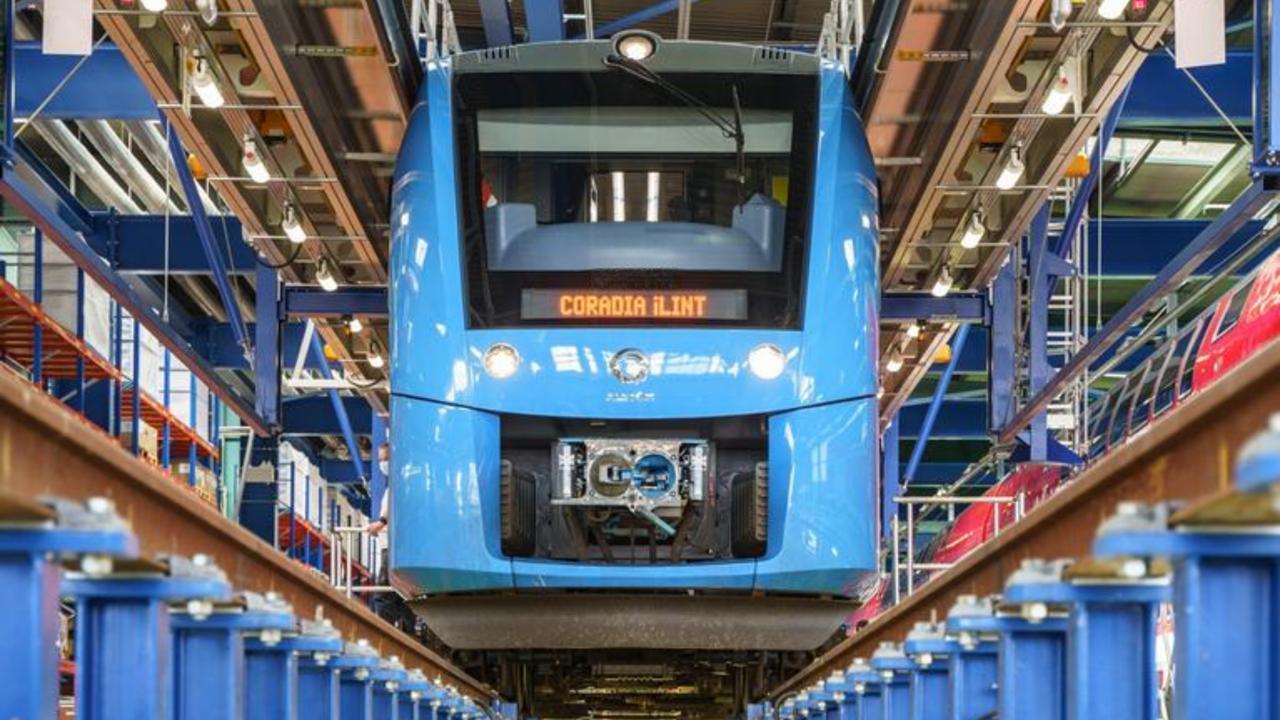
Photo : X / India & The World
A Green Revolution Begins on Indian Tracks
In a defining moment for Indian Railways and the nation’s green energy ambitions, the Integral Coach Factory (ICF) in Chennai has rolled out India’s first indigenous hydrogen-powered rail coach, which officially entered the testing phase this week. This move marks a historic step toward decarbonizing India’s vast railway network and could establish the country as a global leader in sustainable rail transport.
Unveiled with both technical precision and national pride, the coach is part of Indian Railways’ mission to eliminate carbon emissions by 2030. The green propulsion initiative is also in line with the broader government agenda of achieving net-zero goals and promoting Make in India technologies.
Built by Indian Engineers for a Cleaner Tomorrow
The prototype hydrogen-powered rail coach was conceptualized, designed, and developed at the ICF in Chennai—one of the most reputed railway coach manufacturing facilities globally. The Hydrogen Coach Project is entirely indigenous and was executed in a record timeline. Officials revealed that the key engineering challenges involved battery integration, hydrogen fuel cell optimization, and balancing performance with weight and safety.
“This coach reflects India’s scientific and technical maturity in adopting clean energy solutions,” said an ICF senior official. “We have designed it with operational flexibility, safety, and cost-effectiveness in mind.”
The hydrogen fuel cell system integrated into the coach produces electricity by combining hydrogen gas with oxygen. The only by-product of this process is water vapor, making it a zero-emissions technology. The energy produced powers a battery-electric traction system to propel the coach.
What Makes This Coach Special?
The hydrogen coach stands apart from conventional diesel-powered coaches in several ways. It is fitted with state-of-the-art fuel cells, battery modules, a hydrogen storage unit, and advanced control electronics. Key features include:
The coach also includes sophisticated monitoring systems for hydrogen pressure, temperature, and leak detection, ensuring top-tier safety protocols.
Why Hydrogen, and Why Now?
India’s push towards hydrogen-powered transport systems aligns with its broader hydrogen economy roadmap. Hydrogen is not only abundant but also a high-density energy carrier. When generated using renewable energy (green hydrogen), it becomes one of the cleanest energy sources available.
The transportation sector is a major contributor to India’s carbon emissions. Since Indian Railways is one of the largest single consumers of diesel in the country, transitioning to hydrogen could bring immediate environmental benefits.
The Indian government’s National Hydrogen Mission, launched in 2021, aims to position India as a global hub for hydrogen production and export. The rollout of this coach gives tangible momentum to those ambitions.
Testing Underway
Following the rollout, the coach is undergoing rigorous track trials to evaluate its performance across various metrics, including:
According to sources at ICF, the coach will be tested both independently and coupled with other units to assess scalability. The initial deployment may be for short-distance suburban or heritage routes before scaling up to intercity lines.
The first test run was conducted at ICF’s internal test track. Further trials will be conducted under the supervision of the Research Designs and Standards Organisation (RDSO), India’s apex rail technology body.
Future Deployment: Where Will It Run?
Officials from Indian Railways suggest that the initial deployment could happen on heritage tourism circuits like the Kalka–Shimla route or the Darjeeling Himalayan Railway. These routes are shorter and allow Indian Railways to assess the hydrogen coach’s commercial and technical viability before expanding to larger corridors.
Once successful, this hydrogen technology could be scaled for multiple units (MEMUs) and longer-distance trains.
“The vision is to retrofit or design full trains powered by hydrogen cells for daily passenger operations,” said a Railways spokesperson. “This will drastically reduce the carbon footprint of the Indian Railways.”
Global Context: India Enters Elite Hydrogen League
With this innovation, India joins a small but growing group of countries experimenting with or deploying hydrogen trains, including Germany, France, China, and Japan. Germany, for instance, launched the world’s first commercial hydrogen train in 2022. However, what sets India apart is that this hydrogen coach was developed entirely indigenously, without foreign collaboration or imported technology.
This makes it not just a sustainability milestone, but a showcase of India's Make in India and Aatmanirbhar Bharat (self-reliant India) programs.
Cost and Scalability Considerations
While hydrogen fuel cell coaches are more expensive to build than conventional diesel ones, the operational cost—especially with green hydrogen—is expected to reduce significantly over time. ICF engineers estimate that while the capital cost is 3–4 times higher currently, the lifecycle cost could be far lower once hydrogen production scales up and becomes more economical.
Additionally, hydrogen fuel prices are expected to decline rapidly as India ramps up green hydrogen infrastructure. The Ministry of New and Renewable Energy (MNRE) is already planning hydrogen refueling hubs across the country.
Moreover, hydrogen coaches offer long-term savings on maintenance, as fuel cells have fewer moving parts than diesel engines and don’t require oil changes or frequent servicing.
Policy Support and Industry Partnerships
Indian Railways has secured support from both public sector undertakings (PSUs) and private players to develop the hydrogen ecosystem. Collaborations are underway with Indian Oil Corporation (IOC) and Bharat Petroleum (BPCL) to establish hydrogen production and refueling infrastructure at select locations.
The Railway Ministry has also proposed incentives for green R&D and hydrogen fuel technology as part of its 2025–2030 decarbonization roadmap.
This policy momentum is likely to attract further private sector innovation in hydrogen rail applications, including storage systems, safety technologies, and control electronics.
Voices from the Industry
Railway experts have lauded the project as transformative. Prof. P.K. Bansal, a transportation researcher at IIT Madras, noted:
“The rollout of a hydrogen coach is a major technological leap. It shows India's resolve to leapfrog conventional stages of rail modernization and directly adopt next-generation green mobility.”
Passengers are also likely to benefit from quieter operations, better ride comfort, and cleaner travel environments.
Environmental Impact: A Quantifiable Shift
A single hydrogen coach is expected to eliminate over 700 tons of CO₂ emissions per year compared to a diesel equivalent. As more coaches and full trains are introduced, this number will scale exponentially. This makes hydrogen trains a crucial part of India’s plan to achieve net-zero emissions by 2070.
According to Ministry officials, if even 20% of India's diesel-powered trains are replaced by hydrogen alternatives by 2030, the environmental impact would be comparable to removing hundreds of thousands of cars from the road.
A New Chapter in Rail Mobility
India’s first hydrogen-powered rail coach is not just an engineering prototype—it is a symbol of the country’s vision for clean, self-reliant, and future-ready mobility. As the coach undergoes tests and trials, it’s already sending a clear message to the world: India is serious about climate action, and its railways are leading the charge.
If successful, this hydrogen technology could redefine passenger rail travel in India, open doors for exports, and lay the groundwork for an entire ecosystem of clean transport innovation.
And with global climate goals growing more urgent, India’s hydrogen train may just be the right solution, at the right time, on the right track.
India, Hydrogen Rail Coach, ICF Chennai



Advances in Aerospace Technology and Commercial Aviation Recovery
Insights into breakthrough aerospace technologies and commercial aviation’s recovery amid 2025 chall

Defense Modernization and Strategic Spending Trends
Explore key trends in global defense modernization and strategic military spending shaping 2025 secu

Tens of Thousands Protest in Serbia on Anniversary of Deadly Roof Collapse
Tens of thousands in Novi Sad mark a year since a deadly station roof collapse that killed 16, prote

Canada PM Carney Apologizes to Trump Over Controversial Reagan Anti-Tariff Ad
Canadian PM Mark Carney apologized to President Trump over an Ontario anti-tariff ad quoting Reagan,

The ad that stirred a hornets nest, and made Canadian PM Carney say sorry to Trump
Canadian PM Mark Carney apologizes to US President Trump after a tariff-related ad causes diplomatic

Bengaluru-Mumbai Superfast Train Approved After 30-Year Wait
Railways approves new superfast train connecting Bengaluru and Mumbai, ending a 30-year demand, easi




