Post by : Amit
Photo : X / BJP Sashi Kumar Subramony
A Misleading Image Takes the Internet by Storm
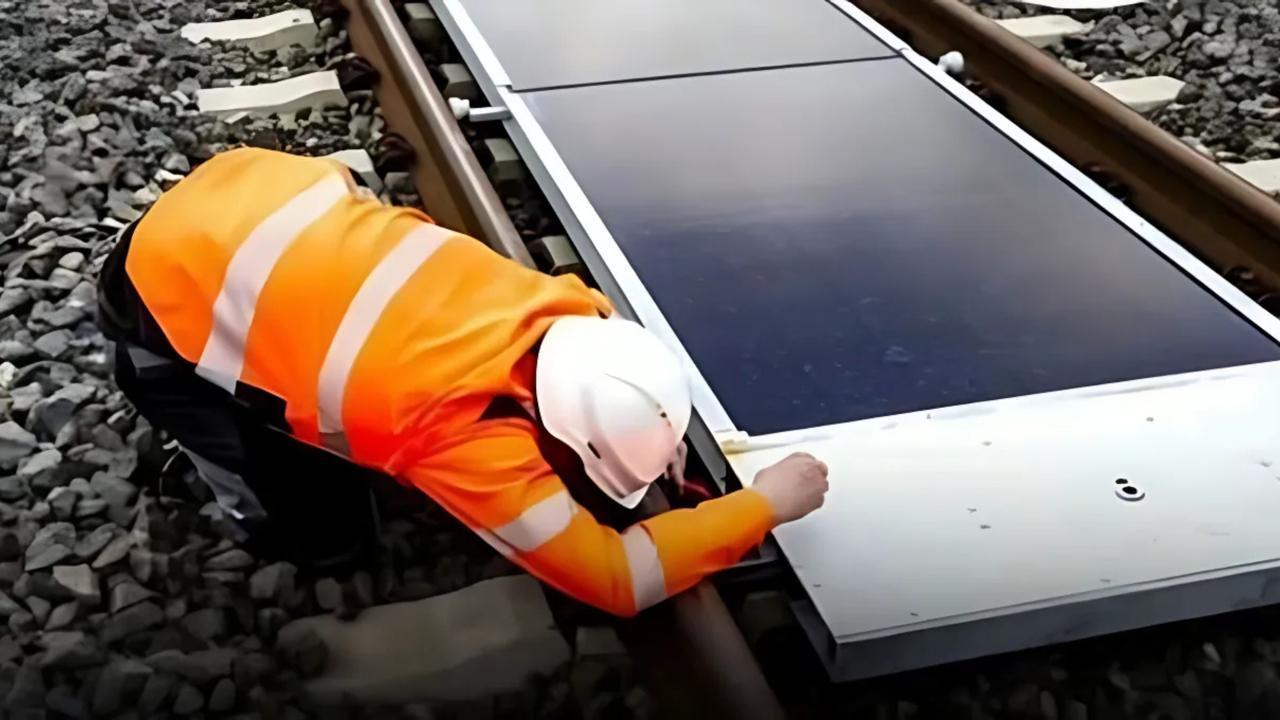
It was a photo too impressive to ignore—shiny solar panels aligned neatly between the rails of a railway track, sparking excitement among tech enthusiasts and green energy supporters alike. Shared across Facebook, WhatsApp, and X (formerly Twitter), the image quickly went viral, accompanied by bold claims that Indian Railways had begun a revolutionary solar energy initiative by installing panels directly between active train tracks.
Thousands of users across the country reposted it with awe and admiration, congratulating Indian Railways for its supposed innovation. Some posts claimed this was a world-first move in the realm of sustainable transportation, while others added elaborate, and completely made-up, details about the project—such as how it would power trains directly using sunlight and reduce India’s carbon footprint by millions of tons per year.
The image, at first glance, looked credible enough to fool even a trained eye. But now, the truth has emerged—and it’s far less groundbreaking than the viral posts made it out to be.
Government Steps In to Debunk the Claim
The Press Information Bureau (PIB), which operates an official fact-checking division under the Indian government, wasted no time in addressing the claim. In a tweet posted on July 15, the bureau firmly declared the viral image and its associated claims as fake. "This claim is fake. No such solar panel has been installed between railway tracks by Indian Railways," the statement read.
Adding weight to the denial, several Indian Railways officials also confirmed that the national transporter has no plans—current or future—to install solar panels between railway lines. The photo, they said, does not show any Indian track section and is completely unrelated to ongoing railway projects in the country.
This clarification dealt a serious blow to the viral posts, but the sheer scale of misinformation had already captured public imagination.
The Real Origin of the Image
So where did the photo actually come from? According to fact-checkers and independent research, the image was likely taken in Europe—possibly Germany or the Netherlands—where experimental projects involving solar panels on or near railway tracks have been tested. However, these are highly localized trials on decommissioned or test tracks, not active railway lines, and certainly not part of any national-scale transportation policy.
In those cases, the panels were placed on unused trackbeds to examine their performance in harsh outdoor conditions. The idea was more about testing durability and photovoltaic output under unusual setups rather than an actual plan to power trains directly from solar.
However, once stripped of context and falsely linked to Indian Railways, the image took on a whole new—and entirely fictional—life on the internet.
Why Installing Solar Panels Between Tracks Makes No Sense
To understand why the idea doesn't hold up, one only needs to consider the basic physics and engineering behind rail transport and solar energy. Train tracks are exposed to constant vibrations, weather extremes, and the relentless weight of passing locomotives. Introducing fragile solar panels into this environment would not only risk breakage but would also create serious operational and safety hazards.
Maintenance crews need regular and uninterrupted access to the tracks for inspections and repairs. Adding panels would create both a physical and logistical obstruction. Then there's the issue of dirt, debris, and shade caused by the trains themselves—all of which drastically reduce solar efficiency.
Solar panels function best in clean, stationary, and shade-free environments, ideally installed on rooftops or open grounds. Between railway tracks is just about the worst place for them—something Indian Railways engineers understand deeply, and why the organization has never considered such a move.
Indian Railways' Real Green Energy Initiatives
Despite the false claim, Indian Railways is by no means neglecting its green responsibilities. In fact, the national transporter is one of the most ambitious government bodies when it comes to adopting clean energy. Over the last few years, the organization has made significant investments in solar and wind energy across the country.
From installing rooftop solar panels on more than 1,200 railway stations to developing solar power plants on vacant railway land, Indian Railways has been steadily increasing its renewable energy footprint. The goal? To become a “net zero” carbon emitter by 2030.
Some notable examples include the 1.7 MW solar power plant in Bina, Madhya Pradesh, which became one of the first railway stations in India to use solar energy for train traction. In Gujarat, a 50 MW solar plant was set up on Railway land to directly power train operations. These efforts are grounded in practicality and efficiency—qualities sorely missing in the viral photo narrative.
Public Reactions: From Admiration to Disappointment
The photo may have been fake, but the reaction it drew was very real. Social media saw a wave of admiration for Indian Railways—until the truth was revealed. Once the clarification from PIB came through, many users expressed frustration over being misled.
Some users deleted their posts and apologized for spreading misinformation. Others chose to highlight the real sustainability projects by Indian Railways, using the opportunity to discuss practical and innovative ways India can achieve its climate goals. Environmental influencers and engineers took to platforms like LinkedIn and YouTube to explain why such installations are not only impractical but outright dangerous on operational tracks.
Misinformation in the Age of Virality
The incident is a textbook case of how misinformation can spread quickly and widely when wrapped in a visually appealing package. The image struck the right balance of futuristic technology, national pride, and green energy—topics that naturally resonate with the public. But without context and verification, even the most exciting stories can become misleading narratives.
This is where fact-checking agencies like PIB play a crucial role. By promptly flagging and correcting such falsehoods, they help prevent the misinformation from causing more harm, particularly when it involves public institutions or national infrastructure.
Lessons for the Future: Verify Before You Share
Perhaps the most important takeaway from this episode is the importance of media literacy in today’s digital world. With AI-generated images, deepfakes, and highly edited visuals becoming increasingly common, it's essential to pause and verify before hitting “share.” Not everything that looks impressive is true—and not every claim, even if it sounds good, holds up under scrutiny.
For organizations like Indian Railways, such incidents can create unnecessary confusion and distract from the real work being done. More importantly, they risk undermining public trust in legitimate government efforts, particularly in areas as critical as sustainability and transport modernization.
The Truth Tracks Straight
At the end of the day, no, Indian Railways has not installed solar panels between its tracks. The viral photo is misleading, falsely attributed, and entirely fake. But the excitement it sparked shows just how eager the Indian public is for innovative solutions to environmental and energy challenges.
The good news? Indian Railways is already on that path—just in smarter, safer, and more effective ways. From rooftop solar arrays to land-based solar plants and wind energy collaborations, the real progress may not go viral—but it is very much on track.
Indian Railways, solar panels, PIB fact check India



Advances in Aerospace Technology and Commercial Aviation Recovery
Insights into breakthrough aerospace technologies and commercial aviation’s recovery amid 2025 chall

Defense Modernization and Strategic Spending Trends
Explore key trends in global defense modernization and strategic military spending shaping 2025 secu

Tens of Thousands Protest in Serbia on Anniversary of Deadly Roof Collapse
Tens of thousands in Novi Sad mark a year since a deadly station roof collapse that killed 16, prote

Canada PM Carney Apologizes to Trump Over Controversial Reagan Anti-Tariff Ad
Canadian PM Mark Carney apologized to President Trump over an Ontario anti-tariff ad quoting Reagan,

The ad that stirred a hornets nest, and made Canadian PM Carney say sorry to Trump
Canadian PM Mark Carney apologizes to US President Trump after a tariff-related ad causes diplomatic

Bengaluru-Mumbai Superfast Train Approved After 30-Year Wait
Railways approves new superfast train connecting Bengaluru and Mumbai, ending a 30-year demand, easi




