Post by : Meena Rani
India’s services sector, long its crown jewel, is showing early signs of fatigue and vulnerability to external shocks. A recent US move imposing a one-time $100,000 fee on new H-1B visa petitions directly impacts Indian IT firms that rely on sending staff abroad for high-value assignments. Whether this fee applies to renewals or new petitions, the change alters the cost calculus for exporting services, accelerating the need for India to diversify growth engines and reduce dependence on a single demand channel.
Manufacturing on a New Trajectory
This pivot is already taking shape. Since the rollout of the Production-Linked Incentive (PLI) scheme in March 2020, India has seen significant growth in domestic production and global supply chain participation. By November 2024, the PLI ecosystem had facilitated investments of approximately ₹1.61 lakh crore and sales of ₹14 lakh crore, supporting over 11.5 lakh jobs directly and indirectly.
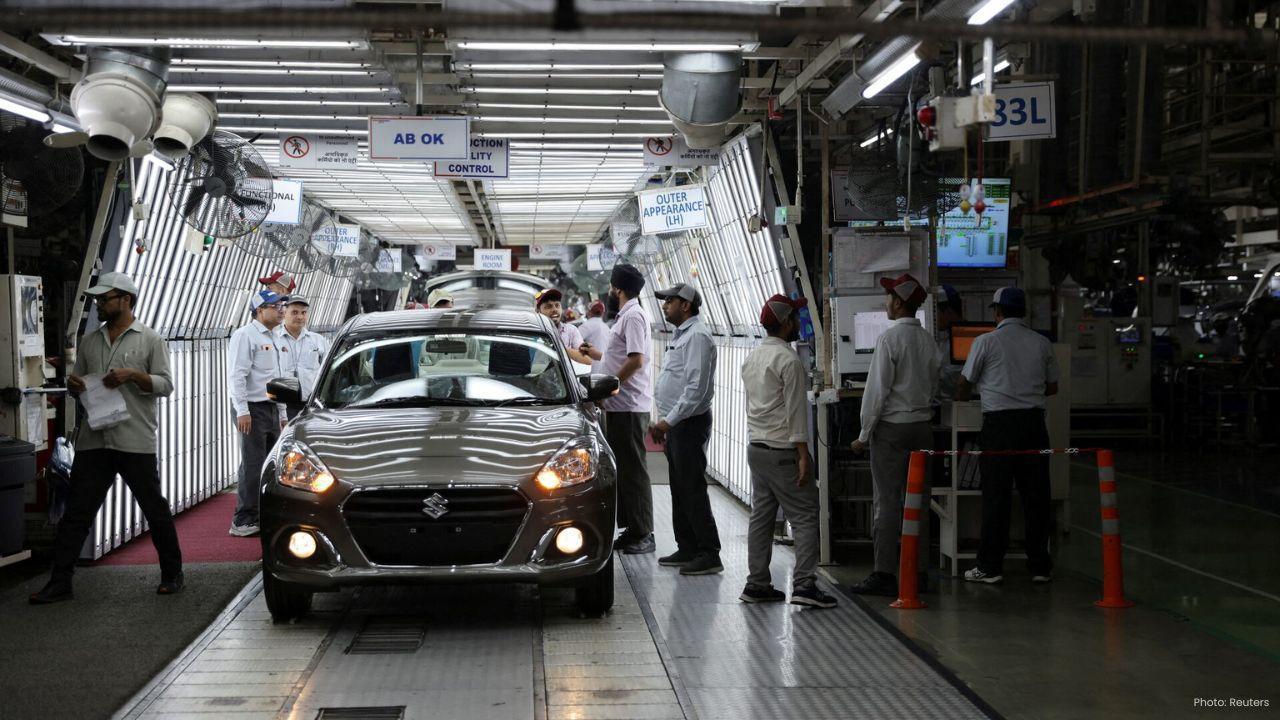
Real factory floors are buzzing with activity across electronics, pharmaceuticals, food processing, and automotive components, with production moving from simple assembly to value addition. Apple suppliers, for example, have scaled iPhone assembly in India, signaling the country’s rise as a strategic electronics manufacturing hub beyond low-cost assembly. In the first half of 2025, Apple’s exports from India surged, underlining this transformation.
Similarly, the automotive sector is undergoing a shift from internal combustion engines to electrification. Tata Motors is localizing battery sourcing and developing the ecosystem necessary for competitive domestic and export markets. These investments generate jobs across skill levels, from assembly line workers to software engineers in vehicle controls. The smartphone value chain also exemplifies this transformation, positioning India as a leading exporter in select markets in 2025.
Manufacturing: The ‘Third Engine’
Manufacturing can offset services-driven slowdowns for three key reasons:
Diversified Market Risk: Unlike services reliant on a few foreign markets, manufacturing sales can span multiple countries, reducing vulnerability to geopolitical shocks such as visa fees.
Wider Employment Creation: High-value service jobs are skill-heavy and urban-centric, while manufacturing generates mass employment in smaller towns and cities, fostering inclusive growth.
Domestic Supplier Ecosystem: Manufacturing drives linkages across finance, logistics, education, and R&D, creating an industrial multiplier effect that services alone rarely achieve.
However, challenges remain. Manufacturing’s GDP share has yet to rise dramatically, with structural constraints such as land scarcity, regulatory bottlenecks, and supply chain limitations slowing scale-up. Delays in PLI project implementation and global tariff volatility add to the risk, highlighting the need for sustained policy support.
Policy, Politics, and Practicalities
Modi 3.0’s emphasis on manufacturing integrates climate goals, technology adoption, and export orientation into a coherent roadmap. To succeed, India must:
Convert PLI approvals into operational plants by easing land and power bottlenecks and streamlining customs.
Align skilling programs with employer needs to ensure workforce readiness matches capital investment.
Maintain an open investment climate, instilling confidence in multinational firms to bring high-end assembly and critical components to India.
If executed well, India could achieve a diversified export basket, robust job creation, and a growth model resilient to global shocks. The $100,000 H-1B fee serves as both a warning and an opportunity: a reminder of the vulnerability of services and a nudge to accelerate the manufacturing renaissance already underway.
India’s future does not require choosing between services and manufacturing. Instead, a balanced approach—maintaining innovation-intensive service growth while building a resilient, exportable manufacturing base—can stabilize growth, create jobs, and multiply value-addition. The pivot has begun, and if execution aligns with policy intent, manufacturing may well become the stabilizer India needs in a challenging global environment.
India manufacturing growth, H-1B visa impact, electronics exports



Advances in Aerospace Technology and Commercial Aviation Recovery
Insights into breakthrough aerospace technologies and commercial aviation’s recovery amid 2025 chall

Defense Modernization and Strategic Spending Trends
Explore key trends in global defense modernization and strategic military spending shaping 2025 secu

Tens of Thousands Protest in Serbia on Anniversary of Deadly Roof Collapse
Tens of thousands in Novi Sad mark a year since a deadly station roof collapse that killed 16, prote

Canada PM Carney Apologizes to Trump Over Controversial Reagan Anti-Tariff Ad
Canadian PM Mark Carney apologized to President Trump over an Ontario anti-tariff ad quoting Reagan,

The ad that stirred a hornets nest, and made Canadian PM Carney say sorry to Trump
Canadian PM Mark Carney apologizes to US President Trump after a tariff-related ad causes diplomatic

Bengaluru-Mumbai Superfast Train Approved After 30-Year Wait
Railways approves new superfast train connecting Bengaluru and Mumbai, ending a 30-year demand, easi




