Post by : Amit
Photo: Reuters
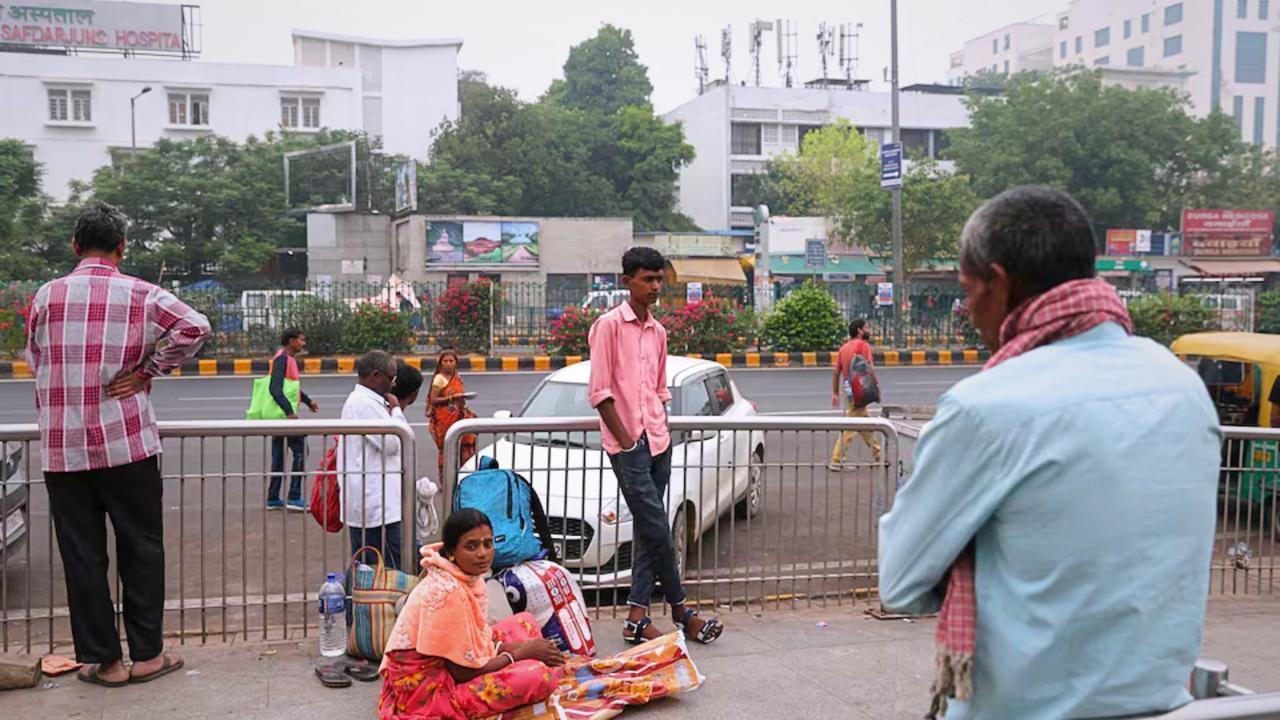
Across India’s bustling cities and quiet towns, a silent crisis unfolds every day on the streets. Pedestrians—the most basic and vulnerable road users—are forced to navigate a system that seems designed for vehicles, not people. What should be the simplest of journeys—walking to work, school, markets, or even for leisure—has become increasingly dangerous, with countless lives lost in the chaos of traffic and the neglect of urban planning.
Every hour, somewhere on India’s vast network of roads, a pedestrian dies. According to recent data, nearly 30,000 pedestrians lost their lives in 2022 alone, making them one of the most at-risk groups on Indian roads. These deaths are not merely statistics; behind every number is a story of a life cut short, a family devastated, and a community left grappling with loss. Yet, despite the alarming scale of the crisis, pedestrian safety remains largely overlooked in transportation policies, infrastructure development, and law enforcement.
One of the most pressing issues lies in the very design of India’s cities and road networks. While walking accounts for nearly 30 to 40 percent of all urban trips, pedestrians are given little space or priority. Footpaths, where they exist, are often narrow, broken, or blocked by parked vehicles, vendors, and construction debris. Zebra crossings and pedestrian signals are scarce or ignored, and the concept of walkability is still alien to many urban development authorities. As a result, crossing a street can feel like a life-or-death gamble, particularly for children, the elderly, and people with disabilities.
The rise in vehicle ownership has only worsened the situation. With more cars, motorcycles, and commercial vehicles on the roads, the pace of urban life has accelerated, often at the expense of those on foot. In many cities, traffic signals favor the smooth flow of vehicles, leaving pedestrians stranded on median strips or dashing across busy intersections. The lack of enforcement of traffic rules further compounds the issue, as drivers frequently ignore pedestrian rights of way without fear of penalty.
While some initiatives have been launched to improve road safety—such as awareness campaigns, speed restrictions in school zones, and better signage—these measures are often piecemeal and inconsistently applied. India’s commitment to the United Nations Decade of Action for Road Safety highlights the need for urgent action, but the ground reality shows that much remains to be done to translate this vision into meaningful change.
Experts argue that the key to making India’s streets safer lies in rethinking urban mobility itself. Cities must prioritize pedestrians, cyclists, and public transportation over private vehicles. Wider, accessible, and obstruction-free footpaths, more pedestrian crossings, traffic calming measures, and strict enforcement of road safety laws can create a safer environment for all. In addition, public awareness and driver education play a crucial role in fostering a culture of respect for pedestrians.
The stakes could not be higher. Every unsafe street not only endangers lives but also discourages walking—one of the healthiest, most sustainable, and affordable forms of transportation. In a country grappling with pollution, traffic congestion, and rising lifestyle diseases, promoting walking is both a public health necessity and an environmental imperative.
The challenge, however, is not just technical—it is deeply cultural. For decades, Indian cities have been built around the convenience of vehicles, not people. Reversing this trend will require political will, visionary leadership, and a fundamental shift in how mobility is viewed and valued.
Until then, millions of Indians will continue to walk the dangerous line, their daily journeys shadowed by the risk that a simple step could be their last.
India, Unsafe Streets



Advances in Aerospace Technology and Commercial Aviation Recovery
Insights into breakthrough aerospace technologies and commercial aviation’s recovery amid 2025 chall

Defense Modernization and Strategic Spending Trends
Explore key trends in global defense modernization and strategic military spending shaping 2025 secu

Tens of Thousands Protest in Serbia on Anniversary of Deadly Roof Collapse
Tens of thousands in Novi Sad mark a year since a deadly station roof collapse that killed 16, prote

Canada PM Carney Apologizes to Trump Over Controversial Reagan Anti-Tariff Ad
Canadian PM Mark Carney apologized to President Trump over an Ontario anti-tariff ad quoting Reagan,

The ad that stirred a hornets nest, and made Canadian PM Carney say sorry to Trump
Canadian PM Mark Carney apologizes to US President Trump after a tariff-related ad causes diplomatic

Bengaluru-Mumbai Superfast Train Approved After 30-Year Wait
Railways approves new superfast train connecting Bengaluru and Mumbai, ending a 30-year demand, easi




