Post by : Amit
Photo : X / Pato Aviador
A Pivotal Aviation Deal Tied to Broader Geopolitical Strategy
In a move that underscores the growing strategic and economic ties between the United States and Southeast Asia, Indonesia has announced its intent to purchase 50 Boeing aircraft, marking a multibillion-dollar investment in the country’s commercial aviation infrastructure. The deal, revealed during a broader U.S.-Indonesia trade discussion, reflects both Jakarta’s ambition to modernize its airlines and Washington’s push to deepen commercial partnerships in the Asia-Pacific.
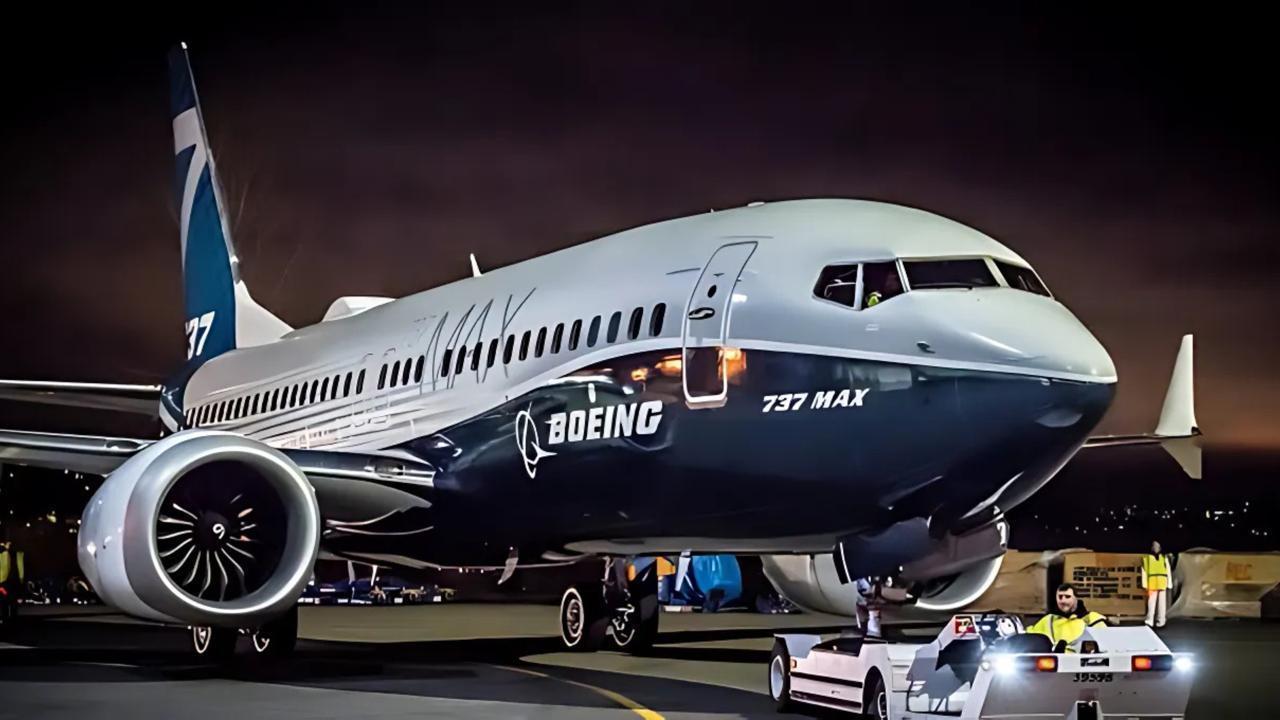
The announcement was made public during a high-profile economic forum in the United States, with former President Donald Trump highlighting the agreement as a flagship example of American manufacturing strength. Although specific aircraft models and delivery schedules have not yet been formally released, industry analysts suggest that the order likely includes a mix of Boeing 737 MAX narrowbodies and potentially some widebody 787 Dreamliners, intended to support both domestic expansion and long-haul connectivity for Indonesian carriers.
Supporting Economic Diplomacy and Industrial Growth
The aircraft deal, while commercial in nature, is deeply entwined with broader geopolitical objectives. As U.S. policymakers look to counterbalance China’s rising influence in the Indo-Pacific, Washington has emphasized trade, technology, and aviation cooperation with regional partners. Indonesia, Southeast Asia’s largest economy and the world’s fourth-most populous country, occupies a pivotal strategic position—both geographically and diplomatically.
“Indonesia is an important partner for the U.S. in both economic and security terms,” a U.S. trade official familiar with the negotiations said. “This deal strengthens our industrial supply chain ties while supporting thousands of American jobs, particularly in aerospace and advanced manufacturing.”
Former President Trump, who was involved in the early stage of the agreement’s announcement, emphasized that the Boeing deal would create or sustain over 10,000 U.S. jobs, many of them in Washington State, Kansas, and South Carolina—Boeing’s key production hubs.
Aviation Growth in Indonesia Driving Fleet Modernization
Indonesia’s appetite for new aircraft is rooted in rapid growth in air travel demand, driven by a burgeoning middle class, tourism expansion, and archipelagic geography that makes aviation indispensable. The country is home to more than 17,000 islands, with many regions only accessible by air.
According to the International Air Transport Association (IATA), Indonesia is expected to be among the top five air travel markets by 2035, with over 300 million passenger journeys forecast annually. Local carriers such as Garuda Indonesia, Lion Air, Citilink, and Batik Air are aggressively upgrading their fleets to meet this demand.
Garuda Indonesia, which is undergoing a major restructuring after years of financial difficulties, is seen as a potential beneficiary of the new Boeing order. Meanwhile, Lion Air, one of the largest operators of the 737 family globally, continues to invest in fuel-efficient jets for its low-cost model.
“This order is both timely and necessary,” said aviation analyst Julius Yudhoyono from Jakarta’s Center for Transport Studies. “Indonesian carriers need modern, efficient aircraft to reduce costs, improve reliability, and meet future environmental standards.”
Boeing’s Strategic Comeback in Asia
The Indonesian order comes at a critical moment for Boeing. After enduring years of turbulence related to the 737 MAX grounding, COVID-19 disruptions, and production delays, the aerospace giant is mounting a comeback, particularly in Asia—a region long dominated by rival Airbus.
Indonesia had previously ordered hundreds of aircraft from Boeing, including a massive 737 MAX order from Lion Air in 2012. However, confidence was shaken following the tragic crash of Lion Air Flight 610 in 2018, one of two deadly MAX accidents that led to a global grounding of the type.
Since then, Boeing has invested heavily in software updates, pilot training enhancements, and global outreach to rebuild trust. The FAA and global regulators cleared the MAX for service after intensive scrutiny, and many operators—including Indonesian airlines—have begun reintroducing the aircraft into their fleets.
“This new commitment from Indonesia is a strong vote of confidence in Boeing’s product portfolio and safety upgrades,” said Richard Aboulafia, an aerospace industry expert with AeroDynamic Advisory. “It also shows the company’s long-standing relationships in Asia are proving resilient.”
Impacts on the U.S. Supply Chain and Employment
Boeing has framed the deal not just as a win for its balance sheet but as a broader victory for U.S. industrial competitiveness. Each commercial aircraft Boeing delivers supports a vast ecosystem of suppliers—over 12,000 companies across 48 U.S. states, according to the company.
Components for the 737 and 787 families come from a diverse array of American manufacturers:
“Every one of these planes represents thousands of skilled labor hours across dozens of American communities,” Boeing CEO Dave Calhoun has previously said. “It’s about exports, jobs, and maintaining U.S. leadership in advanced manufacturing.”
Given the size of the Indonesian order, Boeing is expected to allocate production slots across several years, with some deliveries possibly scheduled for the late 2020s depending on certification and backlog constraints.
Competitive Pressure from Airbus
Despite the momentum, Boeing is not without stiff competition. Airbus has aggressively expanded its footprint in Southeast Asia, with final assembly lines in Tianjin (China) and now Toulouse for the A321XLR—a popular model among Asian LCCs (low-cost carriers). Airbus currently holds a slight lead over Boeing in global single-aisle deliveries.
Earlier this year, Malaysia’s AirAsia placed a significant order for A321neo aircraft, while Vietnam’s VietJet and Philippines’ Cebu Pacific have also leaned heavily toward Airbus.
However, Boeing’s edge lies in deep defense-industrial ties with the U.S. government, something that is often viewed favorably in state-to-state commercial deals. Additionally, Boeing’s newer 737 MAX models—especially the MAX 10—offer strong fuel savings and high-capacity configurations that appeal to dense domestic markets like Indonesia.
“Indonesia values strategic diversification,” said Dr. Rizky Prabowo, an economist at Universitas Indonesia. “They will buy Airbus and Boeing, but this large Boeing deal signals Jakarta’s intention to maintain strong bilateral trade ties with the U.S.”
Aviation Sustainability Goals in Focus
Both Boeing and Indonesian regulators are framing the new aircraft acquisition as aligned with green aviation goals. The newer 737 MAX and 787 models offer 20–25% greater fuel efficiency over older aircraft, contributing to Indonesia’s pledge to reduce aviation emissions under ICAO’s CORSIA framework.
Furthermore, Boeing has partnered with regional stakeholders on sustainable aviation fuel (SAF) development, maintenance training, and pilot capacity building, particularly important for fast-growing aviation markets.
“New aircraft are a bridge to greener aviation,” said Budi Karya Sumadi, Indonesia’s Minister of Transportation. “We are focused on fleet renewal, training, and eventually producing or blending SAF locally.”
Boeing is also exploring joint ventures for engineering and MRO (maintenance, repair, overhaul) capabilities in Southeast Asia, which would further deepen the U.S.–Indonesia aerospace relationship.
A Strategic Win with Long-Term Ripples
Indonesia’s order of 50 Boeing jets is more than just a commercial deal—it is a strategic handshake between two global powers, each seeking to advance its interests through industrial cooperation and shared growth.
For Boeing, the deal reaffirms its place in a competitive Asian market. For Indonesia, it’s a step toward building an aviation sector that can carry its economic ambitions across its vast archipelago and into global airspace.
And for the U.S., it represents a tangible success story of manufacturing diplomacy, where trade deals are crafted not just in boardrooms—but in hangars, on shop floors, and across airways that connect the world.
Indonesia, Usa, Boeing



Advances in Aerospace Technology and Commercial Aviation Recovery
Insights into breakthrough aerospace technologies and commercial aviation’s recovery amid 2025 chall

Defense Modernization and Strategic Spending Trends
Explore key trends in global defense modernization and strategic military spending shaping 2025 secu

Tens of Thousands Protest in Serbia on Anniversary of Deadly Roof Collapse
Tens of thousands in Novi Sad mark a year since a deadly station roof collapse that killed 16, prote

Canada PM Carney Apologizes to Trump Over Controversial Reagan Anti-Tariff Ad
Canadian PM Mark Carney apologized to President Trump over an Ontario anti-tariff ad quoting Reagan,

The ad that stirred a hornets nest, and made Canadian PM Carney say sorry to Trump
Canadian PM Mark Carney apologizes to US President Trump after a tariff-related ad causes diplomatic

Bengaluru-Mumbai Superfast Train Approved After 30-Year Wait
Railways approves new superfast train connecting Bengaluru and Mumbai, ending a 30-year demand, easi




