Post by : Amit
Photo : X / Megatron
A Maritime Dispute Resolved
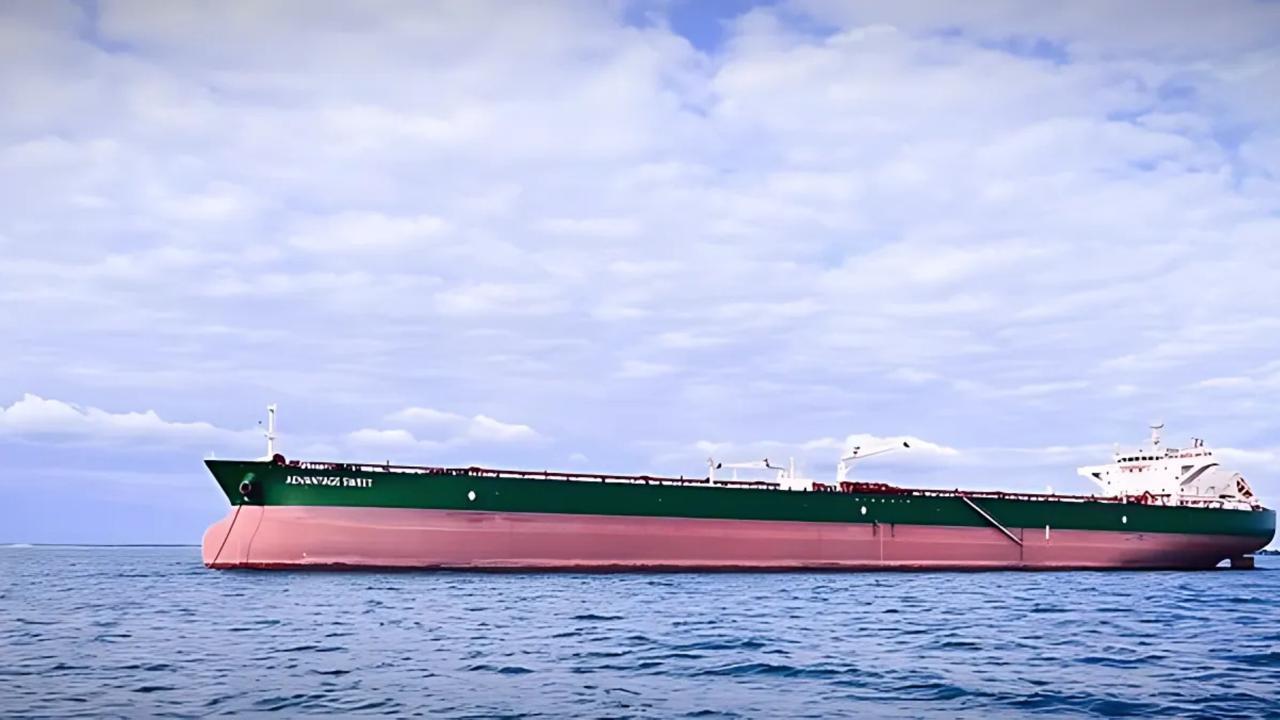
In a decision that brings relief to the international shipping community, Iraq has officially released an oil tanker it detained for several weeks amid suspicions of oil smuggling. The vessel, whose identity remains undisclosed by authorities, had been held in Iraqi waters as part of a broader crackdown on illegal fuel transfers.
The move to free the ship follows an exhaustive investigation by Iraq’s Ministry of Oil and maritime security agencies, which concluded there was insufficient evidence to pursue criminal charges. This resolution comes after a tense period of uncertainty for the tanker’s owners, operators, and crew — and highlights the delicate balance Iraq must maintain between protecting its oil revenue and ensuring smooth commercial operations in one of the world’s most strategically important shipping regions.
The Incident: Detention in the Gulf
The tanker was intercepted by Iraqi naval patrols earlier this summer in the northern Gulf, close to the approaches to Iraq’s main oil export terminals. Officials suspected that the vessel had been engaged in unauthorized loading activities from smaller feeder ships operating without proper licenses.
Once boarded, Iraqi authorities escorted the ship to a secure anchorage, where it remained under guard pending investigation. In an official statement at the time, the Ministry of Oil stressed that such actions were part of an intensified campaign to curb oil theft and smuggling — a problem that costs Iraq millions of dollars annually.
Why Smuggling Is Such a Threat to Iraq’s Economy
Oil smuggling is not a minor issue in the Gulf; for Iraq, it’s a direct attack on its primary source of national income. The country exports over 3 million barrels of crude per day, and even small-scale illegal diversions can amount to substantial financial losses. Smuggled oil is often sold at discounted rates, undermining market prices and depriving Baghdad of export revenue that is vital for public spending and reconstruction.
Smuggling operations in the region are sophisticated, often involving “dark fleet” tactics — switching off Automatic Identification Systems (AIS), conducting ship-to-ship transfers at sea, and falsifying paperwork. Many use older, smaller tankers to move the oil to offshore rendezvous points where it is transferred to larger carriers bound for foreign ports.
The Investigation: From Suspicion to Clearance
Following the tanker’s detention, a multi-agency investigative team examined its cargo manifests, navigational records, and fuel samples. Authorities also conducted in-depth interviews with the ship’s multinational crew, providing translators and legal assistance in accordance with the International Maritime Organization’s (IMO) guidelines.
Sources with knowledge of the case told The Maritime Executive that while some irregularities were found in the vessel’s documentation, these were classified as administrative oversights rather than deliberate attempts to disguise illicit cargo. Fuel tests confirmed that the oil had originated from legitimate sources, and there was no conclusive evidence of unauthorized transfers in Iraqi waters.
With these findings, the Iraqi government determined that the case did not warrant prosecution, and the ship was cleared to resume its commercial operations.
Diplomacy Behind the Scenes
While the investigation unfolded, diplomatic channels between Iraq and the tanker’s flag state were active. Officials from both sides worked to ensure the matter was handled without escalating into a political dispute. Maritime analysts suggest that the flag state’s prompt engagement — combined with Iraq’s willingness to conclude the case based on evidence rather than suspicion — helped prevent a drawn-out standoff.
Such situations are sensitive in the Gulf, where multiple nations share contested maritime boundaries, and vessel seizures can quickly become flashpoints for diplomatic tension.
Impact on the Crew
For the crew, the detention period was far from routine. Confined to the vessel under Gulf summer conditions — where deck temperatures can exceed 50°C — their welfare became a concern for maritime unions and welfare organizations. Shore leave was restricted, and although supplies were replenished regularly, the uncertainty about their future created a stressful environment.
The ship’s operating company has indicated that it will rotate the crew at the next major port, allowing those who endured the detention to rest before returning to duty.
Industry Reactions: Relief, but With Caution
The release was welcomed by shipowners and charterers, but industry leaders remain cautious. “While we’re glad this incident ended without charges, the risks for commercial shipping in Iraqi waters are real,” noted a Gulf-based maritime legal advisor. “Operators need to maintain impeccable compliance records and remain vigilant about local enforcement trends.”
Some insurers have also signaled that detentions like this could affect risk assessments, potentially raising premiums for vessels calling at Iraqi ports or transiting nearby anchorages.
Iraq’s Anti-Smuggling Efforts in Context
This case is part of a broader pattern. Over the past two years, Iraq has increased its investment in maritime surveillance technologies, including satellite tracking and advanced radar systems, to monitor vessel movements near its oil terminals. The government is also exploring blockchain-based cargo verification to make it harder for smugglers to falsify shipping records.
Neighboring countries such as Kuwait, Iran, and the UAE are engaged in similar efforts, recognizing that smuggling often spans multiple jurisdictions and requires coordinated enforcement.
Challenges in Proving Maritime Smuggling
Prosecuting smuggling cases is notoriously difficult. Proving intent to smuggle often requires more than finding oil on board a vessel — investigators must show that it was obtained illegally or destined for unauthorized buyers. Complex corporate ownership structures and transnational crew rosters can also make legal proceedings more complicated.
Moreover, some smugglers exploit regulatory gaps in areas where maritime boundaries are disputed or poorly enforced, making interdiction more politically sensitive.
Future Implications for Shipping in the Gulf
The outcome of this case could set a precedent for how similar incidents are handled. Maritime lawyers believe it shows that Iraq is willing to release vessels when evidence does not support charges — an important signal for maintaining international confidence in its ports.
However, they also warn that enforcement will likely become stricter, not looser, as Iraq seeks to protect its oil revenue. This could mean more frequent inspections, document checks, and boarding operations for tankers operating in the region.
Expert Opinions on Moving Forward
Captain Rami Al-Khalidi, a retired Gulf port authority official, told industry reporters that “the best defense for shipowners is proactive compliance — verifying cargo origins, keeping AIS active, and avoiding high-risk transfer zones.” He also emphasized that investing in crew training on local regulations can prevent misunderstandings that lead to detentions.
Maritime economist Laila Hassan added that preventing smuggling is also about stabilizing oil prices and protecting Iraq’s reputation as a reliable exporter: “Incidents like this, even when resolved, remind global markets that the Gulf is a high-stakes environment for energy shipping.”
A Delicate Balance Ahead
The release of the tanker ends a chapter that could have spiraled into a prolonged dispute. It highlights Iraq’s dual challenge: cracking down on illicit oil trade while keeping legitimate shipping operations running smoothly. For the crew, it’s a personal relief; for the industry, it’s a reminder of the operational and legal complexities of Gulf shipping.
As Iraq continues to tighten maritime security, shipping companies will need to adapt — ensuring that every voyage into its waters is backed by rigorous compliance, transparent documentation, and clear operational protocols. The stakes are too high, both economically and diplomatically, for mistakes to be made.
Iraq tanker release, Oil smuggling investigation



Advances in Aerospace Technology and Commercial Aviation Recovery
Insights into breakthrough aerospace technologies and commercial aviation’s recovery amid 2025 chall

Defense Modernization and Strategic Spending Trends
Explore key trends in global defense modernization and strategic military spending shaping 2025 secu

Tens of Thousands Protest in Serbia on Anniversary of Deadly Roof Collapse
Tens of thousands in Novi Sad mark a year since a deadly station roof collapse that killed 16, prote

Canada PM Carney Apologizes to Trump Over Controversial Reagan Anti-Tariff Ad
Canadian PM Mark Carney apologized to President Trump over an Ontario anti-tariff ad quoting Reagan,

The ad that stirred a hornets nest, and made Canadian PM Carney say sorry to Trump
Canadian PM Mark Carney apologizes to US President Trump after a tariff-related ad causes diplomatic

Bengaluru-Mumbai Superfast Train Approved After 30-Year Wait
Railways approves new superfast train connecting Bengaluru and Mumbai, ending a 30-year demand, easi




