Post by : Amit
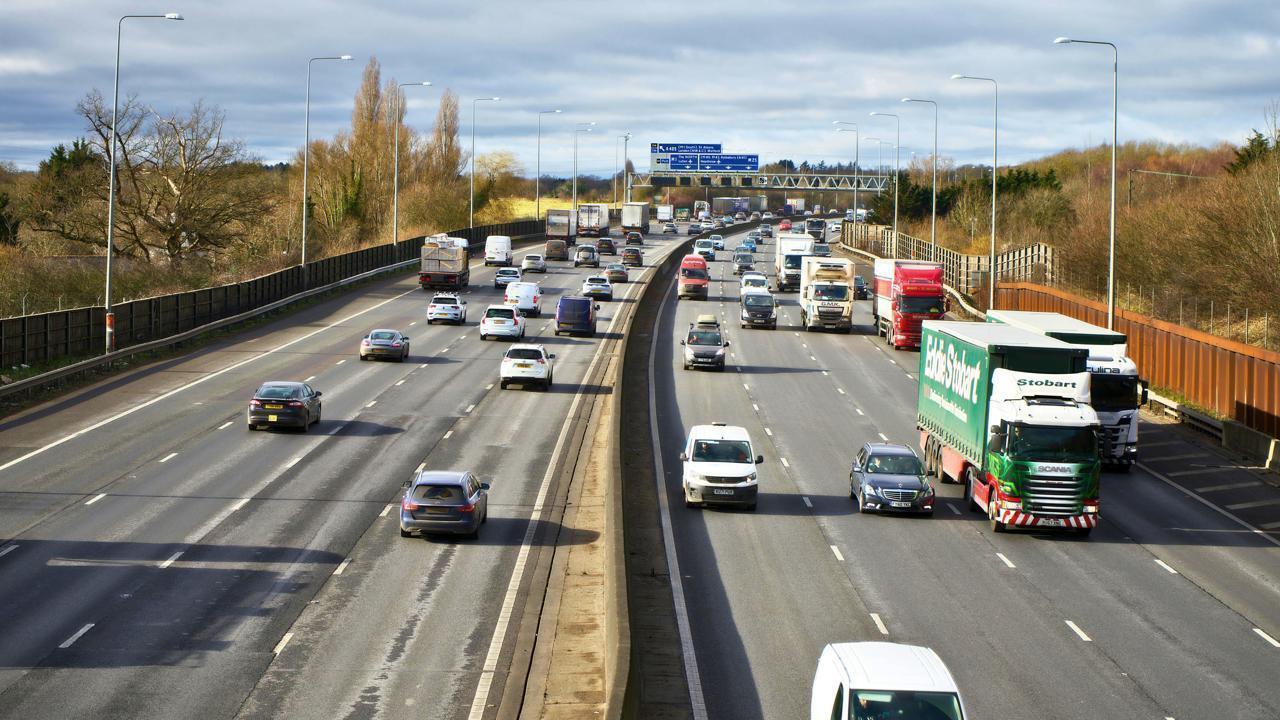
A new high-tech chapter in road enforcement quietly unfolded on a sunlit stretch of Italy’s A1 motorway between Florence and Bologna. In a matter of just 20 minutes, traffic police remotely inspected tachograph data from 80 heavy-duty trucks—a task that would’ve taken hours, possibly an entire day, using traditional manual checks.
The demonstration, attended by media and organized by Italy’s Traffic Police in coordination with the Ministry of Infrastructure and Transport, showcased the full operational capability of Remote Tachograph Monitoring (RTM) technology powered by DSRC (Dedicated Short-Range Communication). What was once a tedious, one-truck-at-a-time procedure is rapidly becoming an automated, data-driven sweep—capable of scanning entire fleets in minutes.
This isn’t a pilot project or a glimpse into a distant future. It’s happening now. And it’s not just Italy.
"Where previously we could check one vehicle, today we analyse dozens and only stop those that really need it," said Davide Leone, Operations Commissioner of the Florence Traffic Police. His words echo the seismic shift underway in how EU countries enforce freight movement regulations under the Mobility Package, a sweeping legislative effort to standardize and modernize road transport rules across the block.
With the deployment of this technology, manual inspections are no longer the first line of defense. Instead, officers now rely on real-time data streamed wirelessly from trucks equipped with second-generation smart tachographs—known as Smart Tacho 2.0—to remotely detect irregularities ranging from illegal driving hours to suspected tampering.
“Thanks to remote access to data, we can focus solely on vehicles where the system has detected anomalies,” Leone added. This targeted, data-first approach not only saves enormous time and human resources, but also helps police avoid unnecessary stops—a major relief to compliant drivers and a potent new tool against fraudulent ones.
The heart of the system is the DSRC link, a short-range wireless communication bridge between moving trucks and roadside enforcement units. As a truck passes a checkpoint, its smart tachograph broadcasts a bundle of 25 real-time parameters—up from just 19 in the first generation of devices.
These parameters allow authorities to identify possible breaches such as driving over legal time limits, operating without a driver card, uncalibrated tachographs, power failures, mismatches between speed and movement data, and signs of tampering. Each of these data points helps paint a near-instant profile of whether the vehicle is operating within legal limits.
A vehicle is only stopped for inspection if red flags are raised, eliminating guesswork and minimizing disruption for compliant hauliers. And while detection is rapid, enforcement remains human. Remote detection does not automatically result in a fine; it simply flags the vehicle for physical inspection, where officers confirm the breach and determine whether penalties apply.
While Italy only recently unveiled its full DSRC-enabled capabilities in June 2023, the country is far from the first to step into this space. The EU mandated that all enforcement bodies must be equipped to remotely access tachograph data from August 19, 2024—a deadline most countries are now racing to meet.
Poland led the charge, deploying DSRC inspection tools as early as November 2021. They were followed by Germany (Saxony), the Netherlands, and then Denmark, the United Kingdom, Belgium, France, Austria, Catalonia, Spain, Germany nationwide, and several others. The Czech Republic, Finland, and Sweden have also adopted the technology, making DSRC enforcement no longer an outlier, but a continental norm.
The stakes are high. Road freight is the lifeblood of the European economy, but it's also a sector plagued by long-standing issues: driver fatigue, rule circumvention, and unfair competition from non-compliant operators.
Smart tachographs and remote inspection tech address all of these—without clogging highways with stop-checks or overwhelming enforcement officers with paperwork. By using digital triggers and remote data to identify high-risk vehicles, police can crack down on the worst offenders while allowing law-abiding transporters to keep rolling.
This also sends a clear message: the era of analog enforcement is over. The future belongs to smart, automated, and fair regulation—driven by technology but executed with precision on the ground.
Italy’s demonstration on the A1 wasn’t just a media show—it was a proof of capability. With DSRC now part of their enforcement arsenal, Italian police are expected to ramp up roadside deployments in the months leading up to the August 2024 EU compliance deadline. Already, coordination is underway to integrate the system with mobile patrols and fixed surveillance units.
But the broader message goes far beyond one country’s borders. As more nations bring their DSRC units online and Smart Tacho 2.0 becomes the new standard for commercial fleets, remote enforcement will reshape how compliance, safety, and fairness are ensured across Europe.
From Florence to Frankfurt, from Gdańsk to Girona, a quiet revolution is rolling across the roads—and the smart tachograph is in the driver’s seat.
Italy, DSRC



Advances in Aerospace Technology and Commercial Aviation Recovery
Insights into breakthrough aerospace technologies and commercial aviation’s recovery amid 2025 chall

Defense Modernization and Strategic Spending Trends
Explore key trends in global defense modernization and strategic military spending shaping 2025 secu

Tens of Thousands Protest in Serbia on Anniversary of Deadly Roof Collapse
Tens of thousands in Novi Sad mark a year since a deadly station roof collapse that killed 16, prote

Canada PM Carney Apologizes to Trump Over Controversial Reagan Anti-Tariff Ad
Canadian PM Mark Carney apologized to President Trump over an Ontario anti-tariff ad quoting Reagan,

The ad that stirred a hornets nest, and made Canadian PM Carney say sorry to Trump
Canadian PM Mark Carney apologizes to US President Trump after a tariff-related ad causes diplomatic

Bengaluru-Mumbai Superfast Train Approved After 30-Year Wait
Railways approves new superfast train connecting Bengaluru and Mumbai, ending a 30-year demand, easi




