Post by : Amit
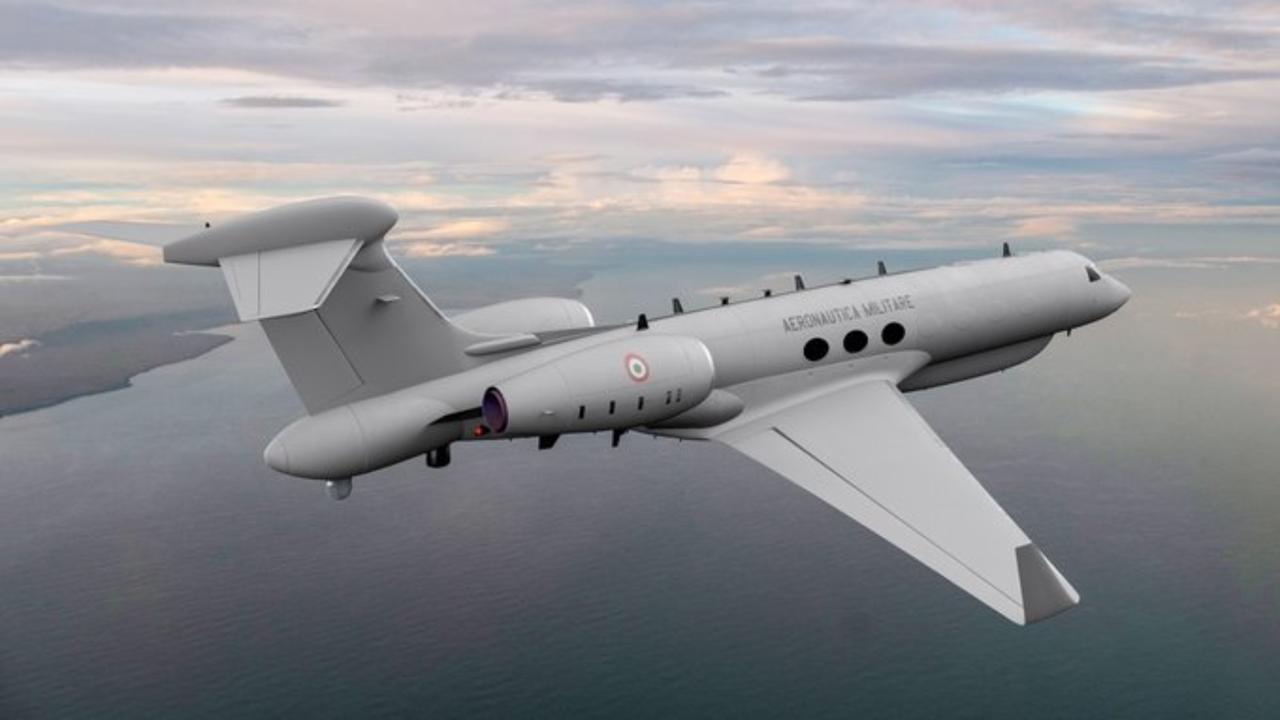
Photo : X / The Aviationist
A Strategic Leap in Defense Capabilities
Italy has taken a decisive step to reinforce its aerial surveillance and electronic warfare capabilities by signing a landmark €300 million (approx. USD 330 million) contract with U.S. defense technology firm L3Harris Technologies. The agreement, finalized on July 25, 2025, will see Italy acquire two advanced EA-37B reconnaissance aircraft — a significant investment in intelligence, surveillance, and reconnaissance (ISR) capabilities for the Italian Air Force.
The EA-37B aircraft, formerly known as the EC-37B Compass Call II, are next-generation airborne electronic attack platforms designed to disrupt, degrade, and deny enemy communications and radar systems. Italy becomes the first international customer for the EA-37B, making the deal not only financially significant but geopolitically symbolic.
A New Chapter in Italy-U.S. Defense Ties
This purchase reflects deepening defense collaboration between Italy and the United States, particularly as global security concerns shift increasingly toward advanced cyber-electronic and hybrid warfare. The deal follows months of negotiations and site visits to L3Harris’s facilities in Greenville, Texas, where the aircraft are being developed and tested.
According to Italy’s Ministry of Defence, the contract includes full mission system integration, pilot and ground crew training, logistics support, and a phased delivery schedule extending into 2027. The Italian Air Force is expected to operate the aircraft from the Pratica di Mare airbase near Rome.
What is the EA-37B?
The EA-37B is based on the Gulfstream G550 business jet airframe, modified extensively to house sophisticated electronic warfare systems. It replaces the aging EC-130H Compass Call used by the U.S. Air Force. The EA-37B incorporates software-defined architecture, modular payloads, and adaptive jamming technologies capable of interfering with hostile communications, radar installations, and even GPS systems.
This platform is critical in modern joint operations, as it provides real-time situational awareness and electronic suppression over hostile environments. The EA-37B is expected to form the backbone of NATO’s electronic warfare capabilities in the coming decade.
Why Italy Needs the EA-37B Now
Italy’s acquisition comes at a time of heightened tensions across Europe and the Mediterranean. Italy has been actively supporting NATO operations in Eastern Europe following Russia’s invasion of Ukraine and is seeking to modernize its military posture in response to emerging hybrid threats. The country has also increased its defense spending, in line with NATO's 2% GDP guideline, with a growing emphasis on digital and electronic defense assets.
“Acquiring the EA-37B signals Italy’s readiness to play a more central role in joint intelligence and deterrence missions. It enhances our capacity to operate in contested environments and protect critical European airspace,” stated Admiral Giuseppe Cavo Dragone, Chief of the Italian Defence Staff, during the official signing ceremony.
Industrial Benefits and Technology Transfer
The deal includes significant offsets for Italian industry, notably in maintenance, systems training, and partial assembly of ground control units. Italian defense companies such as Leonardo and Elettronica are reportedly involved in support roles, providing local expertise in signal processing and mission systems integration. While the EA-37B’s core systems remain proprietary to L3Harris, Italy will benefit from valuable technology transfer agreements, particularly around EW (electronic warfare) simulation and training systems.
This opens new pathways for Italy’s industrial base to co-develop future ISR platforms or upgrades, increasing the country’s self-reliance in high-tech defense manufacturing.
A NATO Force Multiplier
Italy’s EA-37Bs are not just national assets; they are expected to operate in NATO-integrated command structures. Their capabilities will likely be used in alliance-wide surveillance missions, support of EU maritime patrols, and deterrence efforts along the eastern flank.
By introducing these platforms, Italy enhances NATO’s resilience in non-kinetic operations such as cyber defense, signal intelligence (SIGINT), and electronic countermeasures. The aircraft can also serve as critical tools in asymmetric scenarios such as anti-terrorism operations in North Africa or maritime surveillance missions in the Mediterranean.
Delivery Timeline and Training
The first EA-37B unit is expected to be delivered in Q2 of 2026, with the second aircraft arriving by early 2027. Italian pilots and systems operators will begin training in the U.S. by early 2026 at L3Harris’s Airborne Systems Integration Lab (ASIL) in Texas. A tailored training curriculum will prepare Italian crews for multi-domain operations in electronic warfare, SIGINT, and communications denial.
The contract also includes 10 years of logistics support, including spare parts, system upgrades, and remote diagnostics. This ensures operational continuity and mission readiness for the aircraft well into the 2030s.
Expert Opinions: A Shift Toward Multi-Domain Warfare
Defense analysts consider the EA-37B acquisition a smart, future-forward decision. “Italy is investing in next-gen capabilities that don't just extend their physical reach but deepen their digital advantage,” said Elena Russo, a military strategy researcher at the European Centre for Security Policy. “The EA-37B gives Italy—and NATO by extension—a crucial edge in electronic combat scenarios.”
In addition, retired Italian Air Force General Marco Bellini noted: “Traditional fighter jets win air superiority. But platforms like the EA-37B ensure information superiority, which is even more critical in today’s battlespace.”
Beyond Surveillance: Shaping Tomorrow’s Doctrine
This move also signals a change in Italy’s military doctrine. While ISR aircraft were traditionally seen as passive intelligence-gathering tools, the EA-37B is actively disruptive — capable of jamming enemy signals, blinding adversary radars, and manipulating the electromagnetic spectrum. It will redefine how Italy perceives and deploys air power, combining stealth, digital intelligence, and psychological warfare into a single airborne asset.
Additionally, this acquisition aligns with Italy's ambitions under the European Sky Shield Initiative (ESSI), where it hopes to contribute more significantly to continental defense with interoperable, tech-enabled systems.
A Calculated Strategic Move
Italy’s €300 million investment in two EA-37B aircraft represents more than just a procurement milestone — it's a strategic bet on the future of warfare. As electronic and cyber warfare increasingly shape modern conflicts, having advanced EW assets gives Italy a commanding voice within NATO, EU defense policy, and regional security architectures.
In a world where invisible battles over airwaves and data streams define national security, the EA-37B offers Italy a powerful new shield — and an even sharper sword.
Italy, L3Harris, EA-37B Surveillance Aircraft



Advances in Aerospace Technology and Commercial Aviation Recovery
Insights into breakthrough aerospace technologies and commercial aviation’s recovery amid 2025 chall

Defense Modernization and Strategic Spending Trends
Explore key trends in global defense modernization and strategic military spending shaping 2025 secu

Tens of Thousands Protest in Serbia on Anniversary of Deadly Roof Collapse
Tens of thousands in Novi Sad mark a year since a deadly station roof collapse that killed 16, prote

Canada PM Carney Apologizes to Trump Over Controversial Reagan Anti-Tariff Ad
Canadian PM Mark Carney apologized to President Trump over an Ontario anti-tariff ad quoting Reagan,

The ad that stirred a hornets nest, and made Canadian PM Carney say sorry to Trump
Canadian PM Mark Carney apologizes to US President Trump after a tariff-related ad causes diplomatic

Bengaluru-Mumbai Superfast Train Approved After 30-Year Wait
Railways approves new superfast train connecting Bengaluru and Mumbai, ending a 30-year demand, easi




