Post by : Amit
Photo : X / Rukiga F.M
Italy to Build World's Largest Suspension Bridge Linking Mainland to Sicily, Slashing Travel Time to 10 Minutes
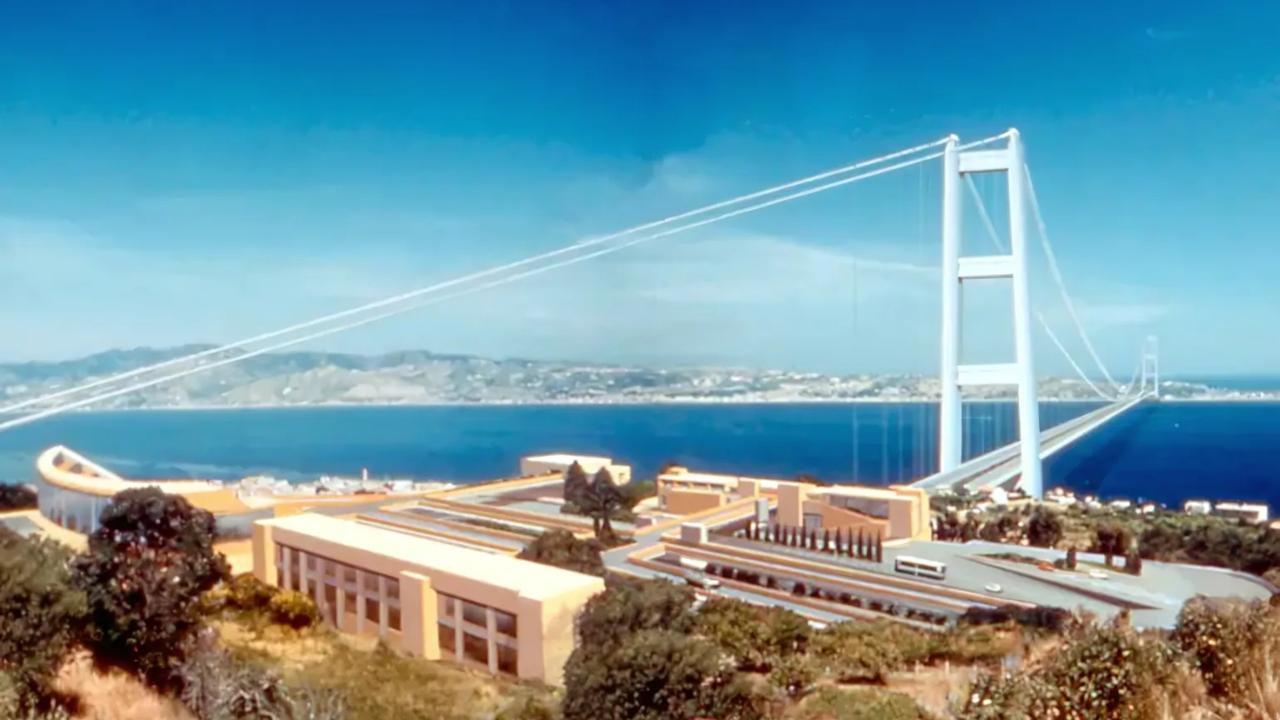
In a landmark infrastructure move set to transform southern Italy, the Italian government has greenlit plans to build the world’s largest suspension bridge spanning the Strait of Messina. This ambitious project will directly connect the Italian mainland with the island of Sicily, cutting current travel times from over an hour by ferry to just 10 minutes by road. The bridge is poised to become a defining symbol of Italian engineering prowess while significantly boosting economic integration, tourism, and transport efficiency in the region.
Bridging a Historic Divide
The Strait of Messina, a narrow waterway separating Sicily from the mainland city of Reggio Calabria, has long represented both a geographic and symbolic divide. Currently, travelers and freight must rely primarily on ferries to cross the strait, which is approximately 3.3 kilometers wide at its narrowest point but notorious for strong currents and challenging weather conditions. The ferry crossing typically takes between 30 minutes to over an hour, depending on the service and weather.
The new suspension bridge project, sometimes referred to as the “Messina Bridge,” will dramatically alter this dynamic. Designed to be the longest suspension bridge in the world, the structure will span nearly 3.3 kilometers with a central span surpassing 3,300 meters — exceeding the length of existing giants like Japan’s Akashi Kaikyō Bridge. This engineering marvel will allow vehicles to cross directly between the mainland and Sicily, opening a new era of seamless connectivity.
Engineering and Design Ambitions
Italy’s transport authorities have engaged top engineering firms to design a bridge that not only pushes the limits of modern suspension technology but also addresses the region’s seismic activity and environmental sensitivities. The Strait of Messina lies in a highly active earthquake zone, so ensuring the bridge’s resilience against seismic events has been a paramount concern in the design phase.
Innovative materials and flexible structural systems are being proposed to allow the bridge to withstand strong winds, seismic shocks, and other natural forces. The design also includes aesthetic considerations to ensure that the bridge complements the stunning coastal landscape, which is steeped in history and natural beauty.
The bridge will feature multiple lanes to accommodate high volumes of passenger vehicles, freight trucks, and public transit options. Alongside the roadway, pedestrian and cycling paths are also under consideration to promote sustainable and inclusive transport modes.
Economic and Social Impact
The new Messina Bridge is expected to have profound economic benefits for southern Italy, a region that has historically faced challenges related to connectivity, investment, and development. By drastically reducing travel time and increasing transport capacity, the bridge will facilitate smoother logistics flows, enhance trade between the mainland and Sicily, and attract greater tourism.
Local industries, including agriculture, manufacturing, and services, stand to gain from improved access to markets and supply chains. The bridge is anticipated to stimulate job creation during its construction and ongoing operation phases, with spillover effects across hospitality, retail, and infrastructure sectors.
Moreover, the project will support the broader European agenda of regional cohesion by integrating Sicily more fully with Italy and continental Europe. This enhanced connectivity aligns with EU priorities to promote balanced regional growth and reduce disparities between northern and southern regions.
Transport and Environmental Benefits
From a transport perspective, the bridge will alleviate pressure on ferry services and reduce congestion in the ports of Messina and Villa San Giovanni. It will provide a reliable, all-weather crossing that is not subject to ferry delays or cancellations due to bad weather, making travel more predictable and efficient for commuters and freight operators.
By enabling faster, more direct road access, the bridge could also reduce emissions linked to idling and slow ferry operations, contributing to Italy’s environmental commitments. The project is designed to incorporate green technologies and minimize ecological disruption, including protective measures for marine habitats and air quality controls.
Environmental assessments are ongoing to ensure that construction and operations adhere to stringent sustainability standards. Authorities have pledged transparency and collaboration with local communities to address concerns and maximize positive outcomes.
Political and Public Perspectives
The Messina Bridge project has been a subject of public debate and political discussion for decades, with previous attempts stalled due to cost concerns, environmental issues, and political opposition. However, recent political consensus and funding commitments have revived the project with renewed vigor.
The current government has framed the bridge as a flagship infrastructure investment to modernize Italy’s transport network and stimulate southern economic development. Public opinion surveys show a growing majority of residents in Sicily and Calabria supporting the bridge due to its potential to improve daily life and economic prospects.
Nevertheless, some environmental groups and local stakeholders continue to urge caution, emphasizing the need for thorough impact studies and sustainable planning. The government has responded by promising rigorous oversight and community engagement throughout the construction process.
Timeline and Funding
Construction is expected to begin within the next few years, following completion of detailed design work and regulatory approvals. The project’s estimated cost runs into several billion euros, with funding sourced from a mix of national government allocations, EU infrastructure funds, and private investment.
Given the scale and complexity, the construction timeline is projected at approximately 7 to 10 years, with phased commissioning of sections to facilitate early use. The government has underscored its commitment to maintaining transparency and fiscal responsibility throughout the project lifecycle.
Global Significance
Once completed, the Messina Bridge will set a new global benchmark for suspension bridge engineering. Its record-breaking central span will join the ranks of iconic infrastructure feats worldwide and potentially serve as a model for other challenging bridge projects in seismically active and environmentally sensitive regions.
The project will highlight Italy’s advanced engineering capabilities and could attract international attention and collaboration in the fields of civil engineering, architecture, and environmental management. The bridge is expected to become a tourist attraction in its own right, drawing visitors eager to experience the world’s longest suspension bridge firsthand.
Future
As Italy embarks on this ambitious infrastructure journey, the Messina Bridge stands as a testament to the country’s vision for a more connected, resilient, and prosperous future. By bridging the historic divide between mainland Italy and Sicily, the project promises to unlock new opportunities for people, businesses, and communities on both sides of the strait.
While challenges remain—from engineering complexities to environmental stewardship and funding logistics—the momentum behind the bridge reflects a shared commitment to progress and innovation. If successful, the Messina Bridge will not only redefine travel in southern Italy but also symbolize the transformative power of infrastructure investment in driving regional development.
Italy suspension bridge, World's largest suspension bridge



Advances in Aerospace Technology and Commercial Aviation Recovery
Insights into breakthrough aerospace technologies and commercial aviation’s recovery amid 2025 chall

Defense Modernization and Strategic Spending Trends
Explore key trends in global defense modernization and strategic military spending shaping 2025 secu

Tens of Thousands Protest in Serbia on Anniversary of Deadly Roof Collapse
Tens of thousands in Novi Sad mark a year since a deadly station roof collapse that killed 16, prote

Canada PM Carney Apologizes to Trump Over Controversial Reagan Anti-Tariff Ad
Canadian PM Mark Carney apologized to President Trump over an Ontario anti-tariff ad quoting Reagan,

The ad that stirred a hornets nest, and made Canadian PM Carney say sorry to Trump
Canadian PM Mark Carney apologizes to US President Trump after a tariff-related ad causes diplomatic

Bengaluru-Mumbai Superfast Train Approved After 30-Year Wait
Railways approves new superfast train connecting Bengaluru and Mumbai, ending a 30-year demand, easi




