Post by : Saif
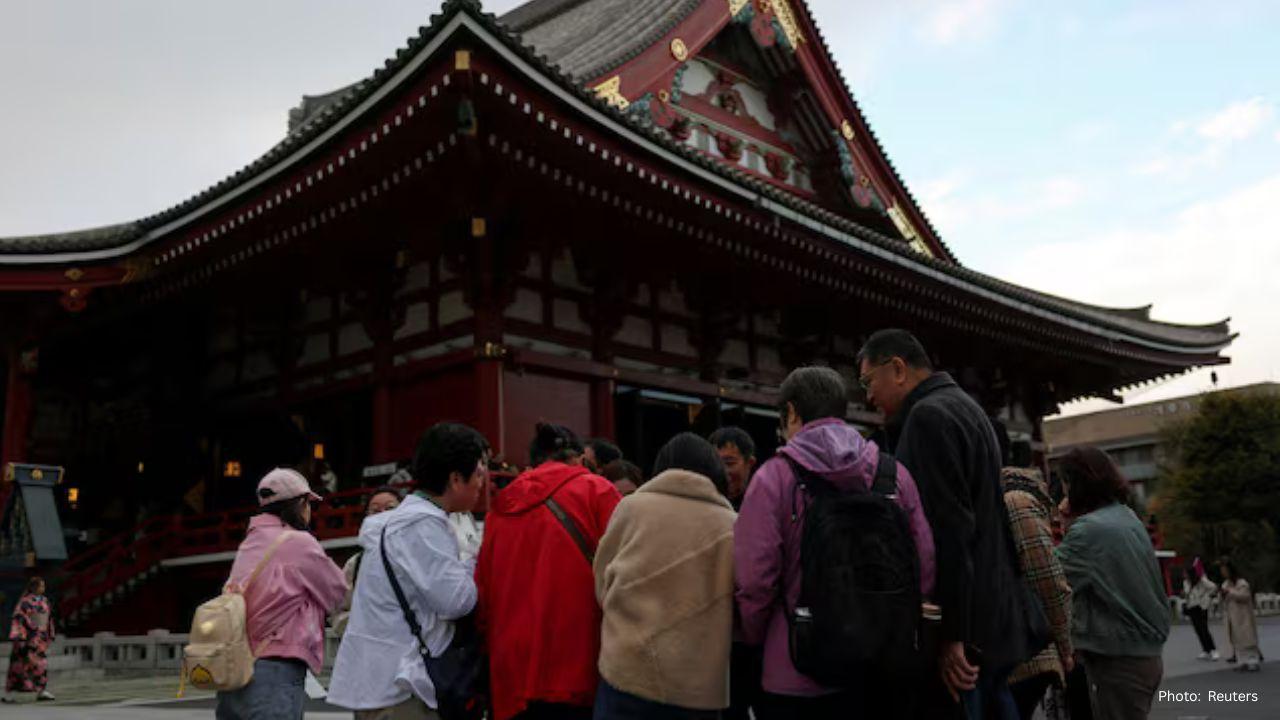
Japan is facing a serious economic setback after China advised its citizens not to travel to the country. The warning came after a diplomatic dispute that began when Japanese Prime Minister Sanae Takaichi made remarks about Taiwan. She said that if China attacked Taiwan in a way that threatened Japan, it could lead to a military response. China reacted strongly to this statement and found it unacceptable. Following this, China told its people that it was not safe to travel to Japan, which immediately caused thousands of tourists to cancel their plans.
This development is especially harmful for Japan because Chinese visitors are extremely important to its tourism industry. Tourists from mainland China and Hong Kong make up around one-fifth of all foreign travelers entering Japan every year. Tourism itself makes up around 7% of the country’s overall economy, so the impact of this sudden drop in visitors is likely to be large and difficult to manage. Businesses that depend heavily on foreign tourists are already feeling the pain. One company in Tokyo, East Japan International Travel Service, said it lost around 80% of its bookings for the rest of the year within just a few days of China’s warning. The company mainly arranges group tours for Chinese tourists, and now its future is uncertain. The vice president, Yu Jinxin, said that the company had never seen such a major loss happen so quickly and that the situation was deeply worrying.
Economists are also sounding the alarm. According to estimates by the Nomura Research Institute, Japan could lose around 2.2 trillion yen, or about $14.23 billion, if the decline in Chinese tourism continues for a full year. More than 10 Chinese airlines have already started offering refunds to passengers who had booked flights to Japan up to December 31, and experts believe that around half a million tickets have already been cancelled. The stock prices of travel and tourism companies in Japan have also fallen sharply since the warning was issued, showing that the market expects long-term damage.
Meanwhile, the diplomatic atmosphere continues to worsen. After Chinese government officials and state media responded with harsh criticism of Prime Minister Takaichi, Japan advised its own citizens living in China to be careful, avoid crowded places, and stay alert for any safety risks. China has also stopped or delayed the screening of upcoming Japanese movies in its cinemas. Some well-known Japanese entertainers with large fan followings in China are now posting messages online to avoid backlash. One popular singer, MARiA, wrote on Chinese social media that China felt like her second home and that she would always support the One China policy.
This is not the first time political tensions have hurt tourism between the two countries. In 2012, when Japan nationalised disputed islands, large protests broke out in China, and travel between the two countries dropped sharply for months. However, business owners fear that this time the situation might last longer and be even more damaging. Yu from the travel service company said that if the current situation lasts one or two months, the company may be able to survive, but if the crisis becomes long-term, the damage could be permanent and extremely serious.
For now, there is no sign of either government backing down. China has demanded a complete withdrawal of Takaichi’s remarks, while Japan says the prime minister’s comments reflect the government’s position and therefore should not be retracted. This suggests that the political dispute could continue for some time. If that happens, Japan’s tourism sector, which was slowly recovering in recent years, may once again face a major setback, and many travel-related businesses may struggle to stay open.
#trending #latest #JapanNews #ChinaJapanRelations #TourismCrisis #Economy #AsiaPolitics #TaiwanIssue #armustnews



Advances in Aerospace Technology and Commercial Aviation Recovery
Insights into breakthrough aerospace technologies and commercial aviation’s recovery amid 2025 chall

Defense Modernization and Strategic Spending Trends
Explore key trends in global defense modernization and strategic military spending shaping 2025 secu

Tens of Thousands Protest in Serbia on Anniversary of Deadly Roof Collapse
Tens of thousands in Novi Sad mark a year since a deadly station roof collapse that killed 16, prote

Canada PM Carney Apologizes to Trump Over Controversial Reagan Anti-Tariff Ad
Canadian PM Mark Carney apologized to President Trump over an Ontario anti-tariff ad quoting Reagan,

The ad that stirred a hornets nest, and made Canadian PM Carney say sorry to Trump
Canadian PM Mark Carney apologizes to US President Trump after a tariff-related ad causes diplomatic

Bengaluru-Mumbai Superfast Train Approved After 30-Year Wait
Railways approves new superfast train connecting Bengaluru and Mumbai, ending a 30-year demand, easi




