Post by : Amit
A Glimpse Into the Future of Indian Rail Travel
In a remarkable development that could redefine the future of rail travel in India, the country is reportedly in talks to bring in Japan’s fastest bullet train — the Shinkansen — capable of speeds over 500 km/h. According to reports circulating in Japanese and Indian media, this revolutionary high-speed train technology might be deployed on the Delhi–Patna corridor, shrinking the journey to just 2.5 hours from the current 12–14 hours.
If implemented, this move will not only mark a technological leap in India’s transport infrastructure but also potentially alter the dynamics of long-distance travel for millions. Let’s explore the full scope of this ambitious plan, how it fits into India’s bullet train vision, and what it could mean for the future of intercity connectivity across the subcontinent.
Shinkansen: More Than Just Speed
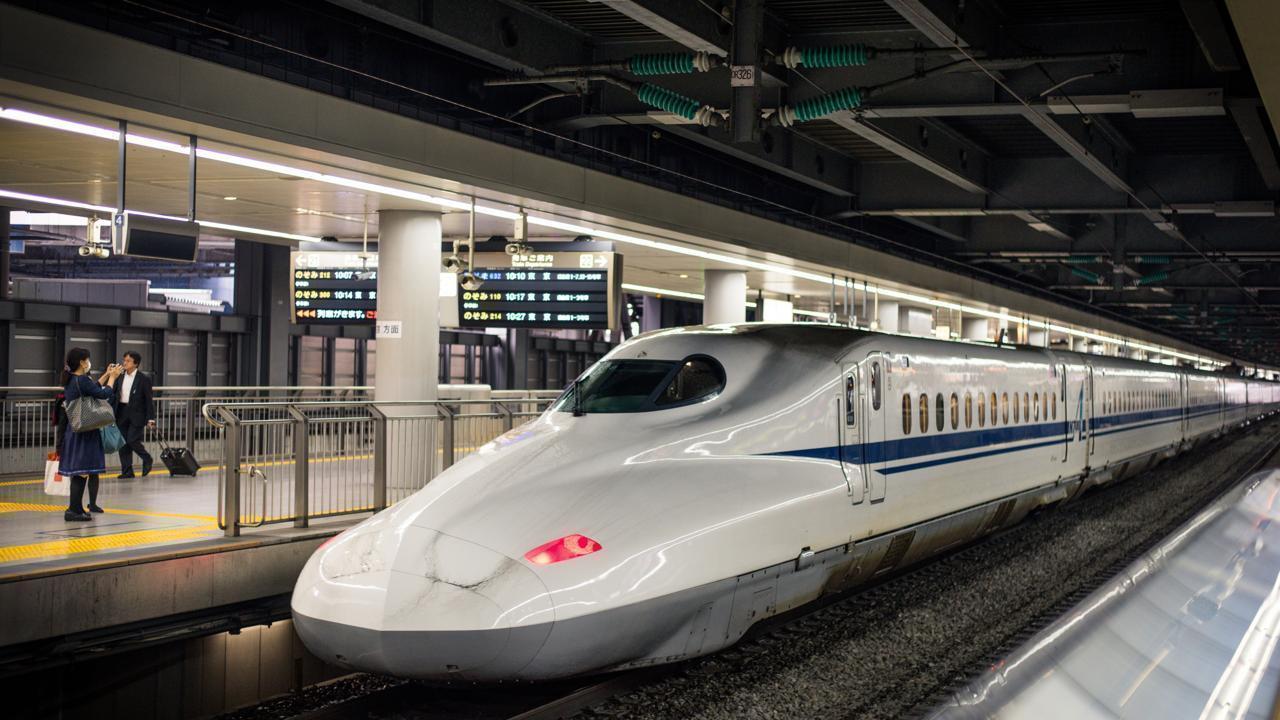
Japan's Shinkansen system — often referred to globally as the "bullet train" — is widely recognized for its blistering speed, unmatched punctuality, and exceptional safety record. Since its debut in 1964, not a single passenger has lost their life due to an accident onboard. Over the years, Shinkansen has evolved significantly, with the latest iteration—the ALFA-X—designed to cruise at 360 km/h during regular operations and test speeds reaching 500 km/h.
The train features aerodynamic innovation, earthquake detection systems, and comfort levels that rival commercial aviation. The Shinkansen’s futuristic appeal has long caught the attention of nations looking to modernize their transport infrastructure, and India has already dipped its toes into this technology through the Mumbai–Ahmedabad high-speed rail corridor, currently under construction with Japanese support.
Delhi to Patna in Just 2.5 Hours: What We Know
Reports from Japanese news platforms suggest that discussions are underway to introduce a Shinkansen route between Delhi and Patna. This is a strategically significant corridor. Delhi, India’s capital, and Patna, the capital of Bihar, are both major political and economic hubs. At present, a rail journey between the two cities takes roughly 12 to 14 hours on the fastest express trains, depending on the route.
Should the Shinkansen be deployed, this time could be reduced to just 2.5 hours — an unprecedented transformation for passengers, particularly business travelers, government officials, and migrant workers. While no official timeline has been confirmed for this new corridor, the very mention of such a possibility has generated significant excitement and curiosity.
Tapping Into High-Speed Potential
The idea of using Japan’s ALFA-X model — a sleek, high-performance train being tested to eventually become the world’s fastest commercial train — represents more than a symbolic upgrade. It aligns with India's broader ambitions of high-speed connectivity under the National Infrastructure Pipeline (NIP), which seeks to modernize public transport and reduce logistical inefficiencies.
India’s existing rail network is among the largest in the world, but it struggles with congestion, outdated equipment, and slow average speeds. Incorporating bullet trains into the network not only elevates the experience for passengers but also relieves pressure from conventional lines, enabling more freight movement and efficient passenger flow.
Infrastructure Readiness: The Big Challenge
However, building a bullet train corridor from Delhi to Patna won’t be as simple as importing rolling stock. High-speed trains require completely dedicated corridors built to exacting safety and engineering standards. Everything — from tracks, stations, signaling systems, to power supplies — needs to be constructed from the ground up, involving enormous financial and human resources.
This level of infrastructural transformation is already evident in the Mumbai–Ahmedabad bullet train project. The ongoing corridor is being laid on elevated viaducts to minimize land acquisition, and the stations are being designed in Japanese architectural style with modern amenities. Similar investments will be necessary for any new route, particularly one as complex as Delhi–Patna, which runs through densely populated regions.
Strategic and Economic Significance
Bihar, despite being one of the poorest states in India, has a high out-migration rate. Patna’s connectivity with the capital is crucial for both economic reasons and governance. If a Shinkansen line is introduced, it will drastically reduce travel fatigue for those commuting to and from the region for work or education, improving labor mobility and regional integration.
It also opens the doors for new economic corridors, where satellite cities can develop along the route. Areas like Varanasi and Prayagraj could benefit significantly as intermediate stops, fostering local commerce, hospitality, and services. Bullet trains, in this context, don’t just carry passengers—they carry developmental promise.
Learning from the Mumbai–Ahmedabad Project
The Mumbai–Ahmedabad High-Speed Rail (MAHSR) project serves as a pilot for bullet train technology in India. Managed by the National High Speed Rail Corporation Limited (NHSRCL), the project has faced delays due to land acquisition issues, COVID-related setbacks, and supply chain bottlenecks.
Despite these hurdles, the progress made is noteworthy. Japanese E5 Series trains — similar in design to Shinkansen — are planned to run on the line. The experience gained from this project will be invaluable for executing future corridors like Delhi–Patna, particularly in procurement, civil construction, training, and station planning.
Financial Footprint and Public-Private Partnerships
Deploying high-speed trains involves staggering costs. The Mumbai–Ahmedabad project is estimated to cost ₹1.1 lakh crore (approximately $15 billion). For the Delhi–Patna route, costs could be comparable or even higher due to the length and terrain. Financing such an initiative will likely require a mix of public funds, Japanese loans, and potentially private partnerships.
Private investors could be brought in for real estate development around new stations, operating concessions, and even train maintenance contracts. This model would echo Japan’s own experience where private sector efficiencies have helped make the Shinkansen network profitable.
Political Will and Public Sentiment
Government support is critical. The Modi administration has demonstrated strong enthusiasm for high-speed rail as a cornerstone of its infrastructure and ‘Make in India’ agenda. Japanese partnerships in this area are also seen as part of broader Indo-Japan strategic ties, involving defense, technology, and trade cooperation.
Public sentiment toward bullet trains is mixed. While many view it as a prestige project showcasing India's global ambition, critics argue that funds could be better allocated to upgrade existing railways, which serve hundreds of millions daily. The answer likely lies in balancing both — bringing high-speed rail to India while simultaneously modernizing legacy lines.
A Symbol of Aspiration
For a country like India, where aspirations often outpace infrastructure, the Shinkansen represents a powerful metaphor for progress. From being associated with slowness and crowding, Indian Railways is slowly beginning to transform into a more modern, efficient, and customer-centric system. The mere announcement of the Delhi–Patna bullet train is indicative of this change in mindset.
The broader vision is not just about speed, but about enabling equal access to time. Saving 10 hours on a journey has profound implications—more time with family, more productivity at work, and greater opportunities for education and healthcare.
What’s Next?
While official confirmation is still awaited, the buzz around Shinkansen’s possible deployment in India is growing stronger. Should feasibility studies and funding plans align, the Delhi–Patna corridor could be the next big leap in India’s bullet train journey. More importantly, it will serve as a litmus test for future lines planned under India’s National High-Speed Rail blueprint.
In parallel, discussions are also emerging around other corridors like Delhi–Varanasi, Chennai–Mysuru, and even extensions to Northeast India. India’s journey to becoming a bullet train nation has just begun, and Japan’s ALFA-X might be the engine that drives this transformation.
Speeding Toward a New Era
From Tokyo to Patna, the idea of Japan’s ALFA-X bullet train slicing across Indian plains is not just a technological marvel—it’s a vision of future mobility. As conversations deepen and feasibility becomes clearer, the possibility of traveling from Delhi to Patna in 2.5 hours could soon move from headlines to timetables.
Until then, the Shinkansen remains a shining aspiration on India’s transport horizon — sleek, swift, and symbolically powerful.
Indian Railways, Japan,



Advances in Aerospace Technology and Commercial Aviation Recovery
Insights into breakthrough aerospace technologies and commercial aviation’s recovery amid 2025 chall

Defense Modernization and Strategic Spending Trends
Explore key trends in global defense modernization and strategic military spending shaping 2025 secu

Tens of Thousands Protest in Serbia on Anniversary of Deadly Roof Collapse
Tens of thousands in Novi Sad mark a year since a deadly station roof collapse that killed 16, prote

Canada PM Carney Apologizes to Trump Over Controversial Reagan Anti-Tariff Ad
Canadian PM Mark Carney apologized to President Trump over an Ontario anti-tariff ad quoting Reagan,

The ad that stirred a hornets nest, and made Canadian PM Carney say sorry to Trump
Canadian PM Mark Carney apologizes to US President Trump after a tariff-related ad causes diplomatic

Bengaluru-Mumbai Superfast Train Approved After 30-Year Wait
Railways approves new superfast train connecting Bengaluru and Mumbai, ending a 30-year demand, easi




