Post by : Amit
Photo : X / Aviation Week
Joby Expands into Defense Through L3Harris Partnership
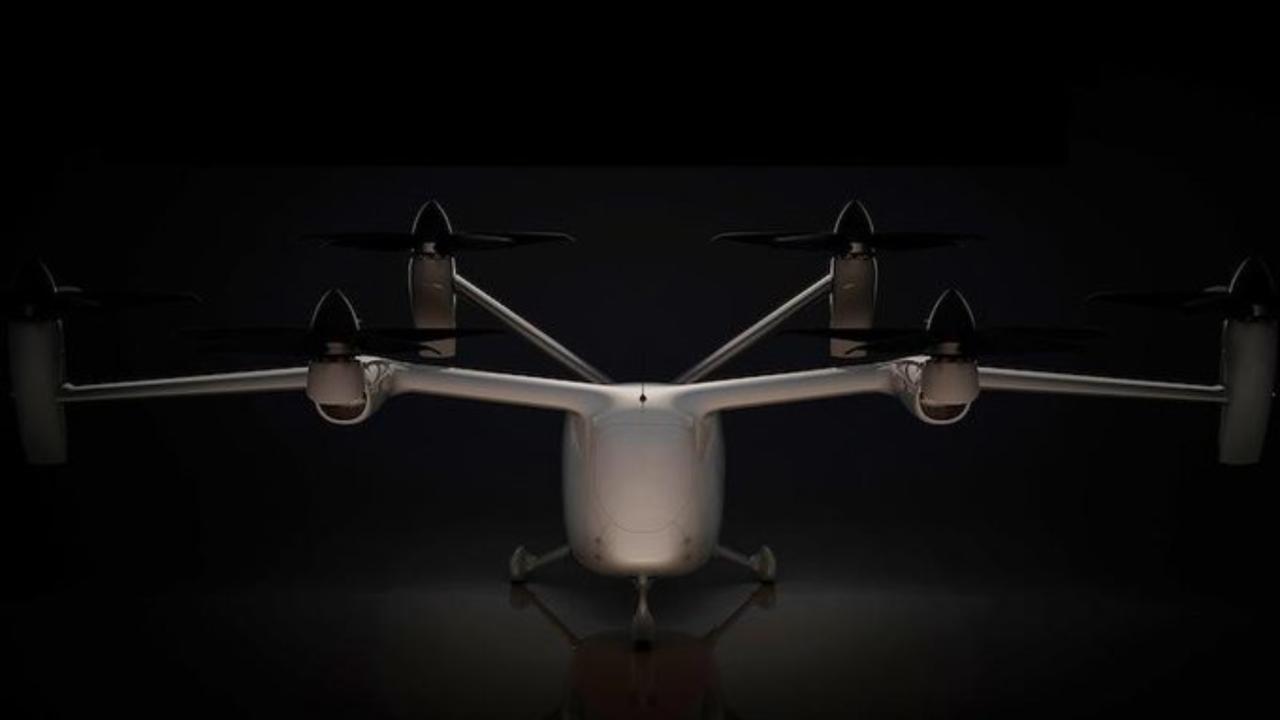
Joby Aviation has entered a strategic collaboration with L3Harris Technologies to develop hybrid‑electric vertical takeoff and landing (eVTOL) aircraft tailored for U.S. defense applications. The partnership, announced this week, is aimed at creating a new class of aircraft that combines Joby’s expertise in electric propulsion with L3Harris’s experience in mission systems and defense integration.
The deal underscores how emerging eVTOL technology — best known for urban air mobility and commercial passenger services — is increasingly being adapted for military and government missions. By adding a hybrid power capability, Joby and L3Harris seek to extend range, endurance, and operational flexibility, making these aircraft viable for roles far beyond civilian markets.
“This is about bringing next‑generation electric aviation to missions that demand more endurance and reliability,” said JoeBen Bevirt, founder and CEO of Joby Aviation. “With L3Harris, we can align our aircraft with defense needs from the ground up.”
Why Hybrid Power Is for Military Use
Joby’s baseline eVTOL aircraft is designed as a fully electric air taxi with a range of about 100 miles. While this is adequate for urban and regional passenger transport, defense missions often require significantly longer endurance, rapid deployment, and the ability to operate in remote areas with little charging infrastructure.
A hybrid‑electric configuration, using an onboard generator to supply power to the batteries during flight, provides the extended range and energy resilience needed for military operations. This system preserves many of the benefits of electric propulsion — low acoustic signature, high efficiency, and reduced emissions — while removing the strict limitations of battery‑only endurance.
“Hybrid‑electric propulsion offers the persistence and reach required by defense operators without sacrificing the agility and low noise profile of eVTOL aircraft,” said Christopher Kubasik, CEO of L3Harris. “It allows us to bridge the gap between today’s technology and tomorrow’s fully electric systems.”
Mission Profiles Under Consideration
Although the companies have not disclosed specific mission sets, defense analysts say hybrid‑eVTOL aircraft could be used for reconnaissance, logistics resupply, personnel transport, or special operations support. Their ability to take off and land vertically, operate from unprepared sites, and fly quietly at low altitude gives them clear advantages over conventional helicopters or fixed‑wing aircraft in certain scenarios.
The U.S. Department of Defense has already signaled interest in electric and hybrid aircraft for distributed operations, particularly in the Indo‑Pacific region where long distances between islands make flexible vertical lift essential. Joby has previously flown prototypes under the U.S. Air Force’s Agility Prime program, giving it early exposure to military requirements and operational testing.
Leveraging L3Harris Defense Integration
L3Harris brings decades of experience integrating avionics, sensors, and secure communications into military platforms. Under the new partnership, L3Harris will provide mission‑specific systems, ensuring that the hybrid‑eVTOL design can meet operational demands such as surveillance, secure data links, and command‑and‑control compatibility with existing U.S. and allied networks.
By combining Joby’s advanced aircraft technology with L3Harris’s defense expertise, the companies plan to create a turnkey solution rather than just an experimental demonstrator. The aircraft would be designed from the outset to handle defense‑grade payloads and mission packages.
“This is not about taking a commercial aircraft and painting it green,” Kubasik emphasized. “It’s about co‑developing an aircraft that meets the mission from day one.”
Certification and Program Timeline
Joby is on track to certify its all‑electric air taxi with the Federal Aviation Administration by 2025. The hybrid‑electric defense variant will follow a different development pathway, potentially under military airworthiness approvals rather than full commercial certification, allowing faster deployment in limited defense roles.
The companies have not provided a detailed timeline, but early concept and systems integration work is already underway. Ground testing of the hybrid‑electric system is expected in the next 18 to 24 months, followed by flight demonstrations to validate performance and mission capabilities.
Industry observers believe the hybrid‑eVTOL program could see accelerated adoption if it demonstrates clear advantages in speed, noise reduction, and operating cost compared to conventional military rotorcraft.
The Strategic Importance of Quiet Vertical Lift
Military planners are increasingly focused on reducing the acoustic footprint of aircraft used in contested or covert environments. Electric and hybrid‑electric aircraft are inherently quieter than traditional helicopters, making them harder to detect during insertion, extraction, or reconnaissance missions.
Joby’s current eVTOL design already operates at noise levels significantly lower than those of conventional rotorcraft, a feature that defense customers find attractive for sensitive operations. Adding a hybrid generator does increase the acoustic profile slightly, but still keeps the aircraft far quieter than legacy platforms.
A Broader Trend in Advanced Air Mobility
The Joby‑L3Harris partnership reflects a growing trend of collaboration between advanced air mobility startups and established defense contractors. Companies like Archer Aviation, Beta Technologies, and Electra.aero are also exploring hybrid or fully electric designs for military logistics and surveillance roles, often supported by early‑stage government funding.
By moving quickly into the defense market, Joby hopes to diversify its business beyond urban air taxi services. Defense contracts could provide a steady revenue stream while the commercial market for eVTOL passenger operations matures.
“This is both a technology pathfinder and a business strategy,” said aerospace analyst Richard Aboulafia. “Defense users are willing to pay for performance today, which gives companies like Joby a way to fund innovation while building credibility for future civilian products.”
Infrastructure and Deployment Considerations
One advantage of hybrid‑eVTOL aircraft is reduced dependence on fixed charging infrastructure. While commercial eVTOL services require networks of vertiports equipped with high‑capacity chargers, military operators can deploy hybrid aircraft in remote areas using portable fuel sources.
This flexibility aligns with the U.S. military’s push for distributed operations and rapid deployment capabilities. Hybrid propulsion also provides longer loiter time for surveillance missions and greater range for resupply operations, making the aircraft more adaptable in dynamic combat environments.
Future Developments
The next phase of the partnership will involve defining specific aircraft requirements, selecting a hybrid power architecture, and integrating mission equipment from L3Harris. The companies are expected to unveil additional program details later this year, potentially including a timeline for prototype rollout.
Joby’s existing eVTOL design may serve as a baseline for the hybrid variant, though engineers will need to make structural modifications to accommodate additional systems and fuel capacity. Early test flights will likely occur in collaboration with the U.S. Department of Defense, leveraging Joby’s ongoing Agility Prime relationship.
The collaboration between Joby Aviation and L3Harris represents a major step in bringing electric and hybrid‑electric propulsion into mainstream defense operations. By combining quiet vertical lift, extended range, and mission‑specific systems integration, the partners aim to deliver an aircraft that can perform roles conventional helicopters cannot easily fulfill.
If the program succeeds, it could open the door for broader adoption of hybrid‑eVTOL technology across both defense and commercial markets, reinforcing the idea that electric aviation is not limited to short‑range passenger transport.
“This partnership shows that advanced air mobility is not just about moving people in cities,” Bevirt said. “It’s about creating aircraft that serve critical missions, whether that’s helping commuters or supporting national security.”
Joby, L3Harris Join Forces, Defense, Hybrid‑eVTOL Missions



Advances in Aerospace Technology and Commercial Aviation Recovery
Insights into breakthrough aerospace technologies and commercial aviation’s recovery amid 2025 chall

Defense Modernization and Strategic Spending Trends
Explore key trends in global defense modernization and strategic military spending shaping 2025 secu

Tens of Thousands Protest in Serbia on Anniversary of Deadly Roof Collapse
Tens of thousands in Novi Sad mark a year since a deadly station roof collapse that killed 16, prote

Canada PM Carney Apologizes to Trump Over Controversial Reagan Anti-Tariff Ad
Canadian PM Mark Carney apologized to President Trump over an Ontario anti-tariff ad quoting Reagan,

The ad that stirred a hornets nest, and made Canadian PM Carney say sorry to Trump
Canadian PM Mark Carney apologizes to US President Trump after a tariff-related ad causes diplomatic

Bengaluru-Mumbai Superfast Train Approved After 30-Year Wait
Railways approves new superfast train connecting Bengaluru and Mumbai, ending a 30-year demand, easi




