Post by : Amit
A Tragic Incident Sparks Legal and Regulatory Shockwaves
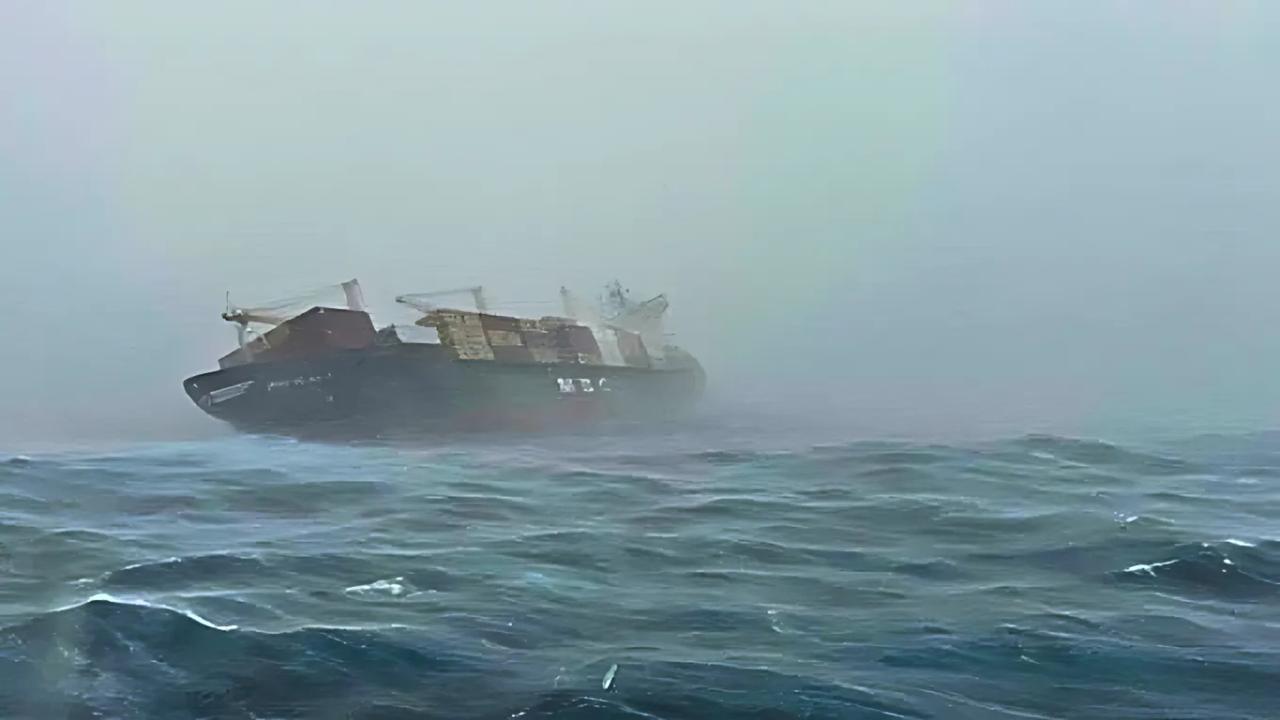
A heartbreaking maritime tragedy off the coast of Kerala has triggered one of the most stringent legal and financial actions ever taken in India’s coastal waters. The Kerala Maritime Board has issued a penalty notice of ₹125 crore against the owner of a foreign-flagged cargo vessel following a deadly collision with a local fishing boat in June 2024 near the Beypore coast in Kozhikode. The impact of the incident left four fishermen dead, several others injured, and an entire coastal community in mourning and unrest.
The collision has not only exposed significant gaps in coastal navigational safety but also underscored the vulnerability of small-scale fishermen operating in increasingly congested sea lanes. For regulators, the event was an inflection point. A joint inquiry involving the Kerala Maritime Board, the Indian Coast Guard, and local law enforcement squarely placed the blame on the cargo ship for deviating from designated sea lanes and failing to respond to proximity alerts—clear signs of navigational negligence.
A Landmark Legal Stand by Kerala Maritime Board
The ₹125 crore penalty, an unprecedented financial demand in India’s maritime history, reflects both the immediate tragedy and broader policy resolve. This sum has been calculated not only to compensate the families of the deceased but also to account for broader community impacts—ranging from lost income and disrupted fishing activity to emergency response costs and environmental damages.
Officials at the Kerala Maritime Board emphasized that the penalty is rooted in a principle of restorative justice. The goal, they said, is not merely to punish but to ensure accountability and set a precedent that deters future negligence. “These waters are not open highways for unchecked foreign traffic,” one senior official said. “They are working grounds for thousands of families. When those lives are put at risk, there must be a price.”
The Board clarified that the fine encompasses both criminal liability and civil damages. The state is pushing for swift enforcement through diplomatic channels and coordination with the Directorate General of Shipping and the Ministry of External Affairs, acknowledging the complex legal entanglements that come with penalizing foreign vessel owners.
Collision Under Clear Skies: A Failure of Basic Protocol
What makes the tragedy even more jarring is the fact that it occurred under clear weather conditions and good visibility. The foreign vessel, reportedly sailing from a Middle Eastern port toward Chennai, drifted off its approved sea corridor and collided with a licensed local fishing boat. Survivors from the fishing crew stated that they attempted multiple distress signals and used their boat’s lighting systems, but the cargo ship neither slowed down nor altered its path.
The impact was sudden and violent. The fishing boat capsized almost instantly, throwing all its occupants into the sea. Nearby fishermen were able to rescue some, while Coast Guard teams joined in shortly after. Four men, however, lost their lives, including the boat’s captain—a veteran seafarer with over two decades of experience. The incident left several families in Kozhikode’s fishing hamlets without their breadwinners, setting off a wave of grief and protest.
Legal Complications with a Foreign-Flagged Vessel
The vessel in question is owned by a company based in the Middle East and sails under a foreign flag—an increasingly common scenario in India’s waters due to globalized shipping operations. However, this international linkage now presents a formidable legal hurdle. While Indian law provides mechanisms to prosecute or fine foreign ships, the effectiveness of enforcement often hinges on cooperation from the ship’s flag state, shipping registries, and insurance bodies.
According to international maritime law, particularly under the International Convention on Civil Liability, the flag state bears responsibility for ensuring that vessels meet navigational and safety standards. But diplomacy can often slow down justice. The Kerala government, in coordination with the Directorate General of Shipping, has requested the Ministry of External Affairs to initiate direct communication with the flag state and the ship’s owners to ensure prompt compliance.
If the vessel’s owners fail to respond or negotiate, authorities may resort to detaining sister ships entering Indian ports, freezing port clearance for related operators, or escalating the matter to an international tribunal.
Insurance, Accountability, and the Price of Risk
The collision has put marine insurance policies under sharp scrutiny. Analysts say the ₹125 crore claim could set a powerful precedent in India’s maritime insurance landscape. Typically, shipping firms carry third-party liability coverage for such incidents, but few anticipate this level of penalty unless there is clear evidence of gross negligence. Now, shipping insurers operating in Indian waters may face tighter underwriting norms, higher premiums, and pressure to reassess navigational risks along India’s coasts.
Port operators and vessel agencies are also reevaluating their own risk management protocols. The collision has reignited longstanding calls from the fishing community for stricter implementation of Automatic Identification Systems (AIS), real-time vessel tracking, and designated maritime corridors to separate fishing and commercial activity.
Fear Along the Coastline: What Local Fishermen Are Saying
The incident has added a layer of fear and frustration among Kerala’s already struggling fishing communities. Over the past few years, fishermen have repeatedly complained of foreign vessels trespassing into nearshore zones, creating turbulence, or outright colliding with their boats. Many of these incidents go unreported, or result in no compensation due to the jurisdictional ambiguity of high seas enforcement.
In the wake of the Beypore collision, fishermen unions across the Malabar region have staged protests, calling for urgent reforms. Their demands include the establishment of exclusive fishing corridors, night-time radar beacons, increased coast guard patrols, and community alert systems linked to vessel monitoring stations.
The state government has responded by promising swift action, including the deployment of advanced coastal surveillance systems and round-the-clock marine enforcement. But local leaders say that unless penalties like this ₹125 crore fine are enforced and collected, the fishing community will continue to feel abandoned.
National Ramifications: Will Policy Catch Up?
At the national level, the incident has sparked a policy debate. Some MPs from Kerala have raised the issue in Parliament, calling for new laws that would mandate foreign vessels to file pre-arrival declarations with regional maritime boards and undergo risk assessments before entering India’s economic zones.
The Ministry of Ports, Shipping and Waterways has reportedly begun reviewing safety advisories for coastal navigation and is in talks with the Indian Navy and Coast Guard to enhance cooperative surveillance. Legal experts are also pushing for more robust coastal shipping laws at the state level, giving regional maritime boards greater authority to enforce navigational safety protocols.
Enforcement Challenges: What Happens Next?
While the penalty notice has been issued, the process of enforcement is anything but straightforward. Officials say that the first stage will involve diplomatic outreach and insurance negotiations. If those fail, the government is prepared to freeze port access for associated shipping lines, blacklist the operator, or escalate the matter internationally.
Legal counsel for the families of the deceased has stated that civil compensation claims will be pursued alongside the maritime board’s demand. If the penalty is not paid, civil courts may be approached for seizure of any Indian assets or enforcement of judgment through reciprocal agreements.
More Than Money: A Moment of Reckoning for Indian Maritime Law
Ultimately, while the ₹125 crore penalty cannot bring back lost lives, it represents something much larger: a recalibration of how India views maritime accountability. For too long, large foreign vessels have operated in Indian waters without adequate oversight, often at the cost of small-scale fishermen’s lives and livelihoods.
If the penalty is enforced—and used to directly support the affected families and invest in maritime safety—it could mark a turning point in the way India manages its coastal spaces. More importantly, it may force both domestic and international shipping operators to reconsider their responsibilities while navigating India’s densely populated and economically crucial coastline.
The coming weeks will determine whether justice will be served. But already, the incident stands as a grim reminder that the sea, while bountiful, is not lawless—and that those who tread it must do so with vigilance, respect, and accountability.
Kerela, India, Cargo Ship, Maritime



Advances in Aerospace Technology and Commercial Aviation Recovery
Insights into breakthrough aerospace technologies and commercial aviation’s recovery amid 2025 chall

Defense Modernization and Strategic Spending Trends
Explore key trends in global defense modernization and strategic military spending shaping 2025 secu

Tens of Thousands Protest in Serbia on Anniversary of Deadly Roof Collapse
Tens of thousands in Novi Sad mark a year since a deadly station roof collapse that killed 16, prote

Canada PM Carney Apologizes to Trump Over Controversial Reagan Anti-Tariff Ad
Canadian PM Mark Carney apologized to President Trump over an Ontario anti-tariff ad quoting Reagan,

The ad that stirred a hornets nest, and made Canadian PM Carney say sorry to Trump
Canadian PM Mark Carney apologizes to US President Trump after a tariff-related ad causes diplomatic

Bengaluru-Mumbai Superfast Train Approved After 30-Year Wait
Railways approves new superfast train connecting Bengaluru and Mumbai, ending a 30-year demand, easi




