Post by : Saif
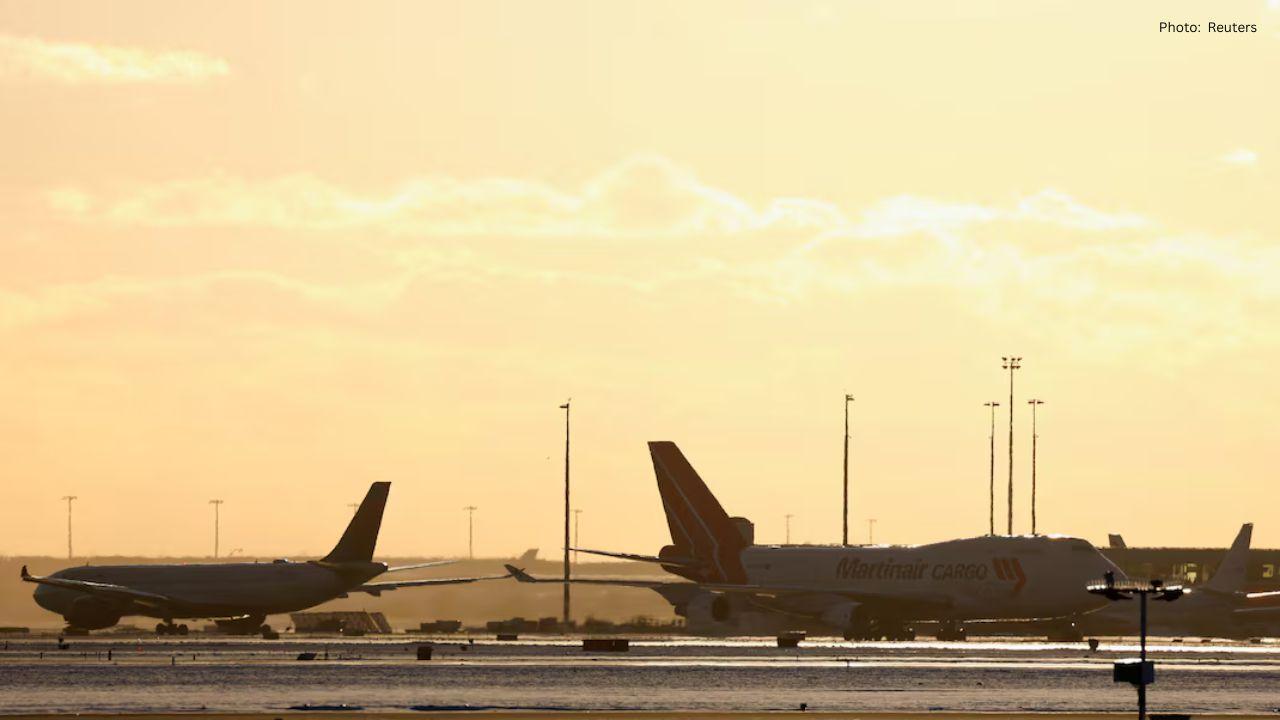
Severe winter weather has created major problems for air travel across Europe, and Dutch airline KLM is now facing a serious operational challenge at its main hub in Amsterdam. The airline has warned that it is running low on de-icing fluid needed to remove ice and snow from aircraft before take-off at Schiphol Airport.
Over the past several days, heavy snowfall, freezing temperatures, and strong winds have disrupted air, road, and rail travel in the Netherlands. At Schiphol, one of Europe’s busiest airports, thousands of flights have already been cancelled or delayed since the cold spell began.
KLM said its fleet of 25 de-icing trucks has been working non-stop to keep planes safe for departure. Each day, the airline has been using about 85,000 litres of a heated mixture of water and glycol to clear snow and ice from aircraft surfaces. This fluid is essential, as ice on wings or engines can make flying extremely dangerous.
According to the airline, de-icing operations have been running around the clock since Friday. While fresh supplies have been delivered daily, a mix of extreme weather and delays from suppliers has caused stock levels to drop sharply. KLM noted that this problem is not limited to the Netherlands and is being felt across several European countries dealing with similar weather conditions.
To avoid grounding more planes, KLM has taken extra steps. Employees were sent directly to a supplier in Germany to collect additional de-icing fluid. Even so, the airline said it could not give a clear timeline on how long existing supplies would last if deliveries do not improve soon.
A KLM spokesperson said the airline is doing everything possible to prevent a complete shortage, but admitted the situation remains uncertain.
The impact on passengers has already been significant. On Tuesday alone, KLM cancelled at least 300 flights to and from Amsterdam. As the airline’s largest operator at Schiphol, any disruption to KLM affects a large number of travelers, including those connecting to long-haul international flights.
Schiphol Airport itself said it still has enough of a different type of de-icing fluid used to clear runways and taxiways. This means aircraft can still land and take off if properly treated, but the shortage of aircraft de-icing fluid remains a serious concern.
Weather forecasts suggest that winter conditions will continue for several more days. Heavy snowfall and strong winds are expected, especially during the mornings, increasing the risk of further delays and cancellations.
From an editorial perspective, the situation highlights how vulnerable modern air travel can be to extreme weather. Safety must always come first, but the growing scale of climate-related disruptions raises questions about preparedness, supply chains, and resilience in the aviation industry. For now, passengers flying through Amsterdam should expect ongoing delays and remain alert for sudden changes to their travel plans.
#trending #latest #KLM #AmsterdamSchiphol #WinterWeather #FlightCancellations #AviationNews #DeIcing #EuropeWeather #AirTravel



Advances in Aerospace Technology and Commercial Aviation Recovery
Insights into breakthrough aerospace technologies and commercial aviation’s recovery amid 2025 chall

Defense Modernization and Strategic Spending Trends
Explore key trends in global defense modernization and strategic military spending shaping 2025 secu

Tens of Thousands Protest in Serbia on Anniversary of Deadly Roof Collapse
Tens of thousands in Novi Sad mark a year since a deadly station roof collapse that killed 16, prote

Canada PM Carney Apologizes to Trump Over Controversial Reagan Anti-Tariff Ad
Canadian PM Mark Carney apologized to President Trump over an Ontario anti-tariff ad quoting Reagan,

The ad that stirred a hornets nest, and made Canadian PM Carney say sorry to Trump
Canadian PM Mark Carney apologizes to US President Trump after a tariff-related ad causes diplomatic

Bengaluru-Mumbai Superfast Train Approved After 30-Year Wait
Railways approves new superfast train connecting Bengaluru and Mumbai, ending a 30-year demand, easi




