Post by : Amit
Photo : X / Sahil P
Rising Rain, Dwindling Buses: A Monsoon Crisis Unfolds
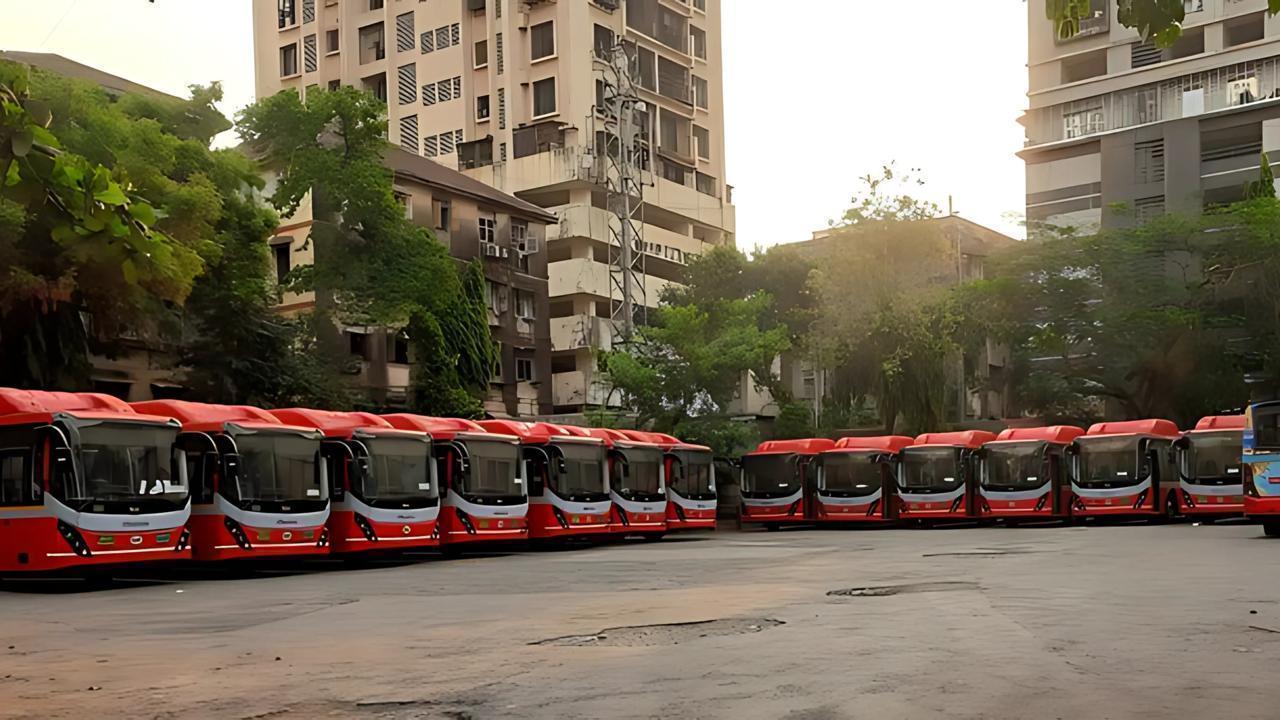
As torrential rains batter Goa during the peak of the monsoon season, the Kadamba Transport Corporation Limited (KTCL) is facing a severe mobility crisis. The state's premier public transport operator has been crippled by a triple burden—an ageing bus fleet, persistent issues with electric buses, and an acute shortage of operational vehicles.
Commuters across key routes in North and South Goa are now dealing with long waiting times, overcrowded buses, and service delays—disrupting daily life, particularly for officegoers, students, and workers in rural interiors. With the monsoon showing no signs of letting up, KTCL’s operational capacity has been stretched dangerously thin.
Ageing Buses Take the Biggest Toll
Much of KTCL’s current fleet comprises buses that are over 10 to 12 years old, well past their optimal performance lifespan. According to KTCL officials, many of these vehicles are now prone to frequent mechanical failures, including brake issues, engine overheating, and water seepage due to worn-out sealing systems—problems that are particularly exacerbated during heavy rains.
The deteriorating condition of these buses has forced the corporation to reduce the number of daily trips on several routes, especially in rural areas. As a result, commuters are often stranded for hours or forced to seek alternative transport, sometimes at higher costs and with lower safety assurances.
The shortage of reliable buses has also compelled KTCL to operate older vehicles on emergency routes, leading to an increased risk of breakdowns in the middle of journeys—further adding to the chaos.
Electric Buses Hit a Roadblock
While electric buses were expected to usher in a new era of green mobility for Goa, KTCL’s EV ambitions have stumbled into harsh monsoon reality. Several e-buses introduced as part of Goa’s sustainable transport plan are reportedly non-operational due to technical faults and lack of spare parts.
Sources within the corporation indicate that key issues include battery drainage, water ingress in electrical components, and delays in diagnostics and repairs. The EVs, which were expected to supplement conventional buses and gradually phase them out, are now lying idle in depots—rendering the state’s shift to electric mobility ineffective during a crucial time.
Adding to the woes, KTCL’s maintenance staff are not yet fully trained to handle complex electric drivetrains, making repairs slow and dependent on OEMs (original equipment manufacturers), who are struggling to supply parts on time.
Monsoon Exposes Gaps in Emergency Planning
The monsoon season is not new to Goa, yet this year’s disruption reveals significant gaps in KTCL’s contingency planning. The lack of a reserve fleet, insufficient real-time updates to passengers, and poor last-mile connectivity have turned regular showers into logistical nightmares.
In several flood-prone areas, KTCL has had to divert routes or cancel services altogether due to waterlogged roads, damaged culverts, and blocked underpasses. Yet, no robust communication system exists to alert passengers in real time, leaving many waiting at bus stops unaware of cancellations or delays.
Moreover, the corporation lacks amphibious rescue vehicles or rain-resilient service models to ensure essential mobility during weather extremes, raising questions about preparedness in a climate-vulnerable region like Goa.
Passenger Frustration Reaches Boiling Point
Public frustration is now mounting as buses either don’t show up or arrive packed beyond capacity. Complaints have surged from college students, government employees, and local residents who depend on KTCL for affordable, reliable transportation.
“Every day is a gamble,” said a college student from Margao. “We never know if the bus will come or if we’ll be stuck in the rain waiting for hours. Sometimes we have to skip classes or pay for expensive cabs just to get to the city.”
Commuters have also pointed to the declining quality of service—with buses arriving without functioning headlights, leaking roofs, broken seats, or non-functional wipers, all of which compromise both comfort and safety during heavy rains.
KTCL Response: Repair Work Underway, But No Quick Fixes
KTCL officials have acknowledged the challenges and assured that repair and fleet augmentation plans are in motion. The corporation is currently in talks with private operators and other state agencies to source additional buses on a short-term basis.
A proposal has also been submitted to the state government for procurement of new diesel and electric buses to replace the ageing fleet. However, the process could take months, as it involves budgeting, tendering, and vehicle customization for Goa’s unique topography.
Meanwhile, technicians have been deployed on emergency duty to fast-track repair work at depots, but with the monsoon’s intensity showing no signs of decline, these efforts are unlikely to fully plug the gap in service delivery.
Calls for Policy and Infrastructure Reform
Transport experts and mobility advocates argue that KTCL’s current predicament is symptomatic of a larger issue—underinvestment in public transport infrastructure and lack of long-term planning. Goa’s growing urban sprawl and increasing tourist traffic demand a modern, well-funded, and responsive transport system.
Policy recommendations being floated include the creation of a monsoon-resilient fleet policy, public-private partnerships for rapid fleet upgrades, and an AI-powered fleet tracking and passenger information system to improve communication and reliability.
In addition, there's a growing consensus that electric mobility cannot succeed without parallel investment in charging infrastructure, maintenance capacity, and weather-resistant design—lessons KTCL is now learning the hard way.
A Wake-Up Call for Goa’s Urban Transport System
The current transport distress in Goa is a wake-up call for KTCL and policymakers alike. While the monsoon may have exposed the cracks, the underlying issues—ageing infrastructure, insufficient investment, and fragmented service planning—have been festering for years.
As the state aspires to build a smart, tourist-friendly urban mobility network, KTCL must be reimagined not just as a transport provider, but as a resilient public utility capable of withstanding environmental and operational challenges.
Unless structural changes are initiated now, Goa’s public transport system risks further erosion—leaving commuters vulnerable and eroding the state’s broader sustainable mobility goals.
Goa, public Transport, KTCL



Advances in Aerospace Technology and Commercial Aviation Recovery
Insights into breakthrough aerospace technologies and commercial aviation’s recovery amid 2025 chall

Defense Modernization and Strategic Spending Trends
Explore key trends in global defense modernization and strategic military spending shaping 2025 secu

Tens of Thousands Protest in Serbia on Anniversary of Deadly Roof Collapse
Tens of thousands in Novi Sad mark a year since a deadly station roof collapse that killed 16, prote

Canada PM Carney Apologizes to Trump Over Controversial Reagan Anti-Tariff Ad
Canadian PM Mark Carney apologized to President Trump over an Ontario anti-tariff ad quoting Reagan,

The ad that stirred a hornets nest, and made Canadian PM Carney say sorry to Trump
Canadian PM Mark Carney apologizes to US President Trump after a tariff-related ad causes diplomatic

Bengaluru-Mumbai Superfast Train Approved After 30-Year Wait
Railways approves new superfast train connecting Bengaluru and Mumbai, ending a 30-year demand, easi




