Post by : Amit
A Leviathan Like No Other in Maritime History
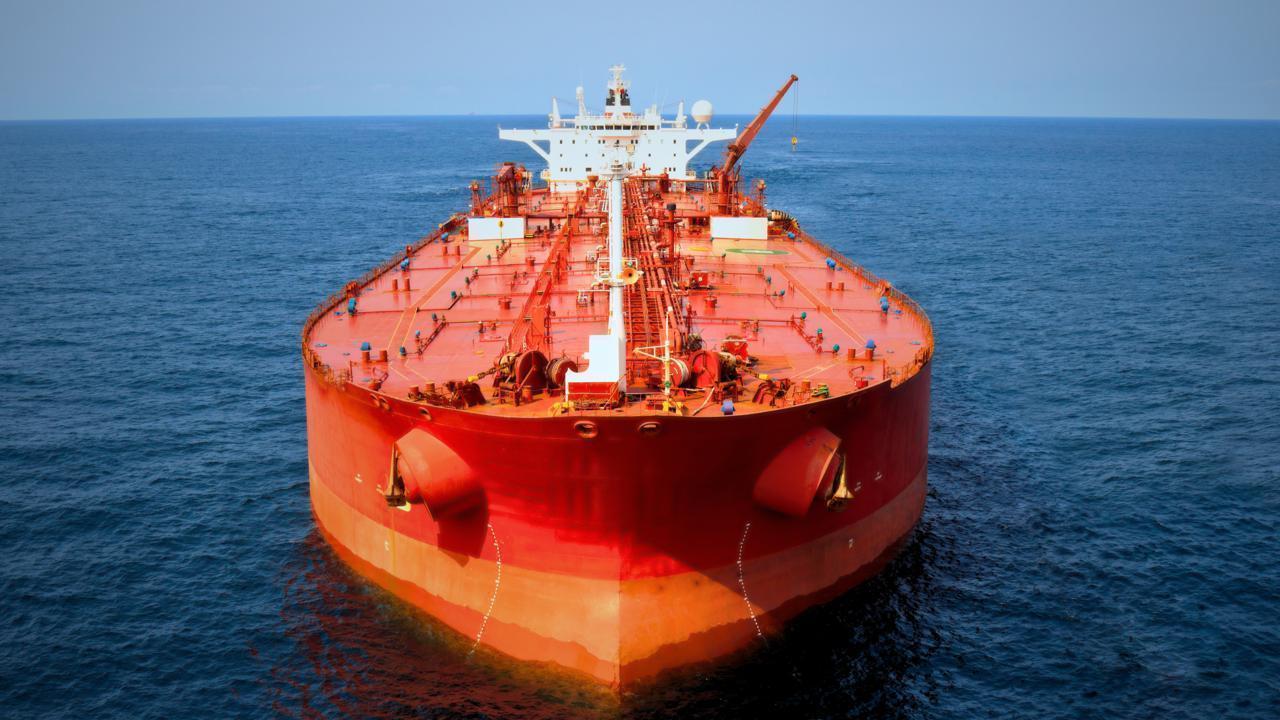
Among all the colossal structures ever floated on the world's oceans, one ship still holds the record that no vessel has since matched—the Seawise Giant. Also known as the Knock Nevis, this extraordinary supertanker was not just the largest oil tanker ever built, but also the longest ship in history, a title that remains uncontested to this day. Her size defied imagination, her operational history spanned global oceans, and her legacy still resonates in the maritime world.
The Birth of a Giant
The Seawise Giant was originally built in 1979 by Sumitomo Heavy Industries in Japan for a Greek shipping magnate. Originally named Oppama, the ship was incomplete when purchased by Hong Kong shipping tycoon T.Y. Tung, who had her lengthened and modified to carry a staggering volume of crude oil. After modifications, she was rechristened Seawise Giant—a nod to Tung’s company, Seawise (a play on "C.Y. Tung").
After her full outfitting, the Seawise Giant measured an astounding 458.45 meters in length (1,504 feet)—making her longer than the height of the Empire State Building.
Unimaginable Dimensions and Capacity
To understand her scale is to enter the realm of extremes. The Seawise Giant had a deadweight tonnage (DWT) of 564,763 tonnes, a beam (width) of 68.8 meters, and a draft of over 24 meters when fully loaded. These figures meant the ship could not navigate the Panama or Suez Canals, nor could she dock at most ports around the world.
She had the capacity to carry over 4 million barrels of crude oil at once—a volume so large it could meet the entire daily oil consumption of the United States for nearly a fifth of a day. To this day, no ship—tanker or otherwise—has matched her scale or oil-carrying capacity.
A Ship Too Big to Sail Anywhere
While her size made her a marvel, it also limited her operations. The Seawise Giant primarily sailed between the Persian Gulf and U.S./Asian oil terminals, mostly anchoring offshore or using deep-water terminals specifically built for ultra-large crude carriers (ULCCs). She was powered by steam turbines and required an incredible amount of fuel and planning to operate.
Due to her immense draft and beam, she was a ship of the open seas. Maneuvering near coastal regions or ports was impossible for her under normal conditions.
Tragedy, Resilience, and Rebirth
The Seawise Giant’s life was almost cut short during the Iran-Iraq War. In 1988, while anchored off Larak Island in Iran, the ship was bombed by Iraqi forces, catching fire and sinking in shallow waters. It was a devastating blow that seemed to seal her fate.
But her story wasn’t over. The Norwegian shipyard Norman International bought the wreckage, refloated her in 1989, and after significant repairs, she was renamed Happy Giant. The reborn vessel later entered service again under the name Jahre Viking, and eventually, toward the end of her operational life, was renamed Knock Nevis under First Olsen Tankers.
Final Years and Honorable Retirement
After a final stint as a floating storage and offloading unit (FSO) in the Al Shaheen oil field off the coast of Qatar, Knock Nevis was finally decommissioned in 2009. She was towed to India’s Alang shipbreaking yard, where she was dismantled—ending the reign of the world’s largest ship.
Before being scrapped, she was briefly renamed Mont for her final voyage. Maritime enthusiasts around the world watched as the legend slowly disappeared from the oceans, piece by piece.
The Engineering Legacy of Seawise Giant
Seawise Giant’s impact wasn't just in scale but in what she represented. She was a product of the oil boom era when maritime logistics had to meet the demand for bulk oil transport at global scales. Her construction represented the pinnacle of shipbuilding in the 20th century, pushing the limits of steel, propulsion systems, and naval architecture.
Her existence forced ports, insurers, and regulators to rethink how to manage super-large vessels. She was the benchmark for ULCCs, and while many large ships have since emerged—especially in container shipping—not one has matched her length or tonnage.
A Cultural and Industrial Icon
The Seawise Giant wasn’t just a tanker; she became a symbol. Her sheer scale caught the attention of media, engineers, artists, and maritime fans worldwide. She appeared in shipping documentaries, global maritime reports, and remains a reference point for "biggest things ever built" lists.
Even in her absence, the legend of the Seawise Giant continues to inspire discussions about mega engineering, maritime logistics, and how far human ambition can stretch.
The Titan Still Remembered
While Knock Nevis has been gone for over a decade, her name still resonates in the marine world. Today, ultra-large crude carriers and container ships like the TI Class Supertankers or the Ever Alot may come close in size or volume, but the legacy of Seawise Giant remains untouchable.
She wasn’t just a ship—she was the sea’s ultimate giant, unmatched in form, capacity, and story.
Marintime, Largest Oil Tanker



Advances in Aerospace Technology and Commercial Aviation Recovery
Insights into breakthrough aerospace technologies and commercial aviation’s recovery amid 2025 chall

Defense Modernization and Strategic Spending Trends
Explore key trends in global defense modernization and strategic military spending shaping 2025 secu

Tens of Thousands Protest in Serbia on Anniversary of Deadly Roof Collapse
Tens of thousands in Novi Sad mark a year since a deadly station roof collapse that killed 16, prote

Canada PM Carney Apologizes to Trump Over Controversial Reagan Anti-Tariff Ad
Canadian PM Mark Carney apologized to President Trump over an Ontario anti-tariff ad quoting Reagan,

The ad that stirred a hornets nest, and made Canadian PM Carney say sorry to Trump
Canadian PM Mark Carney apologizes to US President Trump after a tariff-related ad causes diplomatic

Bengaluru-Mumbai Superfast Train Approved After 30-Year Wait
Railways approves new superfast train connecting Bengaluru and Mumbai, ending a 30-year demand, easi




