Post by : Amit
A Cold War Relic Reborn as a Freight Powerhouse
Latvia has inaugurated a cutting-edge logistics and warehousing hub on the site of a former Soviet military installation in Rēzekne, near the country’s eastern frontier.
The project, announced quietly in early 2023 and completed mid-2025, is now being recognized as a strategic masterstroke in European logistics circles. The site, located just 30 kilometers from the Belarusian border and within 100 kilometers of Russia, was long abandoned, scarred by decades of disuse, political tension, and underinvestment.
Today, it stands completely reimagined: a high-security, AI-managed logistics corridor that blends multimodal transport, autonomous warehousing, and cross-border intelligence—all designed to link Western Europe with the Baltics and beyond.
Backed by the European Cohesion Fund, Rail Baltica stakeholders, and the Latvian government, the new Rēzekne logistics terminal is part of a larger EU effort to decentralize critical freight operations, diversify trade routes away from vulnerable choke points, and build regional autonomy in warehousing, rail, and last-mile logistics.
“This is not just about goods. It’s about resilience, sovereignty, and readiness in an uncertain era,”
—Inese Karpova, Head of National Logistics Development, Latvian Ministry of Economy
The Strategic Geography of Rēzekne
Rēzekne’s location is no accident. Situated in Latgale, a historically neglected but geographically critical region, the city has long been viewed as a transit point between Western Europe, the Baltics, Russia, and the East. During the Soviet era, it served as a key military hub, hosting armored divisions and surveillance operations.
But in the post-Cold War period, the infrastructure decayed. Crumbling barracks, overgrown bunkers, and disused roads marked the region’s industrial stagnation. That began to change in 2020, when Rail Baltica—the EU’s flagship high-speed rail freight and passenger corridor—identified Rēzekne as a node for future intermodal rail infrastructure.
Now, in 2025, with the logistics hub live and operating, Latvia has turned a geopolitical liability into a high-tech logistics advantage.
Tech-Enabled Logistics at the Eastern Gate
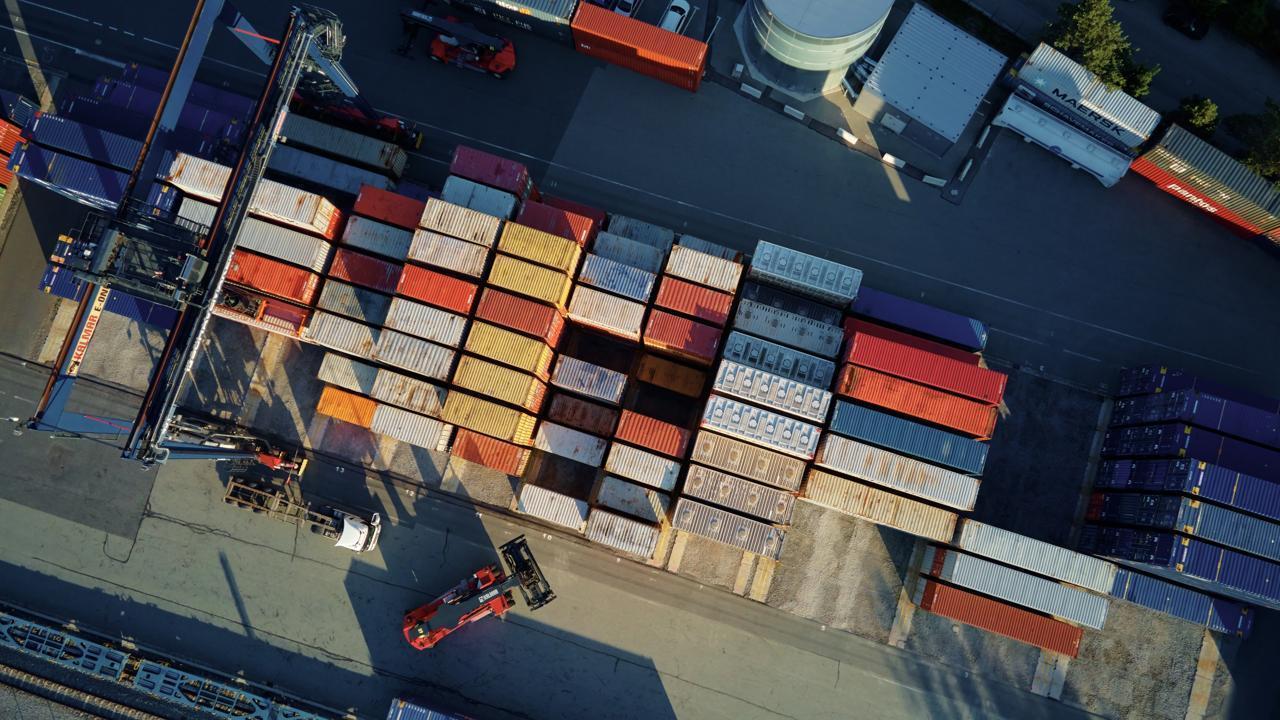
The Rēzekne facility is nothing short of state-of-the-art. It comprises over 40,000 square meters of warehousing, including:
The backbone of the system is a central AI-based cargo controller, which receives shipment data from cross-border networks (primarily Poland, Lithuania, and Estonia), forecasts optimal storage cycles, and assigns cargo to appropriate loading or storage sectors. The system is integrated with customs clearance intelligence via a digital ledger jointly maintained by the Latvian Revenue Service and EU customs units.
“We’re no longer talking about warehousing as static storage,” says Andris Kalniņš, chief technology officer for the hub’s managing operator. “This facility operates like a living organism—processing, adapting, and optimizing around the clock.”
Linked to Rail Baltica: A Continental Lifeline
What truly distinguishes Rēzekne is its seamless integration with the Rail Baltica corridor—a major pan-European transport infrastructure project that connects Berlin to Helsinki via Warsaw, Kaunas, Riga, and Tallinn.
The Rēzekne logistics center includes dual-gauge track integration, allowing both standard (1,435 mm) and Russian-gauge (1,520 mm) freight wagons to access the facility. This flexibility allows goods to move effortlessly between EU-standard rail and former Soviet rail systems, which still dominate in Belarus, Russia, and parts of Ukraine.
With this feature, Latvia can become a buffer zone for freight re-routing, especially critical as political tensions and sanction regimes alter the shape of East-West trade. European freight that once passed through Belarus or Kaliningrad can now flow through Latvian-controlled, NATO-aligned infrastructure.
“In times of disruption, logistics is not just commerce—it’s geopolitics on wheels,”
—Dr. Mārtiņš Liepiņš, Baltic Geoeconomics Institute
A Quiet Answer to Eastern Instability
Though the hub’s primary narrative is economic, it has a subtext of strategic foresight. The war in Ukraine, combined with fluctuating diplomatic ties with Russia and Belarus, has pushed the EU to rethink how it fortifies its logistical spine.
As Poland, Lithuania, and Slovakia see freight delays due to unpredictable customs enforcement or political blockades, the Rēzekne terminal gives Brussels a workaround—a modern, sovereign, digitally secure facility that can serve as a corridor rerouter or buffer zone.
Defense logistics planners are also taking note. While the site is officially civilian, its dual-use capabilities (including emergency food and fuel warehousing, secure zones, and drone infrastructure) make it suitable for civil defense and NATO logistics exercises.
Fueling a Rural Economic Renaissance
The impact on the Latgale region, one of Latvia’s poorest, has been profound. Over 600 new jobs have been created since construction began, with more expected as container throughput increases. Most workers are from surrounding towns, where unemployment had exceeded 14% in recent years.
A technical training center affiliated with Riga Technical University has opened on-site to skill young workers in robotic cargo systems, inventory management AI, and drone logistics coordination.
Nearby suppliers are also benefiting. Local firms are now providing refrigeration units, solar-powered warehouse lighting, and lightweight composite container materials—creating a ripple effect across Latvia’s fragmented industrial landscape.
“We used to watch our kids leave for Riga or Germany,” says Valdis Lūsis, a community leader in nearby Viļāni. “Now, they're staying to work on something world-class.”
Environmentally Engineered for the Future
Another standout feature of the Rēzekne logistics center is its low-emission design philosophy. The facility draws 78% of its energy from renewable sources, including:
In addition, the entire facility is equipped with sensor-managed HVAC systems, smart insulation, and green-roof warehouse architecture, which reduces thermal load and runoff. These features helped the site earn EU Level 5 Green Logistics Certification, a rare distinction.
All delivery vehicles operating from the terminal are either electric or hydrogen-fueled, with five fast-charging stations and one hydrogen filling depot operational since June 2025.
“We are exporting goods, yes—but we are also exporting a vision of what next-generation freight logistics can look like when aligned with climate goals,”
—Signe Kļaviņa, Sustainability Director, Latvian Logistics Innovation Board
Quiet Today, Central Tomorrow
Despite its scale, technological ambition, and geopolitical weight, the Rēzekne hub remains largely absent from public discourse outside Latvia. But that may not last long.
Early interest from Finnish, Czech, and even Kazakh logistics firms suggests that this once-forgotten zone could soon become a core freight operating base for Northern and Eastern Europe—especially as global trade continues to fragment along security lines.
Latvia has also begun discussions with Estonia and Finland about launching a Baltic Smart Freight Alliance, which would unify regional logistics practices, digital freight standards, and customs AI tools. Rēzekne is expected to serve as the lead pilot site.
A Blueprint for the Borderlands
In a world where logistics is no longer just about transport but about data, sovereignty, and real-time adaptation, Latvia’s Rēzekne hub stands out as a blueprint for the future of strategic warehousing and freight intelligence.
From Cold War outpost to climate-forward logistics nerve center, the transformation is as symbolic as it is material. And while Rēzekne may not make headlines like Rotterdam or Hamburg, it could soon define how Europe moves goods across its eastern frontier—securely, sustainably, and smartly.
The message is clear: in today’s Europe, logistics is no longer just the back end of trade. It’s the front line of resilience.
Latvia, Rail-Tied Smart Logistics, Rēzekne



Advances in Aerospace Technology and Commercial Aviation Recovery
Insights into breakthrough aerospace technologies and commercial aviation’s recovery amid 2025 chall

Defense Modernization and Strategic Spending Trends
Explore key trends in global defense modernization and strategic military spending shaping 2025 secu

Tens of Thousands Protest in Serbia on Anniversary of Deadly Roof Collapse
Tens of thousands in Novi Sad mark a year since a deadly station roof collapse that killed 16, prote

Canada PM Carney Apologizes to Trump Over Controversial Reagan Anti-Tariff Ad
Canadian PM Mark Carney apologized to President Trump over an Ontario anti-tariff ad quoting Reagan,

The ad that stirred a hornets nest, and made Canadian PM Carney say sorry to Trump
Canadian PM Mark Carney apologizes to US President Trump after a tariff-related ad causes diplomatic

Bengaluru-Mumbai Superfast Train Approved After 30-Year Wait
Railways approves new superfast train connecting Bengaluru and Mumbai, ending a 30-year demand, easi




