Post by : Amit
Photo : X / Earth_Wanderer
Future-Proofing the Heavy Airlifter
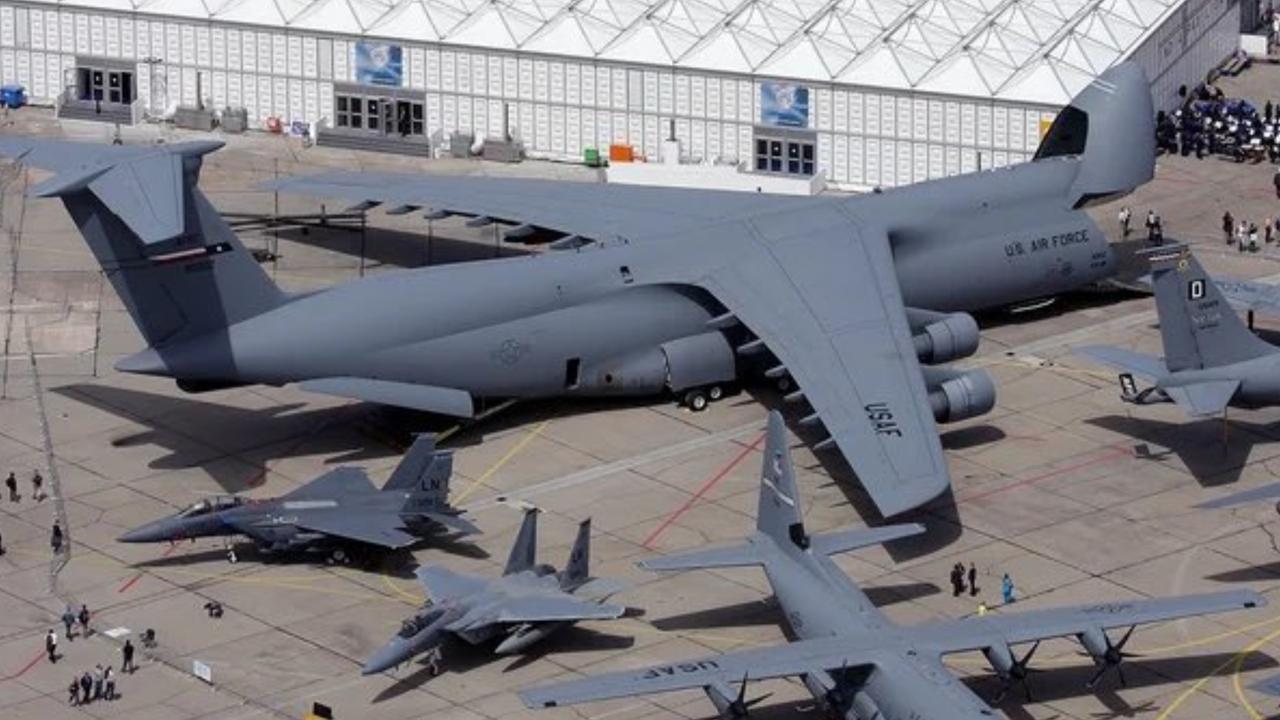
Lockheed Martin has been awarded a contract to modernize the avionics and display systems on the C-5M Super Galaxy. This strategic upgrade underscores the Pentagon’s continued investment in legacy platforms—especially those with unmatched logistical reach—while integrating cutting-edge electronics to meet the demands of next-generation warfare.
The U.S. Air Force Life Cycle Management Center at Robins Air Force Base, Georgia, issued the contract, entrusting Lockheed Martin to lead this critical upgrade that will include new multifunction displays, enhanced processing capabilities, and software architecture improvements. The goal is to extend the C-5M’s service life while optimizing cockpit situational awareness, safety, and performance under increasingly complex mission conditions.
The Mission of the C-5M Super Galaxy
With its massive cargo capacity and strategic range, the C-5M Super Galaxy plays a pivotal role in U.S. military airlift operations, capable of transporting over 280,000 pounds of cargo and flying non-stop across oceans with aerial refueling. It supports everything from troop deployments to delivering oversized equipment like helicopters, satellite launch systems, and even other aircraft.
Originally developed in the late 1960s, the C-5 underwent multiple upgrades, culminating in the C-5M variant, which features modernized engines and mechanical systems. Now, the focus has shifted to its brain—the avionics that allow pilots to fly safely and effectively in both peacetime and wartime environments.
As warfare evolves, with increased reliance on networked operations, electronic warfare resilience, and multi-domain coordination, aircraft like the C-5M must be able to process and display vast amounts of mission-critical information in real time. That’s where the upcoming avionics overhaul becomes not just useful, but essential.
Lockheed Martin’s Digital Upgrade Package
At the heart of the upgrade is the integration of new multifunction display systems that replace legacy cockpit instrumentation with high-resolution, digital screens. These displays will allow aircrews to view real-time flight data, mission parameters, threat alerts, and navigation overlays in a far more intuitive and dynamic interface than analog gauges or older CRT displays.
The new digital cockpit environment will also include advanced computing processors to support mission planning, sensor integration, and secure communications. Software improvements will further streamline the user interface, reduce pilot workload, and enable easier future upgrades via modular architecture—ensuring that today’s investment can evolve with tomorrow’s needs.
Lockheed Martin’s solution draws on avionics expertise from other programs, including the C-130J Super Hercules, F-16 upgrades, and F-35 systems architecture, ensuring cross-platform consistency and proven performance.
Enabling Next-Gen Interoperability
One of the most significant outcomes of the avionics refresh will be enhanced interoperability with other U.S. and allied platforms. In today’s joint operations environment, the ability to seamlessly exchange mission data—whether through Link-16, satellite relay, or future Joint All-Domain Command and Control (JADC2) networks—is vital.
The upgraded displays and processors will give the C-5M the tools it needs to function as part of a connected battlespace. Whether responding to humanitarian crises or operating deep within contested zones, the aircraft must communicate fluidly with fighters, drones, ground assets, and command centers.
Lockheed’s upgrades are designed to support these evolving requirements, offering the digital backbone necessary for C-5Ms to remain integrated and mission-capable in an era where information dominance is as important as air superiority.
Cyber Resilience in Avionics Systems
As military platforms become more digitized, they also become more vulnerable to cyber threats. The new C-5M avionics suite will be hardened against such risks through embedded cybersecurity protocols. These include secure boot processes, real-time threat detection, and system isolation features that prevent the spread of malware across critical flight systems.
Lockheed Martin has made cybersecurity a cornerstone of its avionics development, particularly as adversaries invest heavily in electronic warfare and hacking capabilities. Ensuring the integrity of communications and decision-support systems is now just as important as physical armor or stealth coatings.
By integrating these digital safeguards at the avionics level, Lockheed is helping the Air Force stay one step ahead of increasingly sophisticated threats.
Enhancing Mission Flexibility and Crew Safety
Pilots and mission commanders will benefit not only from improved situational awareness but also from systems that adapt to mission needs in real time. The new displays can shift from standard navigation to tactical overlays, weather patterns, cargo balance indicators, and even encrypted battlefield maps with the tap of a button.
This flexibility enhances decision-making speed and flight crew efficiency, while also reducing the cognitive burden during high-stress missions. In environments where visibility is limited, communications are disrupted, or threats emerge without warning, such capabilities can mean the difference between success and mission failure.
From a human factors engineering perspective, the new avionics also improve safety by offering clearer visuals, color-coded warnings, and touchscreen or simplified button interfaces—reducing the chance of operator error under pressure.
Sustainability and Lifecycle Value
Upgrading the avionics suite also brings logistical and cost-saving benefits. The legacy systems currently onboard the C-5M fleet are increasingly difficult to maintain, with spare parts becoming scarce and maintenance time rising. Digital systems, by contrast, are more reliable, easier to diagnose, and more modular, allowing for component-level repairs instead of full replacements.
By migrating to newer avionics, the Air Force reduces long-term sustainment costs and ensures parts availability well into the 2040s. This lifecycle value is critical as the Air Force balances tight budgets with the need to extend the life of critical platforms without building entirely new aircraft from scratch.
Moreover, software-defined avionics allow for routine updates via code patches rather than costly hardware swaps, meaning the C-5M fleet can evolve as needed to meet changing threats and technologies.
Contract Scope and Timeline
The value of the contract was not publicly disclosed, but it’s expected to include engineering, integration, and flight testing across several years. Initial systems will likely be trialed on a limited number of aircraft before fleet-wide deployment, with extensive simulation and redundancy testing to meet airworthiness standards.
Robins Air Force Base’s Life Cycle Management Center, which issued the award, will oversee the program’s implementation and ensure the new systems meet U.S. Air Force performance benchmarks.
Lockheed Martin’s previous experience with the Avionics Modernization Program (AMP) and Reliability Enhancement and Re-engining Program (RERP) for the C-5 fleet gives the company a head start in understanding the platform’s needs and constraints.
Strategic Importance in a Volatile World
As global logistics become more complex—and as potential flashpoints stretch across Eastern Europe, the South China Sea, and the Middle East—the ability to rapidly deploy personnel and equipment becomes a decisive factor. The C-5M is one of only a few aircraft worldwide capable of moving entire armored brigades or missile defense batteries thousands of miles overnight.
Ensuring this aircraft remains at the forefront of military readiness is not just about avionics—it’s about national security strategy. The Air Force’s decision to invest in digital upgrades rather than retire or replace the fleet reflects a broader philosophy: use what works, improve what can be improved, and maximize return on investment through smart modernization.
As the first upgraded C-5Ms take to the skies later this decade, their performance will be closely watched not only by the U.S. military but also by international allies and even rival powers. The ability to maintain a robust, responsive, and digitally enhanced heavy airlift capability is a strategic asset in an uncertain world.
Lockheed Martin’s avionics modernization effort represents more than just an electronics refresh—it’s a reimagining of what the C-5M can do in an era defined by data, speed, and multi-domain warfare. With the new upgrade, the “Super Galaxy” won’t just remain relevant—it may well redefine what legacy aircraft are capable of in 21st-century combat logistics.
Avionics Modernization, Strategic Airlift



Advances in Aerospace Technology and Commercial Aviation Recovery
Insights into breakthrough aerospace technologies and commercial aviation’s recovery amid 2025 chall

Defense Modernization and Strategic Spending Trends
Explore key trends in global defense modernization and strategic military spending shaping 2025 secu

Tens of Thousands Protest in Serbia on Anniversary of Deadly Roof Collapse
Tens of thousands in Novi Sad mark a year since a deadly station roof collapse that killed 16, prote

Canada PM Carney Apologizes to Trump Over Controversial Reagan Anti-Tariff Ad
Canadian PM Mark Carney apologized to President Trump over an Ontario anti-tariff ad quoting Reagan,

The ad that stirred a hornets nest, and made Canadian PM Carney say sorry to Trump
Canadian PM Mark Carney apologizes to US President Trump after a tariff-related ad causes diplomatic

Bengaluru-Mumbai Superfast Train Approved After 30-Year Wait
Railways approves new superfast train connecting Bengaluru and Mumbai, ending a 30-year demand, easi




