Post by : Amit
Photo : X / MundoMaritimo
A Landmark Move Towards Net-Zero Shipping
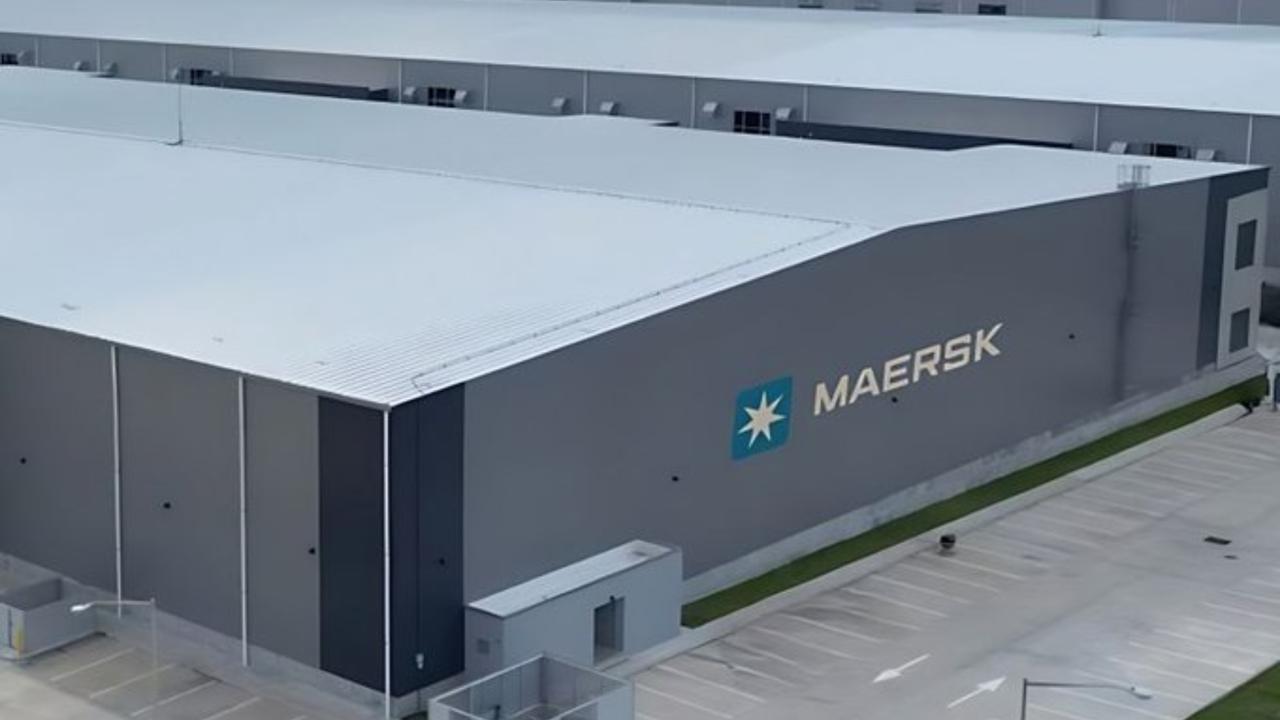
A.P. Moller-Maersk has inaugurated a state-of-the-art Green Logistics Hub at the Port of Rotterdam, positioning it as one of Europe’s most advanced centers for sustainable freight and multimodal logistics. This launch marks a defining milestone in Maersk's broader effort to lead the shipping industry's transition to carbon-neutral operations.
With shipping accounting for nearly 3% of global greenhouse gas emissions, Maersk's strategic investment in green infrastructure at Europe's largest port signals a serious acceleration toward achieving its goal of net-zero emissions by 2040. The new logistics hub, powered by renewable energy and designed for circular supply chain operations, will act as a central node connecting sea, rail, road, and inland waterways in a carbon-reduced ecosystem.
Rotterdam: The Gateway to a Greener Europe
Located strategically within the Maasvlakte II expansion zone of the Port of Rotterdam, the hub occupies more than 40,000 square meters and includes temperature-controlled storage, electric truck loading bays, hydrogen-ready refueling systems, and smart warehouse automation. It has been designed with scalability in mind, with the ability to support future synthetic fuel storage, ammonia-based bunkering, and other alternative fuel innovations.
Rotterdam is already Europe’s largest seaport and serves as a vital transshipment point for goods entering and exiting the continent. The addition of a dedicated green hub by a major global carrier like Maersk adds an important new layer to the port's environmental ambitions. It strengthens the port’s position as a frontrunner in sustainable logistics and deepens the role of the Netherlands in driving the EU’s Green Deal objectives.
Enabling Decarbonized Supply Chains
The new hub will help Maersk fulfill rising demand from customers seeking greener transport solutions. According to a 2024 report from the Clean Cargo Working Group, over 68% of large shippers now prioritize emissions transparency and carbon reduction in their freight procurement decisions. Maersk’s Rotterdam facility will allow for direct tracking of embedded emissions per cargo unit, backed by blockchain-integrated reporting tools and automated emissions ledgers.
A key component is its integration with Maersk’s global Ocean and Inland network. The hub enables transshipment to short-sea services, European rail corridors, and inland barge routes with end-to-end carbon accounting. Electric and hydrogen-powered cargo handling equipment and intelligent energy management systems will also help reduce on-site emissions by over 80% compared to traditional terminals.
A Foundation for Green Innovation
Maersk has framed the Rotterdam hub not only as an operational asset but also as a living laboratory for green technology pilots. The facility includes testbeds for AI-based fleet routing, digital twin simulations for warehouse energy usage, and advanced sensor systems for cold-chain optimization. Several partnerships are already underway, including with Dutch startup PortX for drone-based inventory inspection and German firm HydroPort for hydrogen bunkering trials.
Another innovation is the use of AI-enabled predictive maintenance on forklifts and automated guided vehicles (AGVs), extending the life of equipment and reducing downtime. Combined with regenerative braking systems and rooftop solar panels, the facility is expected to generate more energy than it consumes during daylight operations.
Workforce Upskilling and Community Engagement
A green port is only as strong as its workforce. Maersk is working with the Port of Rotterdam Authority and regional vocational training institutions to launch a skill development program that prepares local talent for green logistics careers. This includes certifications in clean fuel handling, climate impact modeling, and digital logistics tools. The company is also engaging with local communities to minimize noise and air pollution, incorporating green buffers, silent loading systems, and on-site water harvesting.
Soren Skou, former CEO and current board advisor to Maersk, commented, “Rotterdam is more than a terminal. It’s a blueprint for what the future of decarbonized logistics looks like. The level of integration between clean technology, advanced analytics, and human capital here is unprecedented.”
A Pillar in Maersk's 2040 Strategy
Maersk’s strategy to achieve net-zero across its operations by 2040 includes fleet-wide upgrades to methanol-capable vessels, electrification of first-mile and last-mile transport, and investments in carbon-neutral logistics nodes. The Rotterdam hub complements these efforts by serving as a scalable model that can be replicated across global ports.
The company is also actively working with the European Commission and IMO to establish regulatory pathways for zero-emission corridors, and it sees Rotterdam as a launchpad for such pilot routes. Already, trials are underway for a Rotterdam-Gothenburg green corridor using hybrid vessels and biofuel blends, with emissions data fed directly into the Rotterdam hub’s centralized analytics platform.
Industry-Wide Implications
Maersk's initiative has wider implications for the marine and logistics industries. By operationalizing sustainability within one of the world's busiest ports, it sets a new benchmark for competitors and port authorities alike. It demonstrates that green investments are not just environmentally necessary but commercially viable.
As regulations tighten and customers push for transparent decarbonization efforts, the competitive edge may well shift to those logistics providers that can offer verifiable, low-carbon end-to-end solutions. Rotterdam, in this context, becomes more than a port. It becomes a symbol of transformation.
A Model for the World
The unveiling of Maersk’s Green Logistics Hub in Rotterdam represents a turning point in global trade infrastructure. It showcases how public-private collaboration, technology innovation, and sustainability commitments can converge to reshape an entire industry. As global shipping giants face pressure to clean up their act, Maersk has not only responded but raised the bar.
The Rotterdam hub sends a powerful message: decarbonization is not a distant aspiration. It is happening now, and it can be done at scale. Through this initiative, Maersk is not just delivering cargo; it is delivering on the promise of a cleaner, smarter, and more resilient logistics future.
Maersk, Logistics Hub, Rotterdam, Europe



Advances in Aerospace Technology and Commercial Aviation Recovery
Insights into breakthrough aerospace technologies and commercial aviation’s recovery amid 2025 chall

Defense Modernization and Strategic Spending Trends
Explore key trends in global defense modernization and strategic military spending shaping 2025 secu

Tens of Thousands Protest in Serbia on Anniversary of Deadly Roof Collapse
Tens of thousands in Novi Sad mark a year since a deadly station roof collapse that killed 16, prote

Canada PM Carney Apologizes to Trump Over Controversial Reagan Anti-Tariff Ad
Canadian PM Mark Carney apologized to President Trump over an Ontario anti-tariff ad quoting Reagan,

The ad that stirred a hornets nest, and made Canadian PM Carney say sorry to Trump
Canadian PM Mark Carney apologizes to US President Trump after a tariff-related ad causes diplomatic

Bengaluru-Mumbai Superfast Train Approved After 30-Year Wait
Railways approves new superfast train connecting Bengaluru and Mumbai, ending a 30-year demand, easi




