Post by : Amit
Photo: Instagram / Roshan_Busfan
Life across Maharashtra came to a grinding halt on Friday as an overwhelming majority of the state’s transport workers joined a massive strike called by multiple unions demanding the fulfilment of their long-pending grievances. The first day of the statewide transport strike witnessed over 60 percent participation, affecting thousands of daily commuters and creating widespread disruptions in cities, towns, and villages alike.
The strike, which had been brewing for several weeks, is being led by a coalition of transport unions representing drivers, conductors, mechanics, and depot staff from various government-run and private transport services. The unions are pushing for better wages, improved working conditions, timely promotions, and the regularisation of contractual workers—demands that have been repeatedly raised but allegedly ignored by the government.
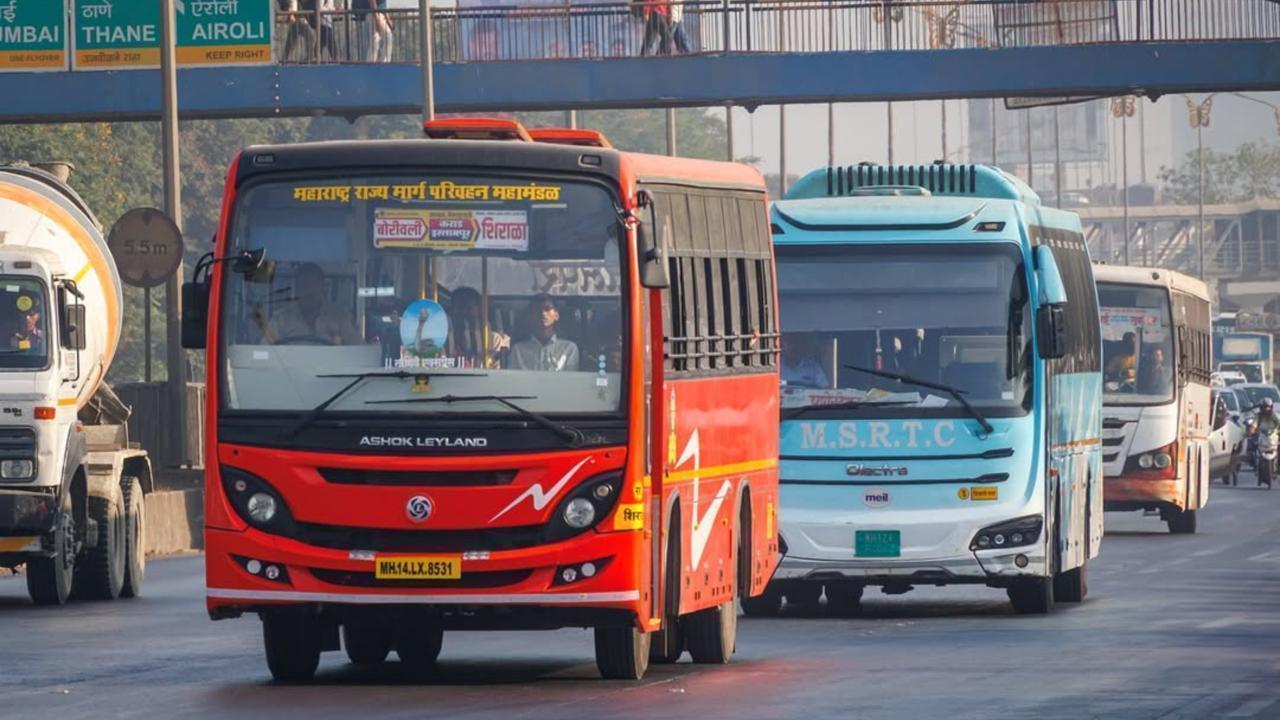
As the clock struck midnight marking the start of the protest, bus depots across major cities like Mumbai, Pune, Nagpur, Nashik, and Aurangabad saw a complete standstill. Maharashtra State Road Transport Corporation (MSRTC) services were severely hit, with a large number of buses remaining grounded throughout the day. In Pune alone, more than 800 buses stayed off the roads, leaving commuters stranded and forcing many to scramble for alternative modes of transport.
Several schools, colleges, and offices reported lower attendance as people struggled to find transportation. In urban centres, auto-rickshaws and app-based cab services saw a sharp spike in demand, leading to surge pricing and long wait times. Meanwhile, the streets of smaller towns were eerily quiet, as public transport—the lifeline of rural and semi-urban Maharashtra—came to a near standstill.
“We have been appealing to the government for years now, but our voices have gone unheard,” said Shashikant Pawar, a senior transport union leader from Nagpur. “The workers are the backbone of this state’s transport system, and yet we are treated like we don’t exist. Today’s turnout shows that we are united and determined to fight for our rights.”
The transport strike has not only inconvenienced daily commuters but also triggered economic concerns, particularly in regions heavily dependent on public transport. Small business owners, daily wage workers, and market vendors expressed frustration over the sudden disruption, fearing loss of income and livelihood. Some industrial zones in and around Pune and Nashik even reported lower productivity as workers were unable to reach factories and warehouses on time.
The state government, while acknowledging the demands of the striking workers, has so far appealed for patience and restraint. Maharashtra’s Transport Minister Sanjay Bansode addressed the media in Mumbai, urging unions to call off the strike and return to the negotiation table.
“We respect the contributions of transport workers and we are open to dialogue,” Bansode said. “A high-level committee has already been formed to address their demands. We request the workers not to hold the public to ransom by resorting to such large-scale disruptions.”
However, union leaders remain unconvinced by these assurances, citing past instances where promises were made but not kept. According to the Maharashtra Transport Workers’ Federation, this is not the first time workers have been forced to strike in the face of government inaction. The Federation claims that despite repeated memorandums, protest marches, and smaller strikes, core issues like wage disparity, contract regularisation, and promotion backlogs remain unresolved.
The anger among the workers is palpable. Many drivers and conductors have not received timely promotions for over a decade, while contractual workers complain of low pay, job insecurity, and lack of social benefits. Some have even alleged that despite court orders in their favour, the state has dragged its feet in implementing key policy changes.
Adding to the complexity of the situation is the financial health of the MSRTC itself. The transport corporation has been struggling with mounting losses for years, exacerbated by the COVID-19 pandemic, rising fuel costs, and increasing competition from private players. While the government has periodically announced bailouts, critics say these measures have failed to translate into tangible benefits for frontline workers.
In several cities, protests remained peaceful, with workers staging sit-ins and marches outside bus depots and government offices. In Pune’s Swargate Depot, over 200 striking workers gathered with placards and banners, raising slogans demanding “justice and dignity.” Police were deployed in key areas to ensure law and order, but no major incidents of violence or vandalism were reported by late evening.
Commuters, meanwhile, had to bear the brunt of the transport paralysis. Many expressed sympathy for the workers’ plight but also shared their frustration over the lack of alternative arrangements. “I support their demands, but the government should have planned something for us passengers too,” said Meera Kulkarni, a college student in Pune who had to walk nearly five kilometres to reach her destination.
With no breakthrough in talks by Friday evening, union leaders announced that the strike would continue into its second day, intensifying pressure on the state administration. A joint statement issued by the key unions stated that the protest would not be withdrawn until written assurances were provided, with clear timelines for addressing their demands.
The situation is also drawing political attention. Opposition parties have seized the moment to criticise the state government’s handling of labour issues, accusing it of neglect and mismanagement. Several opposition leaders visited protest sites and expressed solidarity with the striking workers, further politicising the crisis.
As the standoff continues, citizens across Maharashtra are bracing for more disruptions in the coming days. The strike has revived discussions on the need for systemic reforms in the public transport sector, particularly around the rights and welfare of the workers who keep the state moving.
In the absence of swift government action, the coming days are likely to see escalating tensions, with the potential for the strike to widen to other essential services. Both sides—workers and government—now face the challenge of balancing public welfare with long-standing labour grievances.
For the average Maharashtrian, however, the priority remains clear: a quick resolution that restores normalcy while ensuring that the voices of the transport workers are heard, respected, and acted upon.
Maharashtra, Mumbai



Advances in Aerospace Technology and Commercial Aviation Recovery
Insights into breakthrough aerospace technologies and commercial aviation’s recovery amid 2025 chall

Defense Modernization and Strategic Spending Trends
Explore key trends in global defense modernization and strategic military spending shaping 2025 secu

Tens of Thousands Protest in Serbia on Anniversary of Deadly Roof Collapse
Tens of thousands in Novi Sad mark a year since a deadly station roof collapse that killed 16, prote

Canada PM Carney Apologizes to Trump Over Controversial Reagan Anti-Tariff Ad
Canadian PM Mark Carney apologized to President Trump over an Ontario anti-tariff ad quoting Reagan,

The ad that stirred a hornets nest, and made Canadian PM Carney say sorry to Trump
Canadian PM Mark Carney apologizes to US President Trump after a tariff-related ad causes diplomatic

Bengaluru-Mumbai Superfast Train Approved After 30-Year Wait
Railways approves new superfast train connecting Bengaluru and Mumbai, ending a 30-year demand, easi




