Post by : Amit
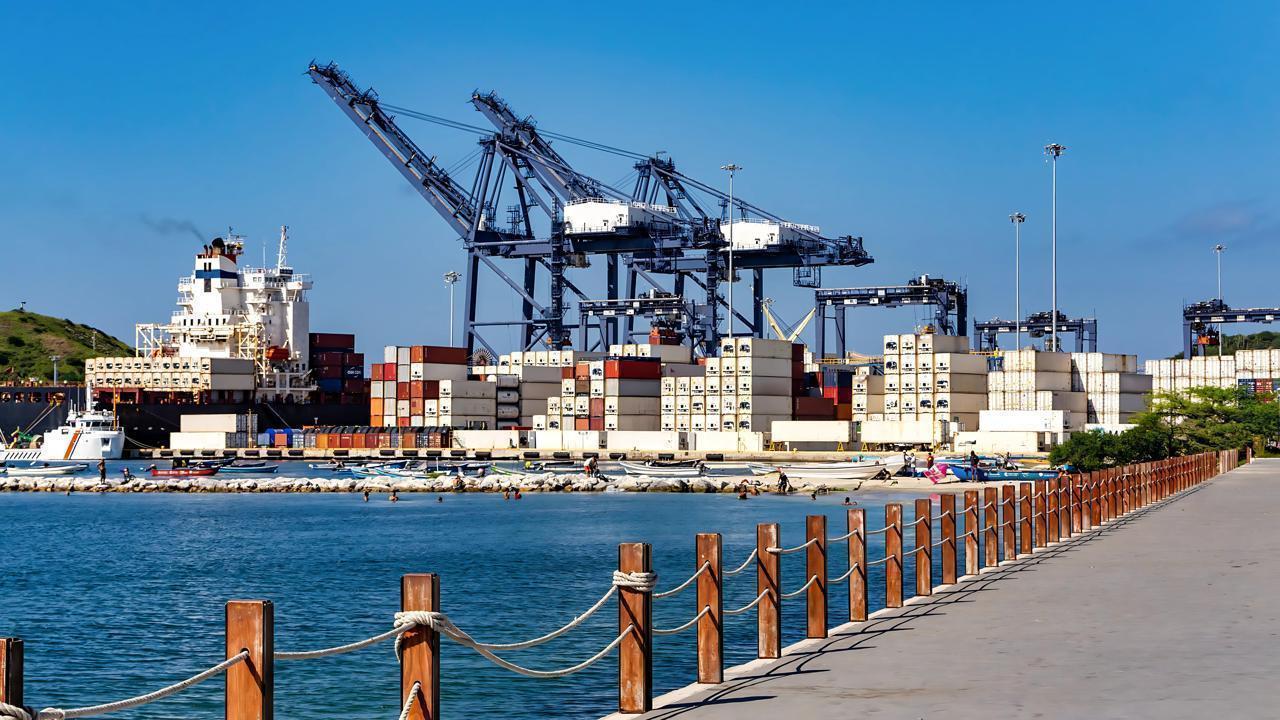
As global trade volumes continue to rebound in 2025, the world’s busiest maritime gateways are grappling with a challenge that refuses to go away: port schedule reliability. A new analysis by Sea-Intelligence, the maritime data and analytics firm, reveals that many major hub ports have seen a notable deterioration in schedule performance, casting a shadow over supply chain recovery efforts and shipping network efficiency.
For an industry that has spent the last three years recovering from the cascading disruptions of COVID-19, the Russia-Ukraine war, and global equipment shortages, the latest figures feel like déjà vu. Despite record investments in port digitization and vessel scheduling tools, carriers are still struggling to hit their timetables—especially at the world’s largest ports.
Sea-Intelligence’s data shows that some high-volume hubs have seen schedule reliability dip below 45%, meaning less than half of all port calls occur on time. The findings come at a critical moment, as cargo owners gear up for the second half of the year, including peak back-to-school and holiday shipping seasons.
The Sea-Intelligence report does not mince words: the worst performance is coming from ports that are central to global shipping routes. Asian mega-ports like Singapore, Shanghai, and Busan, along with major European and U.S. gateways, have all shown month-on-month declines in vessel schedule reliability.
Singapore, one of the world's most critical transshipment hubs, has faced congestion spikes due to a combination of increased vessel bunching, tighter berth availability, and cascading delays from feeder services. Shanghai has similarly struggled with post-pandemic volume surges and equipment repositioning bottlenecks.
In Europe, Antwerp and Rotterdam have both experienced worsening congestion, driven partly by infrastructure works and fluctuating inland barge availability. On the U.S. East Coast, New York and Savannah were among the ports where schedule performance continued to fall short of pre-pandemic levels.
“Schedule reliability at the hub level matters even more than at origin or destination ports,” said one global freight forwarder based in Hamburg. “A delay at a hub ripples across an entire rotation—and impacts multiple customer deliveries.”
While vessel operators are the face of these delays, shippers and third-party logistics providers bear the brunt. Missed delivery windows, out-of-sequence container arrivals, and cascading demurrage fees are all reappearing in client complaints. For retailers and manufacturers with tight inventory windows, a missed ETA can still result in thousands—or millions—of dollars in lost sales or penalty fees.
To cope, many shippers are returning to the old playbook: building more buffer time into lead schedules, spreading risk across multiple carriers, and overbooking containers across services. But all of these responses come at a cost.
At the same time, carriers are now facing increasing pressure to restore network reliability as a competitive differentiator. With capacity now stabilizing and freight rates under pressure, the ability to offer consistent and dependable transit times could become the next battleground for customer loyalty.
Ironically, while mega-hubs falter, smaller regional ports and niche terminals are reporting stronger on-time performance. Sea-Intelligence's analysis suggests that less-congested ports, with lower throughput and more nimble terminal operations, are increasingly being favored by carriers seeking schedule protection.
This growing gap in reliability performance could reshape port strategies. Large hub ports, often operating close to or at capacity, may face calls to rethink berth scheduling, yard management, and digital coordination across terminals to improve throughput reliability.
The report also underscores how port reliability is now just as critical to supply chain planning as vessel scheduling and inventory forecasting.
Despite a wave of digitalization across ports—from AI-powered berth planning to predictive container tracking—many terminal operations remain constrained by physical capacity, labour issues, and weather-related disruptions. For instance, terminal upgrades underway in some ports have added short-term congestion, even if they promise long-term efficiency.
Experts suggest that better carrier-terminal coordination, dynamic arrival management, and incentives for off-peak scheduling could help ease some of the friction. But without tangible capacity enhancements and cross-stakeholder alignment, digital tools alone won’t resolve the systemic reliability challenge.
With peak shipping season looming and trade volumes rising, the Sea-Intelligence report serves as a cautionary tale for the global maritime logistics industry. Brittle schedule reliability at major ports can easily unravel finely balanced global supply chains, especially as just-in-time inventory models remain prevalent in retail and manufacturing.
For cargo owners, the message is clear: plan for uncertainty, diversify routes when possible, and remain agile. For port operators and carriers, the focus must shift from recovery to resilience.
In a post-pandemic, geopolitically unstable world, reliability is not a luxury—it is a necessity. And as the Sea-Intelligence data shows, some of the biggest players in the shipping world still have work to do to earn back shippers' trust.
Maritime, Russia Ukraine



Advances in Aerospace Technology and Commercial Aviation Recovery
Insights into breakthrough aerospace technologies and commercial aviation’s recovery amid 2025 chall

Defense Modernization and Strategic Spending Trends
Explore key trends in global defense modernization and strategic military spending shaping 2025 secu

Tens of Thousands Protest in Serbia on Anniversary of Deadly Roof Collapse
Tens of thousands in Novi Sad mark a year since a deadly station roof collapse that killed 16, prote

Canada PM Carney Apologizes to Trump Over Controversial Reagan Anti-Tariff Ad
Canadian PM Mark Carney apologized to President Trump over an Ontario anti-tariff ad quoting Reagan,

The ad that stirred a hornets nest, and made Canadian PM Carney say sorry to Trump
Canadian PM Mark Carney apologizes to US President Trump after a tariff-related ad causes diplomatic

Bengaluru-Mumbai Superfast Train Approved After 30-Year Wait
Railways approves new superfast train connecting Bengaluru and Mumbai, ending a 30-year demand, easi




