Post by : Saif
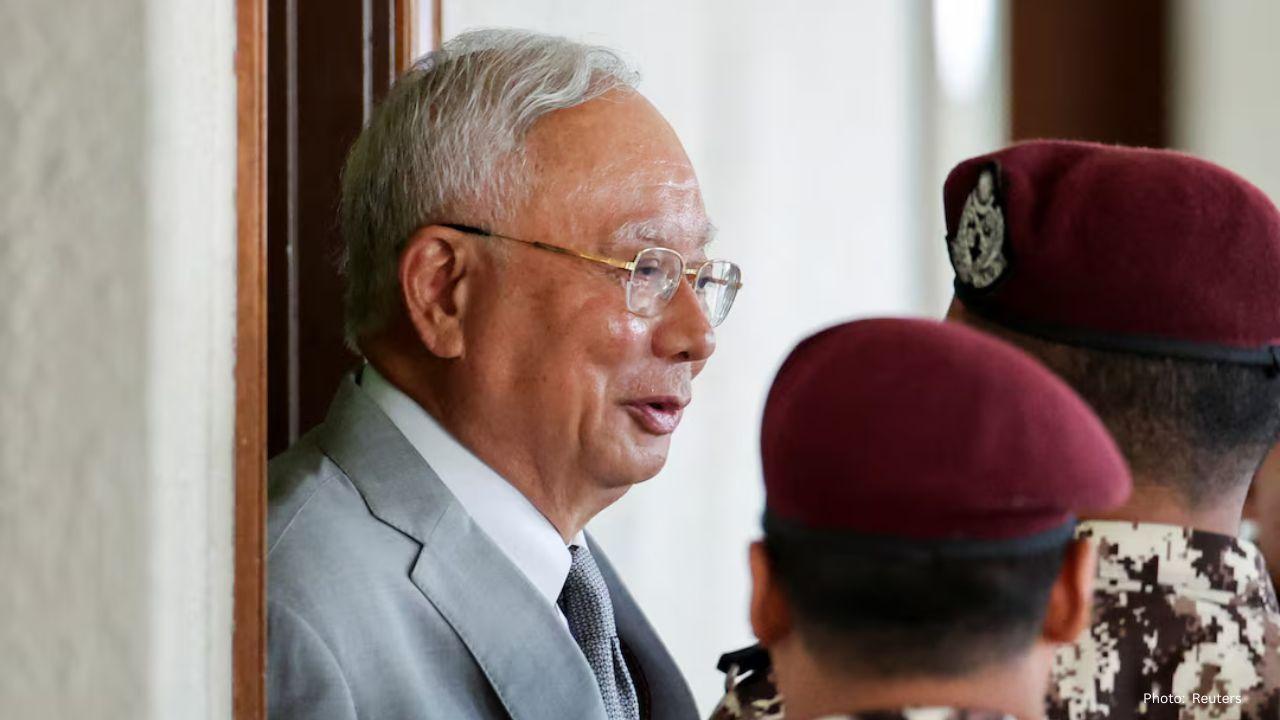
A Malaysian court has once again made it clear that the rule of law must be followed, even by the most powerful figures in the country. On Monday, the Kuala Lumpur High Court rejected former Prime Minister Najib Razak’s request to serve the rest of his prison sentence under house arrest.
Najib has been in jail since August 2022 for his role in the massive 1Malaysia Development Berhad (1MDB) corruption scandal. The case shocked Malaysia and the world, involving billions of dollars that were allegedly misused and stolen from a state investment fund meant to help the country’s economy.
In his latest legal move, Najib argued that a royal document issued last year allowed him to complete his sentence at home. He claimed the order was part of a royal pardon given by the former king of Malaysia. Based on this, he asked the court to force authorities to recognize and carry out the order.
However, the court did not agree with his request. High Court judge Alice Loke said that while the existence of the royal document was not in question, it was not created using the correct legal process. Under Malaysian law, any decision related to pardons or changes to sentences must involve the country’s pardons board. In this case, the judge said the former king should have consulted the board before issuing an order allowing house arrest.
Because proper steps were not followed, the court ruled that the order was invalid. As a result, Najib will remain in prison and will not be allowed to serve his sentence at home.
The timing of this decision is also important. Just days from now, Najib is expected to face a major court verdict in another 1MDB-related case. This upcoming judgement could have serious consequences and may further shape his legal future. Najib has continued to deny all charges against him in the various cases linked to the scandal.
The 1MDB scandal remains one of the darkest chapters in Malaysia’s political history. It led to public anger, damaged the country’s global image, and played a major role in ending Najib’s time in power. Many Malaysians still see the court cases as a test of whether justice applies equally to everyone, regardless of status or influence.
This latest ruling sends a strong message. Courts are expected to follow the law strictly, even when royal elements or high-profile figures are involved. Legal procedures exist to ensure fairness, transparency, and accountability, and skipping them can weaken public trust.
For ordinary Malaysians, the decision may bring reassurance that the justice system is standing firm. While debates around pardons and royal powers will continue, the court’s focus on proper procedure shows that legal rules cannot be bent for personal benefit.
As Najib prepares to face another key court decision later this week, the nation will once again be watching closely. The outcome will not only affect his future but also reflect how Malaysia continues to deal with corruption and uphold the rule of law.
#trending #latest #NajibRazak #MalaysiaCourt #1MDBScandal #RuleOfLaw #CorruptionCase #MalaysianPolitics #JusticeSystem



Advances in Aerospace Technology and Commercial Aviation Recovery
Insights into breakthrough aerospace technologies and commercial aviation’s recovery amid 2025 chall

Defense Modernization and Strategic Spending Trends
Explore key trends in global defense modernization and strategic military spending shaping 2025 secu

Tens of Thousands Protest in Serbia on Anniversary of Deadly Roof Collapse
Tens of thousands in Novi Sad mark a year since a deadly station roof collapse that killed 16, prote

Canada PM Carney Apologizes to Trump Over Controversial Reagan Anti-Tariff Ad
Canadian PM Mark Carney apologized to President Trump over an Ontario anti-tariff ad quoting Reagan,

The ad that stirred a hornets nest, and made Canadian PM Carney say sorry to Trump
Canadian PM Mark Carney apologizes to US President Trump after a tariff-related ad causes diplomatic

Bengaluru-Mumbai Superfast Train Approved After 30-Year Wait
Railways approves new superfast train connecting Bengaluru and Mumbai, ending a 30-year demand, easi




