Post by : Amit
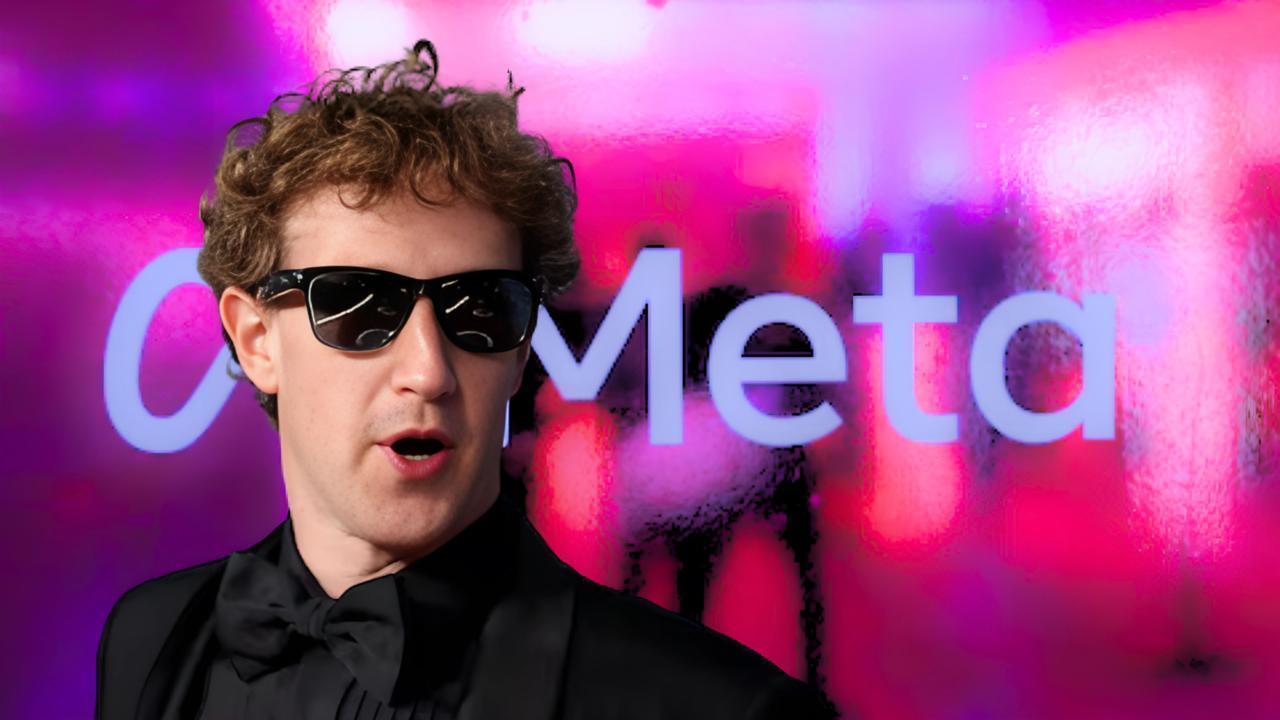
Photo: Reuters
Meta—the tech giant behind Facebook, Instagram, and WhatsApp—has hired renowned AI entrepreneur and researcher Daniel Gross to spearhead its newly formed Superintelligence Team, signaling the company’s deepening ambition to take the lead in developing Artificial General Intelligence (AGI). The move not only intensifies Silicon Valley’s AI arms race but also highlights the growing importance of safety, ethics, and human alignment in the pursuit of next-generation artificial intelligence.
Daniel Gross, who previously co-founded Safe Superintelligence Inc. (SSI)—a boutique AI research firm dedicated to the responsible development of advanced AI—has long been celebrated as one of the brightest minds in the artificial intelligence community. Known for his sharp intellect, ethical rigor, and focus on building AI that serves humanity rather than undermines it, Gross brings both technical brilliance and moral vision to Meta at a time when AI is poised to reshape everything from economies to geopolitics.
For Meta, the hiring of Gross is being seen as a strategic masterstroke in its bold quest to build superintelligent AI—systems that don’t just mimic human cognition but surpass it across virtually every domain of knowledge, creativity, and reasoning. While this level of intelligence remains largely theoretical today, the pace of progress in artificial intelligence has accelerated so dramatically in recent years that what once seemed like science fiction is now being viewed as an inevitable milestone.
The new Superintelligence Team will operate within Meta’s broader AI ecosystem, which already includes the powerful FAIR (Facebook AI Research) division. However, the formation of this dedicated team reflects Meta’s intention to go beyond narrow AI—systems trained for specific tasks—and venture into the far more complex and uncharted territory of general-purpose, human-level AI.
Meta’s bold step comes at a time when the race toward AGI is heating up worldwide. Tech heavyweights including OpenAI, Google DeepMind, Anthropic, Microsoft, and Tesla are all investing billions in AI research, pushing the boundaries of what machines can do—from writing human-like text and composing music to solving complex scientific problems and even making strategic decisions in real time.
At the heart of this race lies not just the question of who can build the most powerful AI—but who can build it safely.
Daniel Gross’s appointment underscores precisely this challenge. Born in Israel, Gross made his mark early as the founder of Cue, a personal assistant app that was later acquired by Apple, where he contributed to AI-driven projects. He went on to become a leading investor and mentor at Y Combinator, where he helped shape the growth of multiple AI startups. Most recently, he co-founded SSI, an initiative focused on ensuring that as AI becomes more powerful, it remains aligned with human values, transparent, and safe—an issue that has become the subject of growing public anxiety and regulatory interest.
Gross is not just another technologist chasing the next big thing; he is part of a growing chorus of AI thinkers who believe that if artificial superintelligence is achieved without the proper safety measures, the risks could be catastrophic. Concerns range from economic disruption and mass job displacement to the potential for AI-driven manipulation, surveillance, autonomous weapons, and loss of human agency.
By bringing Gross on board, Meta appears to be making a clear statement: it wants to lead not only in the development of powerful AI systems but also in ensuring that those systems are built with responsibility and foresight.
Meta CEO Mark Zuckerberg has in recent months publicly signaled the company’s ambition to be a major force in AI, framing it as the next computing revolution that will shape the metaverse, digital communication, and even the global economy. With this new hire, Meta is positioning itself to compete head-to-head with the likes of OpenAI—creator of ChatGPT and GPT-4—and Google DeepMind, which recently unveiled its Gemini AI platform.
What makes this move particularly significant is that Meta’s focus appears to be two-fold: pushing the boundaries of AI capability while embedding safety and alignment into the DNA of its research from the outset.
For Gross, this new role offers a rare chance to scale his vision of safe superintelligence on one of the world’s largest technology platforms. With billions of users across Meta’s social media and messaging ecosystems, even small AI breakthroughs can have global ripple effects—raising the stakes for how responsibly such technologies are developed and deployed.
The road to AGI, however, is fraught with technical, ethical, and geopolitical challenges. As AI systems grow in complexity, concerns over bias, privacy, misinformation, and algorithmic manipulation continue to mount. Around the world, governments are racing to draft legislation to regulate AI before it outpaces human oversight. The European Union’s AI Act and ongoing discussions in the US Congress reflect a shared recognition that the AI revolution cannot be left solely in the hands of private corporations.
In this context, Gross’s appointment may also help Meta position itself more favorably with regulators and policymakers. By emphasizing safety and ethics, Meta can strengthen its case that it is not just chasing profit but also acting as a responsible steward of transformative technology.
Industry watchers note that Meta’s AI ambitions go beyond academic research. The company is expected to weave advanced AI into everything from personalized content on Facebook and Instagram to immersive experiences in its long-term vision of the metaverse. There is also growing speculation that Meta could enter the enterprise AI market, challenging incumbents like Microsoft and Google in providing AI-powered tools for businesses.
But as the company moves forward, it will have to navigate the complex interplay between innovation, regulation, public trust, and ethical leadership. The inclusion of voices like Gross’s in key decision-making roles could be critical in steering Meta through this labyrinth.
For now, the specifics of the projects that Gross’s Superintelligence Team will undertake remain closely guarded. Insiders suggest that his mandate will involve both foundational AI research—pushing the theoretical boundaries of machine learning—and applied AI, ensuring that Meta’s consumer-facing products benefit from cutting-edge innovation while minimizing risks.
As the AI landscape evolves at breakneck speed, Meta’s decision to hire Daniel Gross could prove to be a pivotal moment in the history of artificial intelligence. It reflects a growing recognition that the next frontier of AI is not just about building the most powerful systems—but about building them wisely, ethically, and in alignment with the values of the societies they will shape.
For Daniel Gross, the challenge ahead is monumental. For Meta, the stakes have never been higher.
And for the world, the choices made in boardrooms like these could determine not just the future of technology, but the future of humanity itself.
Meta, AI



Advances in Aerospace Technology and Commercial Aviation Recovery
Insights into breakthrough aerospace technologies and commercial aviation’s recovery amid 2025 chall

Defense Modernization and Strategic Spending Trends
Explore key trends in global defense modernization and strategic military spending shaping 2025 secu

Tens of Thousands Protest in Serbia on Anniversary of Deadly Roof Collapse
Tens of thousands in Novi Sad mark a year since a deadly station roof collapse that killed 16, prote

Canada PM Carney Apologizes to Trump Over Controversial Reagan Anti-Tariff Ad
Canadian PM Mark Carney apologized to President Trump over an Ontario anti-tariff ad quoting Reagan,

The ad that stirred a hornets nest, and made Canadian PM Carney say sorry to Trump
Canadian PM Mark Carney apologizes to US President Trump after a tariff-related ad causes diplomatic

Bengaluru-Mumbai Superfast Train Approved After 30-Year Wait
Railways approves new superfast train connecting Bengaluru and Mumbai, ending a 30-year demand, easi




