Post by : Amit
India's Shores, Global Ambitions: A Sea-Change Underway
In a defining shift for India's economic and strategic identity, Prime Minister Narendra Modi has set in motion a transformative maritime revolution. What was once a long-neglected sector relegated to the sidelines of national policy has become a cornerstone of India's global aspirations. Through bold infrastructure investments, diplomatic strategy, and institutional reforms, the Modi government is laying the foundation for what many are calling a maritime renaissance.
With a coastline stretching over 7,500 kilometers, a vibrant blue economy waiting to be tapped, and a geopolitical environment that prizes Indo-Pacific leadership, India's time to embrace the sea has arrived. But this isn’t just about cargo or port traffic—it’s about redefining India’s position on the global economic map, deterring regional threats, and ensuring long-term resilience.
From Forgotten Frontiers to National Priority
Historically, India’s maritime identity had remained underdeveloped. While the nation has enjoyed millennia of coastal trade history—from the ports of Gujarat to the harbors of the Eastern coast—modern India placed disproportionate focus on land-based trade and border defense. The seas, which offered economic lifelines and geostrategic leverage, were seen as secondary.
That calculus began to shift with Modi’s administration. In his first term, projects like Sagarmala aimed to revitalize port infrastructure and coastal connectivity. But in his second term, and more so into his third, the focus sharpened. Maritime logistics, shipbuilding, port-led industrialization, and naval modernization were no longer siloed goals—they were interwoven into India’s grand strategic and economic playbook.
The Pillars of the Maritime Revolution
Modi’s maritime revolution rests on several interdependent pillars: port modernization, shipping reform, blue economy development, naval expansion, and regional maritime diplomacy.
1. Port Infrastructure as Engines of Growth
Through Sagarmala and now the PM Gati Shakti Master Plan, India is investing in multi-modal port connectivity. Major ports like Mundra, Vizhinjam, and the upcoming Vadhavan deep-sea port are designed not just to increase container handling capacity, but to create global-standard maritime clusters. These hubs are being linked to freight corridors and industrial parks to streamline exports and reduce logistics costs.
2. Boosting Indigenous Shipbuilding
The government has introduced policies to encourage domestic shipbuilding, aiming to reduce reliance on foreign-built vessels and create jobs in coastal states. With initiatives like the Shipbuilding Financial Assistance Policy (SBFA), India hopes to mirror the success of countries like South Korea and China, which dominate global ship exports.
3. Blue Economy as a Growth Frontier
Modi’s vision includes leveraging India’s Exclusive Economic Zone (EEZ) for sustainable economic growth—through fisheries, deep-sea mining, renewable ocean energy, and marine biotechnology. The Blue Economy is no longer a fringe concept, but a formal part of the national development discourse.
4. Maritime Security and Naval Power
India's rising naval prowess complements its economic interests. The Navy is not only being equipped with indigenously built aircraft carriers, submarines, and surveillance systems—it is also becoming an instrument of diplomacy. Joint naval exercises with Quad partners and Indian Ocean nations underline India’s growing maritime leadership.
5. Diplomacy Across the Indo-Pacific
India’s foreign policy now openly embraces a maritime-forward doctrine. The SAGAR (Security and Growth for All in the Region) initiative has deepened India’s ties with island nations and coastal economies. India is offering port development aid, satellite monitoring services, and naval training programs to build trust and counterbalance China’s influence in the Indo-Pacific.
Economic Impact: Ports as Growth Engines
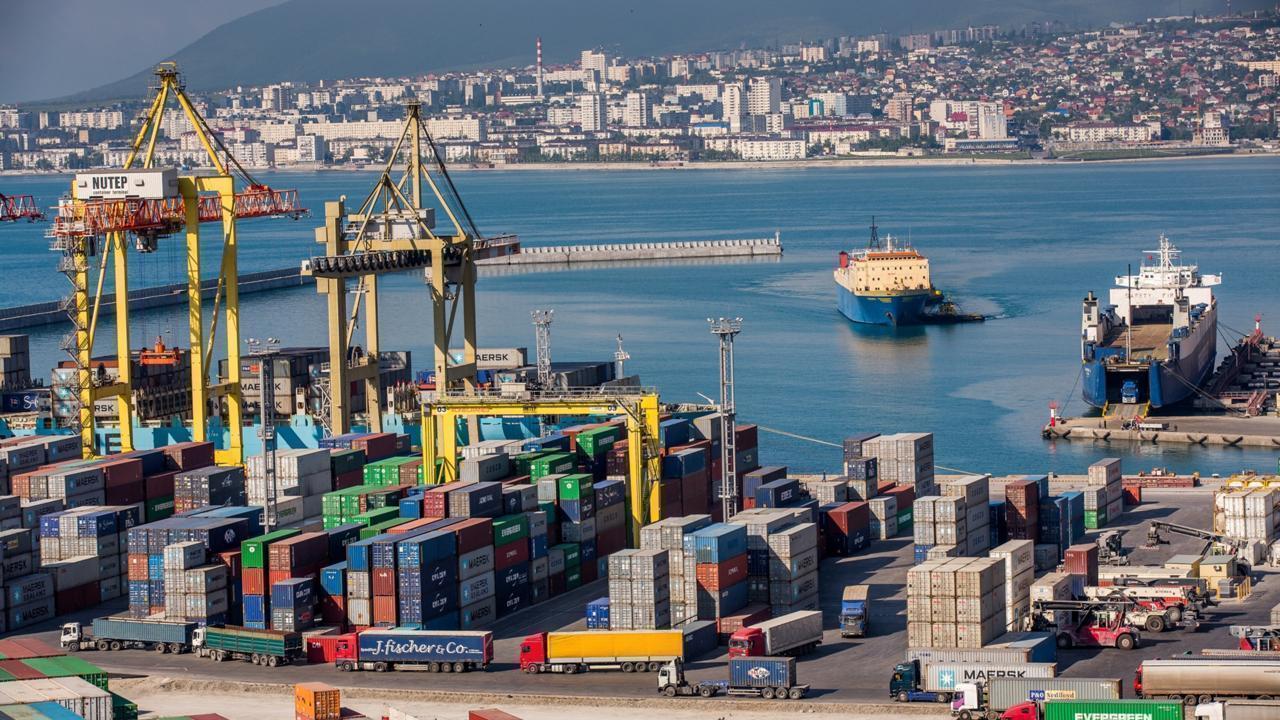
Ports are not just gateways to trade—they are economic ecosystems. Under Modi, India’s port handling capacity has increased by more than 50% since 2014. Private sector participation has grown, port operations have been digitized, and turnaround times have improved.
The development of transshipment hubs, such as Vizhinjam in Kerala, is allowing India to capture cargo traffic that previously went to Colombo or Singapore. With the upcoming Vadhavan port in Maharashtra designed to handle 23.2 million TEUs annually, India is preparing to rival top Asian ports.
Moreover, India’s push for coastal economic zones and free trade warehousing zones has started to unlock value from the hinterland. States like Gujarat, Tamil Nadu, and Andhra Pradesh are seeing rising investments in maritime-linked manufacturing, with electronics, chemicals, textiles, and processed foods becoming key sectors.
Maritime Logistics: India's Missing Link in Global Value Chains
One of India’s long-standing hurdles to becoming a manufacturing giant has been its high logistics costs—nearly 13–14% of GDP, compared to 7–8% in developed economies. By boosting maritime trade, India can shift freight from congested roads and railways to cost-effective sea routes.
The government's efforts to improve coastal shipping and inland waterway networks are part of this larger strategy. Through multimodal integration under Gati Shakti, India is aiming to bring logistics costs below 10% of GDP. This would not only enhance export competitiveness but also reduce carbon emissions.
Strategic Depth in the Indo-Pacific: From Watcher to Shaper
India’s maritime revolution isn’t purely economic—it’s deeply strategic. The Indo-Pacific is the center of gravity for 21st-century geopolitics, and maritime control is central to influence in this region. From securing sea lanes to deterring piracy and countering expansionist powers, India is now asserting itself as a maritime stakeholder.
This shift is evident in India’s Quad participation, its patrols in the South China Sea, and its defense deals with island nations. Modi’s vision sees maritime security as a continuum of economic security. That’s why the Navy is getting new vessels at an unprecedented pace, and why India is extending naval infrastructure support to Seychelles, Mauritius, and Sri Lanka.
Fiscal Reform, Private Sector Confidence, Global Integration
Despite significant progress, the path ahead is not without obstacles. Fiscal bottlenecks—such as inconsistent port tariffs and multi-layered customs duties—continue to deter some global investors. India’s special economic zones (SEZs) and coastal economic zones often suffer from regulatory overlap between states and the center.
Experts argue that without addressing these issues, even the most modern ports may not deliver their full potential. What’s needed is a unified maritime policy that links taxation, digital trade, and customs with infrastructure delivery. The private sector also needs long-term policy predictability to invest confidently in shipbuilding, port services, and marine innovation.
Moreover, while India is becoming more assertive globally, it remains hesitant about joining large multilateral trade pacts. Balancing domestic industry protection with the need for global market access will be crucial if India wants to rival the port-driven export growth seen in Vietnam or Indonesia.
From Maritime Power to Maritime Superpower?
What Modi’s maritime revolution has done is reposition India—not just geographically but ideologically. From being a largely land-focused nation dependent on air and rail corridors, India is evolving into a multi-modal logistics powerhouse where ports drive the new industrial revolution.
The next decade could see India lead in green ports, autonomous shipping, marine robotics, and blue economy innovation—if the right policy ecosystem is sustained. With the world's attention turning to the Indo-Pacific, India’s maritime credibility will determine its voice in shaping regional security, trade norms, and technological standards.
This revolution, therefore, is not merely about ships and cargo—it is about nation-building from the shorelines inward.
Marintime, India



Advances in Aerospace Technology and Commercial Aviation Recovery
Insights into breakthrough aerospace technologies and commercial aviation’s recovery amid 2025 chall

Defense Modernization and Strategic Spending Trends
Explore key trends in global defense modernization and strategic military spending shaping 2025 secu

Tens of Thousands Protest in Serbia on Anniversary of Deadly Roof Collapse
Tens of thousands in Novi Sad mark a year since a deadly station roof collapse that killed 16, prote

Canada PM Carney Apologizes to Trump Over Controversial Reagan Anti-Tariff Ad
Canadian PM Mark Carney apologized to President Trump over an Ontario anti-tariff ad quoting Reagan,

The ad that stirred a hornets nest, and made Canadian PM Carney say sorry to Trump
Canadian PM Mark Carney apologizes to US President Trump after a tariff-related ad causes diplomatic

Bengaluru-Mumbai Superfast Train Approved After 30-Year Wait
Railways approves new superfast train connecting Bengaluru and Mumbai, ending a 30-year demand, easi




