Post by : Amit
Photo : x / Asian Aviation
MTU deepens its China strategy
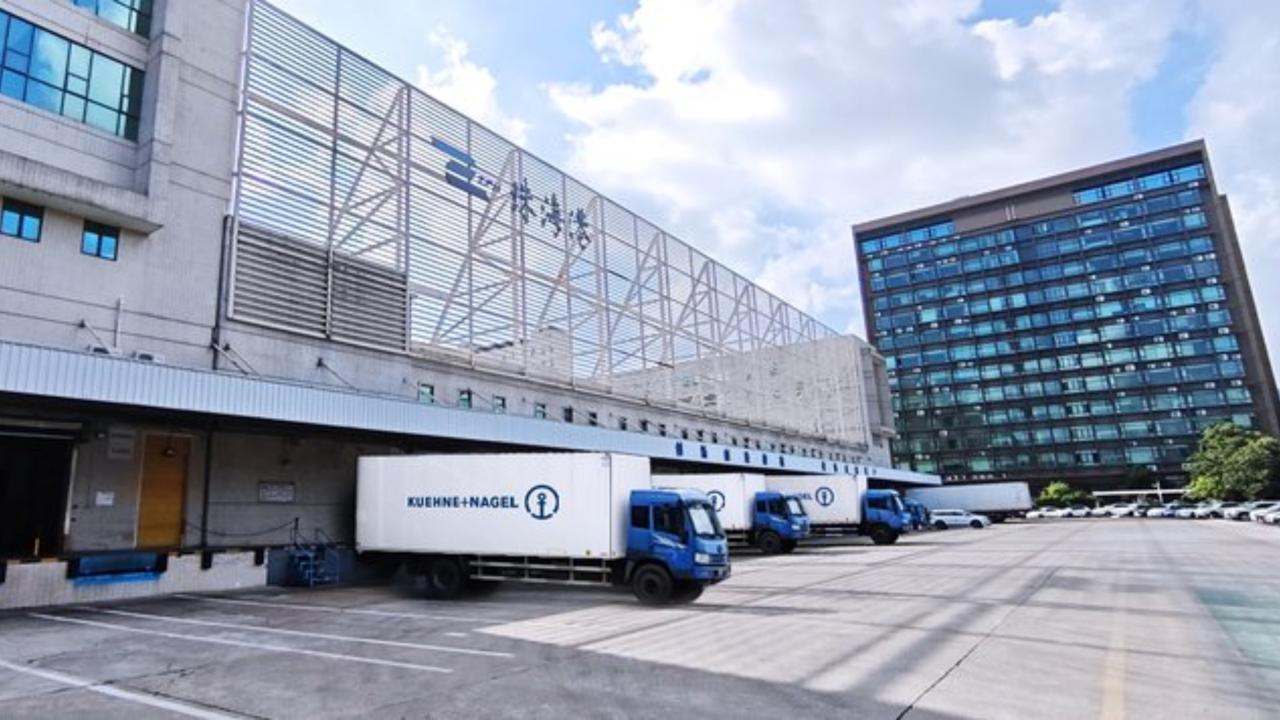
MTU Maintenance Lease Services, the leasing subsidiary of Germany’s MTU Aero Engines, has expanded its global network with the addition of a new spare parts warehouse in China. The move underscores the growing importance of Asia as a center for aviation maintenance, repair, and overhaul (MRO) and reflects MTU’s strategy to bring inventory closer to customers in one of the fastest-growing aviation markets.
The facility will serve airlines, MRO providers, and lessors across China and the broader Asia-Pacific, offering faster access to critical spare parts and reducing reliance on long-haul logistics from Europe or North America. In an industry where turnaround times can make or break operations, the establishment of localized parts hubs is increasingly becoming a competitive necessity.
Why China matters in aviation logistics
China’s aviation sector has grown at a staggering pace over the past two decades, and although slowed by pandemic disruptions, it remains the world’s second-largest air travel market after the United States. As airlines resume fleet expansion and traffic recovery accelerates, the need for efficient MRO supply chains has never been greater.
For lessors such as MTU Maintenance Lease Services, having a dedicated warehouse in China allows for better support of airlines operating narrowbody and widebody fleets, particularly Airbus A320, A330, and Boeing 737 and 777 aircraft families. These models dominate Chinese fleets, and their high utilization rates demand robust, responsive parts support.
By moving inventory closer to the customer, MTU reduces delays caused by customs, long-distance shipping, and supply chain bottlenecks—issues that have been magnified in recent years by global trade tensions and pandemic-related disruptions.
MTU’s leasing and parts business model
MTU’s leasing arm specializes in short- and medium-term engine leasing, parts pooling, and asset management. The company provides airlines with flexible options for maintaining fleet availability without committing to long-term capital outlays.
The addition of a China warehouse integrates neatly with this business model. Customers leasing spare engines or components can now access local inventory without waiting for items to be shipped from Europe. This accelerates fleet recovery in cases of unscheduled maintenance or component failures.
For MTU, the move strengthens its value proposition in Asia, where competition among MROs and lessors is fierce. It also signals that the company intends to deepen its footprint in a region projected to account for more than 40% of global aircraft deliveries over the next 20 years.
The global push for regional warehouses
MTU is not alone in pursuing a localized logistics strategy. Across the aviation sector, MRO providers and lessors are investing heavily in regional warehouses to shorten supply chains.
Singapore, Hong Kong, and mainland China have emerged as key nodes in this network. Companies such as Lufthansa Technik, Satair, and GA Telesis have established or expanded parts hubs in Asia to meet growing customer needs.
The logic is straightforward: as fleets in Asia expand, operators want immediate access to critical parts. Long shipping times not only increase costs but also threaten operational reliability. A grounded aircraft can cost airlines tens of thousands of dollars per day in lost revenue, making speed of support a decisive factor.
By adding its own China warehouse, MTU signals its readiness to compete at the same level as larger rivals while also addressing the specific needs of Chinese carriers.
China’s evolving MRO landscape
The timing of MTU’s move is significant. China is actively developing its domestic MRO ecosystem to reduce reliance on foreign service providers. State-backed firms such as Ameco and GAMECO have expanded capacity, while new private players are also entering the field.
At the same time, foreign MROs and lessors are positioning themselves to remain relevant by offering specialized expertise, advanced technology, and global networks. MTU’s warehouse gives it a foothold in this evolving landscape, ensuring it can offer immediate logistical support even as competition intensifies.
The facility may also provide a foundation for deeper collaboration with Chinese airlines, which increasingly expect suppliers to have a local presence.
The supply chain lessons of recent years
The past five years have reshaped how aviation companies think about logistics. The COVID-19 pandemic exposed the vulnerabilities of centralized supply chains, as border closures and shipping bottlenecks delayed critical parts deliveries. Meanwhile, geopolitical frictions between China, the U.S., and Europe have added complexity to cross-border logistics.
Against this backdrop, localized warehousing has emerged as a strategy not just for efficiency, but also for resilience. By storing parts in China, MTU ensures that it can continue to serve customers even in the event of global disruptions.
It also aligns with a broader trend across industries, where multinational companies are diversifying supply chains and building redundancy into their networks.
MTU’s competitive positioning
For MTU, the China warehouse is more than a logistical convenience—it is a competitive differentiator. Leasing and MRO are highly competitive businesses, where airlines weigh not just cost but also speed and reliability of support.
By demonstrating a willingness to invest in local infrastructure, MTU strengthens its relationships with Chinese carriers and lessors. This could pay dividends as the country’s fleet continues to grow. Industry forecasts suggest that by 2043, China alone will account for nearly 25% of the global commercial fleet.
Being embedded in that ecosystem today gives MTU a head start in securing long-term contracts and partnerships.
The customer perspective
From the perspective of airlines, the addition of MTU’s China warehouse is a welcome development. Aircraft downtime is one of the most expensive challenges operators face, and minimizing it requires immediate access to spare parts and engines.
For Chinese carriers, having a local source of parts reduces dependence on long supply chains, while for regional operators in Southeast Asia, the facility provides an additional option for sourcing critical components.
This could make MTU an attractive partner not only for Chinese airlines but also for regional players looking to diversify their MRO suppliers.
Strategic implications for the wider industry
MTU’s move also signals a shift in the balance of global aviation logistics. For decades, Europe and North America dominated parts distribution, with Asia largely reliant on imports. Today, that dynamic is changing.
As Asia becomes the center of gravity for global aviation growth, companies that fail to establish a presence risk losing relevance. MTU’s warehouse is part of a broader industry adjustment that acknowledges the reality of Asia as the future engine of aviation.
In the long run, these shifts could see Asia not just as a consumption hub for parts but also as a production and innovation center, especially as Chinese OEMs such as COMAC expand their global footprint.
Challenges and risks
While the strategy is sound, challenges remain. Operating a warehouse in China means navigating regulatory complexity, customs procedures, and competitive pressures from domestic firms. Moreover, geopolitical tensions could complicate supply chain operations if trade restrictions tighten.
There are also financial considerations. Maintaining local inventory ties up capital, and MTU will need to ensure that parts turnover justifies the investment. Balancing inventory levels to meet demand without overstocking is a delicate task in an industry where technology cycles and fleet retirements can quickly render parts obsolete.
Looking ahead
Despite these challenges, MTU appears confident that the benefits outweigh the risks. The China warehouse strengthens its global leasing and MRO portfolio, positions it closer to a key customer base, and enhances resilience against supply chain shocks.
Industry observers see it as a necessary move to keep pace with competitors and to capitalize on Asia’s growth. For MTU, the facility is likely just one step in a broader strategy to expand its logistics footprint worldwide.
A calculated investment in Asia’s future
The establishment of a China parts warehouse by MTU Maintenance Lease Services reflects both the opportunities and challenges of modern aviation logistics. On one hand, it demonstrates agility in meeting customer demand, reducing turnaround times, and embedding in a fast-growing market. On the other, it underscores the complexities of operating in an environment shaped by shifting geopolitics and intense competition.
For MTU, however, the decision is a clear bet on Asia’s role as the future of aviation. By investing today, the company positions itself to capture tomorrow’s growth. For China’s airlines and operators, it means faster, more reliable access to the parts that keep fleets flying.
In an industry where every hour of downtime counts, that could prove to be the difference between staying competitive and falling behind.
Aviation, China, Germany



Advances in Aerospace Technology and Commercial Aviation Recovery
Insights into breakthrough aerospace technologies and commercial aviation’s recovery amid 2025 chall

Defense Modernization and Strategic Spending Trends
Explore key trends in global defense modernization and strategic military spending shaping 2025 secu

Tens of Thousands Protest in Serbia on Anniversary of Deadly Roof Collapse
Tens of thousands in Novi Sad mark a year since a deadly station roof collapse that killed 16, prote

Canada PM Carney Apologizes to Trump Over Controversial Reagan Anti-Tariff Ad
Canadian PM Mark Carney apologized to President Trump over an Ontario anti-tariff ad quoting Reagan,

The ad that stirred a hornets nest, and made Canadian PM Carney say sorry to Trump
Canadian PM Mark Carney apologizes to US President Trump after a tariff-related ad causes diplomatic

Bengaluru-Mumbai Superfast Train Approved After 30-Year Wait
Railways approves new superfast train connecting Bengaluru and Mumbai, ending a 30-year demand, easi




