Post by : Amit
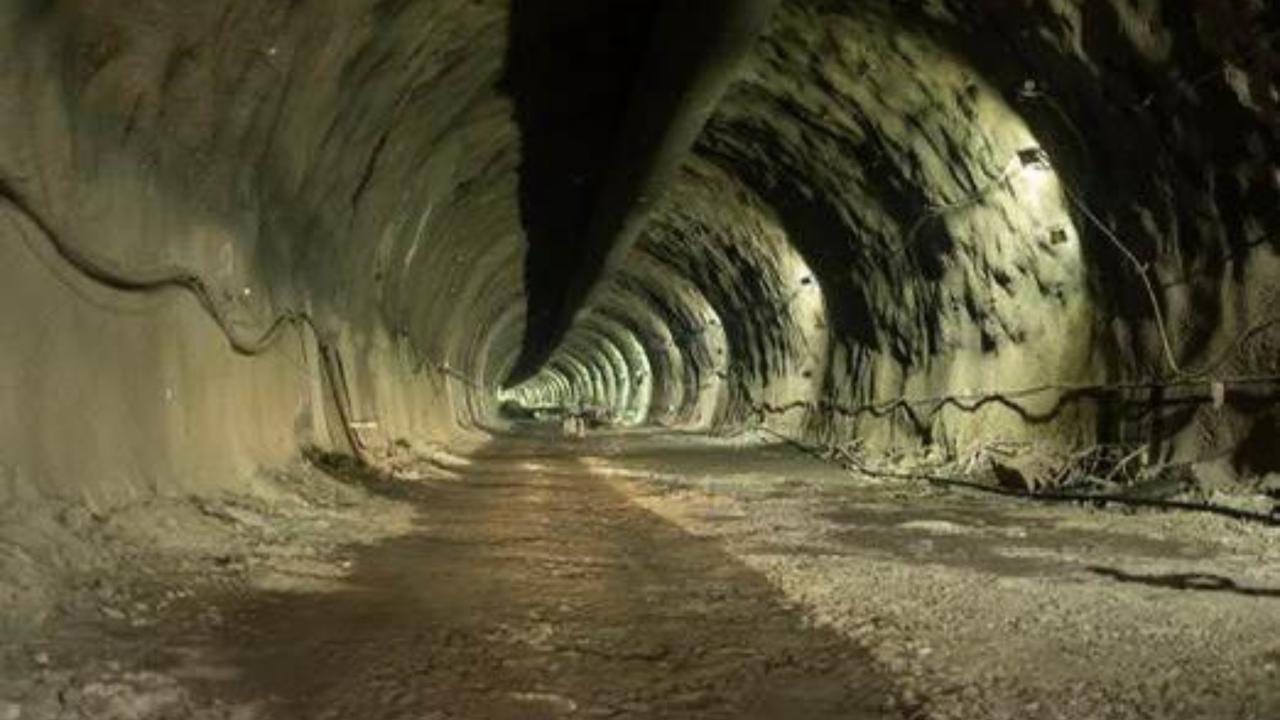
Photo : X / Ashwini Vaishnaw
A Milestone in India's High-Speed Rail Revolution
The construction of the 7.02-kilometre-long undersea tunnel, a key segment of the ambitious Mumbai–Ahmedabad bullet train corridor, has been successfully completed. This engineering milestone, announced by the National High-Speed Rail Corporation Limited (NHSRCL), marks a turning point in India's aspiration to introduce world-class high-speed rail connectivity, powered by cutting-edge Japanese Shinkansen technology.
This undersea passage—the first ever built in India for a high-speed rail system—runs beneath Thane Creek near Mumbai and is part of a broader 508-kilometre high-speed rail route. The development underscores the technical strength of the Indo-Japanese collaboration and reflects the nation’s forward momentum toward modern, efficient, and sustainable transportation infrastructure.
Engineering Feat: A Tunnel Beneath the Sea
The tunnel is part of a larger 21-kilometre stretch that connects Mumbai’s Bandra Kurla Complex (BKC) to Shilphata in Thane, with the 7.02-km section running beneath Thane Creek standing out due to its complexity and novelty.
This section was completed using three Tunnel Boring Machines (TBMs), each weighing over 1,700 tonnes and custom-built for the project. These massive machines worked in tandem with the New Austrian Tunneling Method (NATM) to negotiate extremely challenging terrain under the creek bed. Engineers contended with high-pressure groundwater ingress, unstable soil strata, and marine environmental sensitivity.
The tunnel descends to depths of 25 to 56 metres below ground level, and its construction required maintaining alignment within millimeter precision. Thirty-nine segments were assembled with utmost accuracy, ensuring airtight sealing and long-term durability.
Indo-Japanese Collaboration: Technology and Trust
The Mumbai–Ahmedabad High-Speed Rail project is being built with significant financial and technical support from Japan, primarily through the Japan International Cooperation Agency (JICA). Drawing heavily on Shinkansen expertise, this partnership exemplifies a successful international collaboration that is delivering tangible results on Indian soil.
Japanese corporations, including Kawasaki Heavy Industries and Hitachi, are supplying the rolling stock, while Taisei Corporation, along with India’s Larsen & Toubro (L&T), have been instrumental in executing the tunneling and civil engineering works.
“This tunnel marks the fusion of Indian ambition with Japanese precision,” an NHSRCL official stated. “It’s more than just infrastructure—it’s the start of a new era in Indian rail transport.”
The bilateral partnership not only brings world-class technology to India but also acts as a platform for knowledge exchange, skill development, and long-term economic and diplomatic synergy.
Strategic Importance of the Undersea Tunnel
Among all components of the Mumbai–Ahmedabad bullet train corridor, the Thane Creek undersea tunnel has been regarded as one of the most critical milestones. Technically complex and environmentally sensitive, it was a "critical path item" whose delay could have impacted the entire project timeline.
Now that it is completed, it unlocks the next phases of development in Maharashtra, a section that had previously lagged behind Gujarat due to land acquisition hurdles and urban constraints. With tunneling done, NHSRCL can now focus on track laying, systems installation, and trial operations across this critical route segment.
India’s First Undersea Rail Tunnel: Setting New Benchmarks
While metro tunnels under rivers exist in Kolkata and Ahmedabad, this is the first-ever undersea tunnel for high-speed, intercity rail in India. Unlike metro tunnels, the operational and safety parameters of high-speed rail systems are more rigorous—requiring greater tunnel diameter, faster ventilation, more complex evacuation systems, and vibration resistance.
As such, the successful completion of this tunnel places India on a new footing in large-scale tunneling projects and provides a blueprint for future underwater rail infrastructure, potentially along coastal routes like Mumbai–Goa, Chennai–Mysuru, or Visakhapatnam–Hyderabad.
Environmental Safeguards: A Tunnel Built with Nature in Mind
Thane Creek is known for its delicate marine ecosystem, which includes mangroves, wetlands, and bird sanctuaries. NHSRCL confirmed that stringent environmental protection measures were followed throughout the project lifecycle. Notably, no dredging or underwater blasting was conducted during construction—significantly minimizing environmental disruption.
Continuous seismic and hydrological monitoring was carried out, while marine biodiversity impact studies were incorporated into the planning phase. NHSRCL’s collaboration with environmental scientists ensured that the tunnel was built in line with both Indian and international sustainability norms.
Safety features within the tunnel also include fire-resistant linings, smoke extraction systems, emergency exits (cross-passages every 500 meters), and real-time monitoring—critical elements for protecting passengers in a high-speed environment.
Economic and Development Impact: A Corridor of Opportunity
The Mumbai–Ahmedabad bullet train is expected to reshape not only the physical but also the economic landscape between these two major cities. Once operational, the high-speed train will reduce travel time between Mumbai and Ahmedabad from over 6 hours to just under 2 hours. This will not only boost business travel and tourism but also lead to the creation of new urban and semi-urban hubs along the route.
Areas surrounding stations like Surat, Vadodara, Bharuch, and Thane are already seeing increased interest in real estate, hospitality, and commercial ventures. Analysts predict the emergence of a high-speed rail-driven economic corridor, offering spillover benefits in employment, logistics, retail, and technology.
Additionally, the bullet train is poised to absorb a significant share of domestic air and road traffic, particularly on the highly congested Mumbai–Ahmedabad sector, which will reduce carbon emissions, improve passenger convenience, and enhance India’s transport sustainability index.
Political and Public Reaction: From Skepticism to Celebration
The completion of the undersea tunnel has been met with applause from policymakers and the public alike. Prime Minister Narendra Modi hailed the event as a “testament to India’s engineering innovation and our global collaborations delivering concrete results.”
Maharashtra Deputy Chief Minister praised engineers and workers for persevering through monsoon challenges, urban congestion, and marine sensitivity—all while adhering to a strict schedule and budget.
Public sentiment around the bullet train project, once tinged with skepticism over feasibility and delays, is now shifting positively. The successful completion of visible and tangible elements like tunnels, stations, and viaducts is boosting public confidence and anticipation.
Future Outlook and Project Timeline
As of July 2025, NHSRCL reports that over 35% of the total civil construction work is complete across the entire corridor. The Gujarat segment is ahead of schedule, with multiple viaducts, bridges, and stations nearing structural completion.
In Maharashtra, the tunnel completion signals the beginning of an accelerated development phase, supported by better land access and streamlined project execution. According to NHSRCL’s current projections:
More Than a Tunnel: A Symbol of India's Aspirations
The Thane Creek tunnel is more than a civil engineering achievement—it is a symbol of a new era in Indian mobility. It embodies a vision where high-speed trains will become as integral to daily life as conventional rail or air travel. The Mumbai–Ahmedabad corridor is just the beginning, with similar projects proposed for Delhi–Varanasi, Mumbai–Nagpur, and even Delhi–Amritsar in the planning phase.
By successfully executing India’s first undersea tunnel, the NHSRCL and its partners have pushed the limits of possibility and set a precedent for how complex infrastructure can be planned, funded, and delivered in India.
As the bullet train edges closer to reality, the undersea tunnel stands as a defining success story—proving that with the right expertise, partnerships, and vision, India is ready to build for the future.
India, Mumbai, Metro, Bullet Train



Advances in Aerospace Technology and Commercial Aviation Recovery
Insights into breakthrough aerospace technologies and commercial aviation’s recovery amid 2025 chall

Defense Modernization and Strategic Spending Trends
Explore key trends in global defense modernization and strategic military spending shaping 2025 secu

Tens of Thousands Protest in Serbia on Anniversary of Deadly Roof Collapse
Tens of thousands in Novi Sad mark a year since a deadly station roof collapse that killed 16, prote

Canada PM Carney Apologizes to Trump Over Controversial Reagan Anti-Tariff Ad
Canadian PM Mark Carney apologized to President Trump over an Ontario anti-tariff ad quoting Reagan,

The ad that stirred a hornets nest, and made Canadian PM Carney say sorry to Trump
Canadian PM Mark Carney apologizes to US President Trump after a tariff-related ad causes diplomatic

Bengaluru-Mumbai Superfast Train Approved After 30-Year Wait
Railways approves new superfast train connecting Bengaluru and Mumbai, ending a 30-year demand, easi




