Post by : Avinab Raana
Photo : X / Amαr 🇮🇳
Mumbai Metro Embarks on Seamless Commuter Integration
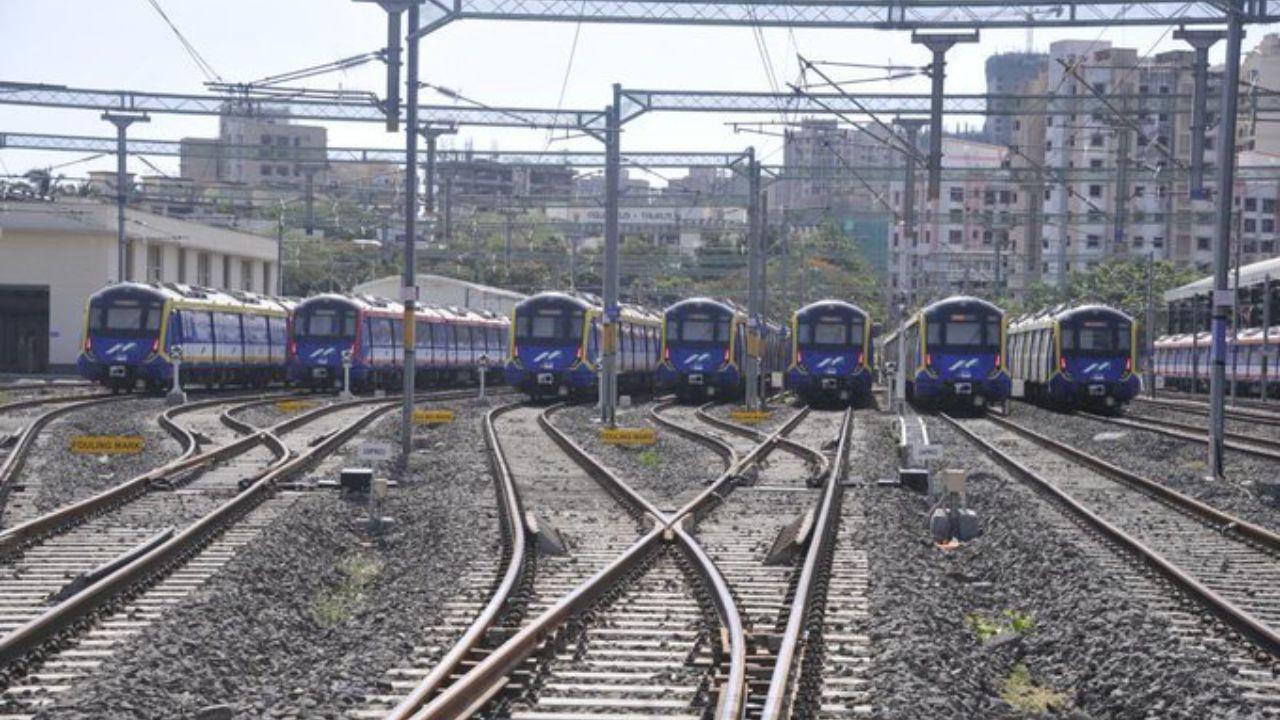
Mumbai’s sprawling transportation network is being tuned for harmony as the Mumbai Metropolitan Region Development Authority (MMRDA) advances multimodal integration across the metro system. From constructing pedestrian-friendly infrastructure to unifying fare media, the goal is to erase gaps between modes—elevating the experience of every daily ride.
Foot Overbridges Bridge The Metro-Suburban Divide
A significant stride came with new Foot Over Bridges (FOBs) connecting Metro Line 3 to the airport and suburban rails. A 100-meter steel bridge now links the CSMIA Metro station directly to Airport Terminal 2—collapsing walking distances from 450 to just 118 meters and eliminating exposure to street-level congestion. Other FOBs are in the works to link suburban rail stations at Pant Nagar, Vikhroli, and Bhandup with metro access, smoothing transitions across the Central line corridors.
Parallels Converge Through Coordinated Commissioning
Mumbai’s transit authorities are partnering in a dedicated joint coordination committee, led by MMRDA and including Mumbai Railway Vikas Corporation, CIDCO, BEST, MRVC, and rail ministries. Their mission: identify key interchange nodes, propose unified ticketing zones, and seal infrastructure gaps with skywalks, underpasses, and shared access points—ensuring suburban rail and metro are more than parallel lines.
Physical Integration: Footpaths, Tracks, and Transport Bays
MMRDA has awarded contracts in 2024 worth over ₹70 crore to build multimodal infrastructure around Metro Line 9 and other lines. The scope spans widened footpaths, cycle tracks, dedicated pick-up/drop-off zones, bus bays, improved traffic management, and street lighting—all within 500 meters of key stations. These groundwork moves prioritize safety, accessibility, and ease of transfer.
The Dharavi Hub: A Multimodal Masterstroke
In one of its most ambitious moves, the state government has commissioned MMRDA to develop a Dharavi Multimodal Transit Hub (MMTH). This integrated node will converge metro, suburban rail, BEST buses, and even non-motorized conveyances in the dense redevelopment zone. Positioned as a connective grid between Sion and Mahim stations, and linked with Metro Line 11, Dharavi’s new hub aims to redefine mobility in one of Mumbai’s most transit-starved neighborhoods.
One Card to Rule Them All: NCMC Launches Across Metro
Technological integration is also underway. The RuPay National Common Mobility Card (NCMC) has been introduced across Metro Line 3, enabling tap-and-go access not only on lines 1, 2A, and 7 but also on BEST buses and Chalo buses. Through this simple, unified platform, passengers are granted streamlined, cashless mobility across the network—paving the way for wider adoption and commuter efficiency.
Mega Investment Strengthens Network Ties
The MMRDA’s ₹12,000 crore mobilization—covering metro extensions and infrastructure enhancements—includes ₹535 crore explicitly earmarked for multimodal integration work across 32 stations. This includes upgraded traction, signaling, and fare systems, and cements last-mile connectivity as a primary rail objective, rather than an afterthought.
Coordinated Infrastructure Builds Transit Credibility
Mumbai’s truth is that its transport network must feel like one seamless system—not a patchwork of disconnected services. Through careful planning and multi-agency cooperation, integration projects are transforming interchange points into cohesive transit corridors. Communities will soon move from station to train to bus to street without friction—a major step forward in urban mobility dignity.
Policy Push Aligns with Commuter Realities
Underpinning these efforts is a strategic policy momentum and urban imperative. As traffic congestion, overcrowding, and pollution strain city life, the state is making multimodal integration a key pillar in sustainable urban development. Whether in Dharavi or through streamlined interchange, city transit is becoming more about connected journeys and less about disconnected waits.
Remaining Challenges Demand Deliberate Choices
Even with progress, Mumbai’s transit integration faces hurdles: monsoon delays, coordination complexity, land acquisition, and urban congestion. Execution will test resolve. Yet, with contracts signed, committees formed, and strategic pathways charted, the stage is set for Mumbai’s transit network to evolve beyond lines—into a unified journey system.
Mumbai’s Transport Symphony Begins
With multilayered integration, Mumbai Metro is pivoting from siloed rail corridors to a connected, commuter-first system. From skywalks to smart cards; from interchange hubs to unified planning—it’s building a transport symphony where every mode plays in harmony. For Mumbai’s millions of daily travelers, that harmony spells a future of comfort, efficiency, and seamless mobility.
Multimodal integration, Mumbai Metro, Commuter connectivity



Advances in Aerospace Technology and Commercial Aviation Recovery
Insights into breakthrough aerospace technologies and commercial aviation’s recovery amid 2025 chall

Defense Modernization and Strategic Spending Trends
Explore key trends in global defense modernization and strategic military spending shaping 2025 secu

Tens of Thousands Protest in Serbia on Anniversary of Deadly Roof Collapse
Tens of thousands in Novi Sad mark a year since a deadly station roof collapse that killed 16, prote

Canada PM Carney Apologizes to Trump Over Controversial Reagan Anti-Tariff Ad
Canadian PM Mark Carney apologized to President Trump over an Ontario anti-tariff ad quoting Reagan,

The ad that stirred a hornets nest, and made Canadian PM Carney say sorry to Trump
Canadian PM Mark Carney apologizes to US President Trump after a tariff-related ad causes diplomatic

Bengaluru-Mumbai Superfast Train Approved After 30-Year Wait
Railways approves new superfast train connecting Bengaluru and Mumbai, ending a 30-year demand, easi




