Post by : Amit
Global Financing Powers Next Phase of Mumbai's Transit Evolution
Mumbai, India’s financial nerve center and home to over 20 million people, is taking a decisive leap forward in transforming its public transportation network. The Mumbai Metro, already a centerpiece of the city’s urban mobility ambitions, has now attracted substantial foreign loans from global financial institutions. These funds are poised to catalyze key metro projects, ensuring faster execution, enhanced commuter services, and a sustainable future for India’s most congested metropolis.
The project, encompassing various metro corridors under development and planned execution, has become one of the largest urban infrastructure undertakings in India. With the scale and ambition growing, Mumbai has turned to multilateral development banks and bilateral partners to mobilize the massive capital needed. This strategic move is not only about plugging funding gaps—it’s about bringing global engineering, efficiency, and sustainability standards into India’s transit playbook.
A Closer Look at the Funding Breakdown
The recently sanctioned foreign loans are being drawn from international agencies such as the Japan International Cooperation Agency (JICA), the Asian Infrastructure Investment Bank (AIIB), and the Asian Development Bank (ADB). Collectively, these funding sources are expected to infuse billions of rupees into metro corridors currently under development, particularly Metro Lines 5, 9, and 10, as well as the expansive Mumbai Metro Line 4 project.
JICA has historically played a critical role in India’s metro financing. In Mumbai, JICA’s role goes beyond capital infusion—it brings in technical know-how and project discipline rooted in Japan’s decades of experience in mass rapid transit systems. Meanwhile, AIIB and ADB are stepping in to offer financial flexibility with competitive interest rates and repayment terms that ensure long-term project sustainability.
The funds are being channeled primarily through the Mumbai Metropolitan Region Development Authority (MMRDA), which has been entrusted with implementing several of the metro corridors. Some projects are also under the purview of Mumbai Metro Rail Corporation (MMRC), which is executing Line 3, Mumbai’s first fully underground metro line.
Strategic Importance of the International Funding Model
The decision to secure foreign loans for Mumbai’s metro infrastructure is both a necessity and a strategic evolution. Domestically, infrastructure funding often grapples with bureaucratic bottlenecks and limited fiscal space. By tapping into foreign capital, Mumbai is aligning itself with global practices where large-scale urban transport projects are often underwritten by multilateral agencies to ensure speed and transparency.
These loans also include performance-based disbursements, meaning funds are released in phases based on key construction milestones. This minimizes the risk of delays and ensures that projects meet their timelines and budget constraints. Moreover, international agencies typically require environmental impact assessments, social inclusion frameworks, and safety audits as part of the loan conditions. This means Mumbai’s metro construction will be held to higher environmental and operational standards—ensuring sustainable, inclusive urban development.
Metro Line 4: A Flagship Project Backed by Foreign Funds
One of the key beneficiaries of foreign funding is Mumbai Metro Line 4, a 32.3-kilometer elevated corridor stretching from Wadala in South Mumbai to Kasarvadavali in Thane. With over 32 stations planned, this line will provide critical east-west connectivity and reduce vehicular traffic on the heavily congested Eastern Express Highway.
Line 4 is expected to carry over 1.2 million passengers daily once operational. To make that a reality, international funds are enabling high-end construction technology deployment, including pre-cast segmental bridges, automated station integration systems, and advanced signaling systems.
In addition to capacity-building, foreign funding ensures that global environmental and sustainability benchmarks are met. This includes regenerative braking systems for trains, energy-efficient station designs, and noise/vibration mitigation near residential areas.
Connecting the Dots: Integration with Other Corridors
Mumbai’s metro network is designed to be highly interconnected, and the foreign-backed projects are playing a crucial role in this vision. For instance, Metro Line 5 (Thane-Bhiwandi-Kalyan), being partially funded by AIIB, is expected to decongest the Central Railway corridor and improve accessibility in the northern suburbs. Similarly, Line 9 (Dahisar-Mira Bhayandar), funded by ADB, will offer seamless interchange with Metro Line 7 and the Western Express Highway.
The planned integration between metro lines and Mumbai’s suburban rail, BEST bus network, and even water transport systems is aimed at delivering a holistic multimodal transport solution. This will significantly reduce dependence on private vehicles and bring down Mumbai’s urban carbon footprint.
Social and Economic Ripple Effects
Aside from easing the daily commute for millions, the inflow of foreign capital is creating a ripple effect across the local economy. Employment generation is a significant outcome—thousands of engineers, construction workers, logistics providers, and equipment manufacturers are now engaged across various project sites.
The localization of certain metro components—such as coaches, signaling systems, and traction units—ensures that Indian suppliers and SMEs get a share of the massive capital spend. JICA and other agencies often encourage local value addition as part of their funding stipulations, boosting the government’s ‘Make in India’ initiative.
Moreover, once operational, these metro lines are expected to catalyze real estate development, retail growth, and urban renewal around their stations. Transit-oriented development (TOD) is gaining traction, and international funding agencies are working with MMRDA to build pedestrian-friendly, green, and high-density commercial zones around metro stations.
Addressing Concerns: Debt, Sovereignty, and Project Delays
Despite the clear benefits, not all stakeholders are comfortable with Mumbai’s reliance on foreign loans. Concerns have been raised about rising public debt and the long-term fiscal burden these loans might impose. However, transportation experts argue that metro investments are productive and revenue-generating assets, unlike other forms of borrowing.
Moreover, since the terms of most multilateral loans are highly concessional—low interest rates, long repayment periods, and grace periods—Mumbai’s fiscal position remains relatively secure.
Another concern is the potential for project delays due to complex tendering, coordination between central and state agencies, and challenges in land acquisition. To mitigate this, foreign funders have embedded performance review and monitoring mechanisms into the loan agreements. These ensure that deadlines are tracked, issues escalated quickly, and corrective measures implemented in real-time.
Sustainability Commitments and Climate Financing
Interestingly, a portion of the foreign loans is being classified as climate finance. Metro systems significantly reduce urban emissions by replacing diesel buses and private vehicles. Mumbai’s rising air pollution levels and urban heat island effect make low-emission transport options a top priority.
JICA and ADB are encouraging MMRDA to adopt solar power installations on station rooftops, water recycling systems, and green station certifications (like IGBC or LEED). These initiatives qualify for climate-linked funding and create long-term energy savings.
The infusion of green technology not only reduces operational costs but also positions Mumbai as a forward-thinking, climate-resilient metropolis—capable of attracting more global investments.
India’s Urban Transit Revolution
Mumbai’s foreign-funded metro projects are a small but significant piece of India’s larger urban mobility puzzle. As cities like Delhi, Bengaluru, Pune, and Hyderabad pursue similar funding models, the central government is now actively courting multilateral banks for infrastructure development under the PM Gati Shakti initiative and National Infrastructure Pipeline.
Public-private partnerships (PPPs) are being reimagined, with global financiers and Indian EPC contractors collaborating to de-risk projects, accelerate execution, and modernize operations. The success of Mumbai’s funding model could act as a blueprint for other metros looking to leapfrog infrastructural challenges.
A Global Vote of Confidence in Mumbai’s Future
In many ways, the foreign funding flowing into Mumbai Metro is more than just a financial transaction—it’s a vote of confidence in the city’s long-term viability, resilience, and strategic importance. For commuters, it promises faster, cleaner, and more reliable transport. For businesses, it enhances connectivity and productivity. For the city, it offers a chance to reimagine itself as a 21st-century global metropolis.
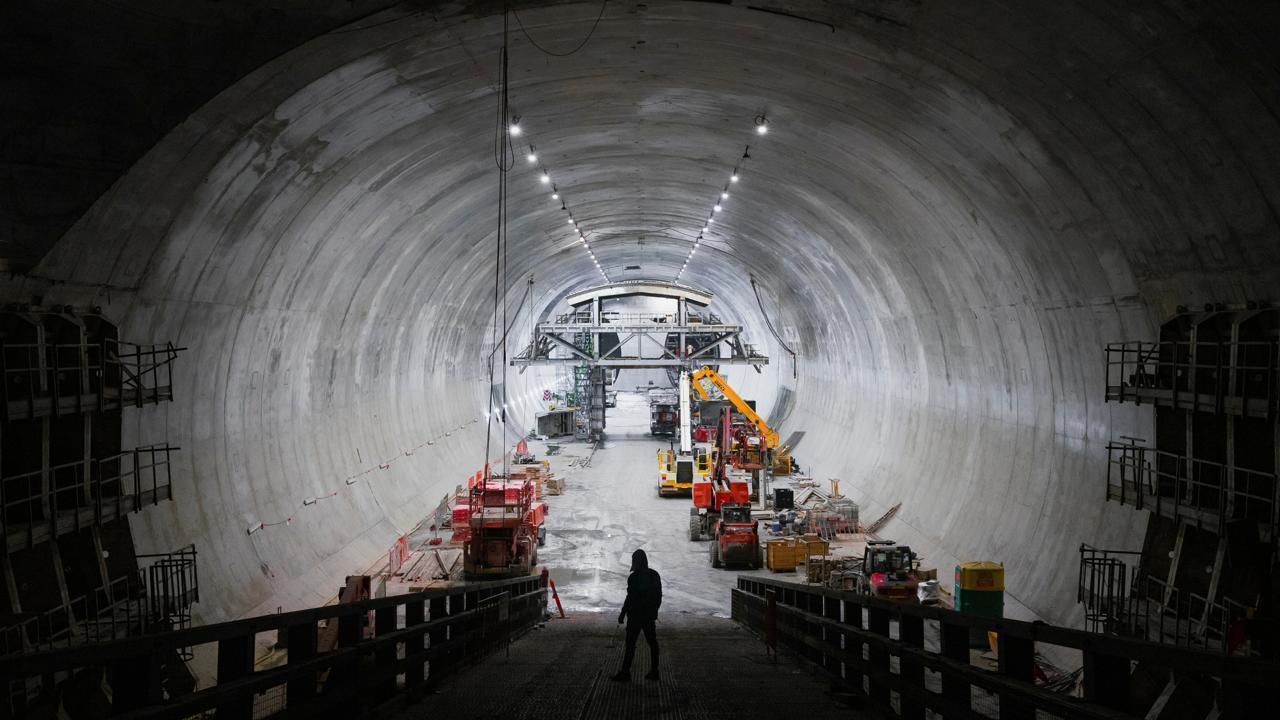
As tunnel boring machines rumble beneath the surface and elevated tracks inch forward over congested roads, Mumbai’s transformation is gaining momentum—fueled by the collective will of its planners, people, and now, the global community.
Mumbai, Metro, Foreign Loans



Advances in Aerospace Technology and Commercial Aviation Recovery
Insights into breakthrough aerospace technologies and commercial aviation’s recovery amid 2025 chall

Defense Modernization and Strategic Spending Trends
Explore key trends in global defense modernization and strategic military spending shaping 2025 secu

Tens of Thousands Protest in Serbia on Anniversary of Deadly Roof Collapse
Tens of thousands in Novi Sad mark a year since a deadly station roof collapse that killed 16, prote

Canada PM Carney Apologizes to Trump Over Controversial Reagan Anti-Tariff Ad
Canadian PM Mark Carney apologized to President Trump over an Ontario anti-tariff ad quoting Reagan,

The ad that stirred a hornets nest, and made Canadian PM Carney say sorry to Trump
Canadian PM Mark Carney apologizes to US President Trump after a tariff-related ad causes diplomatic

Bengaluru-Mumbai Superfast Train Approved After 30-Year Wait
Railways approves new superfast train connecting Bengaluru and Mumbai, ending a 30-year demand, easi




