Post by : Amit
Unyielding Death Toll Shadows Massive Safety Investments
Despite an unprecedented ₹1.14 lakh crore spent over the last decade to enhance railway safety in Mumbai, fatal accidents on the suburban railway network continue to claim hundreds of lives each year. The harsh reality has exposed the limitations of infrastructure-heavy approaches in curbing one of the world’s deadliest urban rail corridors. As per a detailed Economic Times Infra report, even with a steady rise in safety allocations by Indian Railways and state authorities, the human toll remains largely unchanged—raising serious questions about effectiveness, prioritization, and governance in the city’s lifeline transport system.
Funding Versus Fatalities: A Grim Equation
Since 2012, both the Centre and Maharashtra government have invested heavily in projects such as track augmentation, foot overbridge (FOB) construction, boundary walls, and surveillance systems. Yet the annual death count hovers around 2,000–2,500 commuters. In 2023 alone, nearly 2,410 people died in accidents on Mumbai’s local railway lines. The grim consistency of this number—despite nearly ₹1.14 lakh crore in cumulative investment—highlights a chilling mismatch between spending and impact.
Authorities defend the budget by pointing to the vast scale of modernization needed. Projects like the Mumbai Urban Transport Project (MUTP) and the recently greenlit MUTP-3A encompass complex infrastructure overhauls. Yet critics argue that investments remain skewed towards long-gestation projects while immediate safety gaps go unaddressed.
Urban Lifeline or Death Trap?
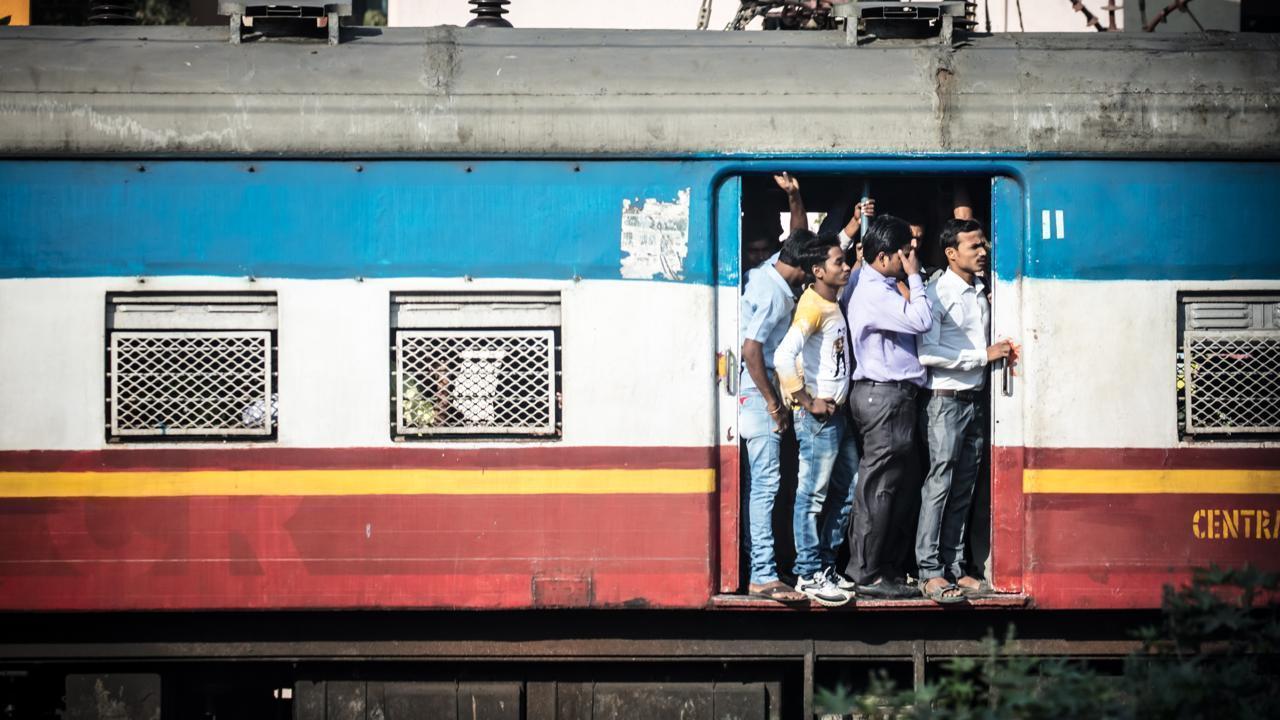
Mumbai’s local train system carries over 8 million commuters daily—roughly equivalent to the entire population of Israel boarding trains every day. The Central and Western Railway suburban networks are essential to city life, yet tragically dangerous. The bulk of fatalities occur due to overcrowding, crossing tracks, or falling off moving trains. Many passengers risk their lives daily by hanging from train doors or walking along narrow tracks, especially where proper footbridges or designated crossings are missing.
“Railway officials often tout the size of projects, but real safety doesn’t just come from new bridges or wider tracks—it comes from daily usability and behavioural change,” said transport activist Subhash Gupta, who has been campaigning for safer rail access in the suburbs.
Investment Highlights: Where the Money Went
The ₹1.14 lakh crore includes funding for both MUTP I, II, III and IIIA, safety modernization programs, station redevelopment, and fencing. MUTP-3A alone is worth ₹33,690 crore, including improvements like air-conditioned rakes, automatic signalling, and the elimination of level crossings.
Here’s a quick outline of the main investments:
Despite this, the tangible difference in safety outcomes is barely noticeable. Fatalities from falling off trains and track crossings continue unabated, especially during peak hours.
Missing Links: Infrastructure vs Behaviour
Experts say part of the problem lies in the infrastructure-behaviour disconnect. While structural enhancements are necessary, they cannot succeed alone without public awareness campaigns, enforcement of trespassing laws, and station-level interventions.
“Railways must realize that engineering solutions alone don’t solve human problems,” said Dr. Rohit Sharma, a transport policy analyst at IIT Bombay. “We need crowd management, public education, and last-mile solutions like feeder buses and skywalks that reduce the need to walk on tracks.”
Additionally, the cultural normalization of high-risk commuting practices plays a role. For many low-income daily wage earners, climbing onto overcrowded coaches or running across tracks is not a choice but a necessity. Safety measures that don't account for the lived reality of Mumbai’s rail users remain limited in their effect.
Governance Gaps and Accountability
Adding to the challenge is the complex web of stakeholders. Mumbai’s rail system is managed by Central Railway (CR) and Western Railway (WR), while project funding and planning also involve the Maharashtra government, MMRDA, and the Railway Board. The multi-agency coordination often leads to delayed execution, duplication of efforts, or cost overruns.
For instance, the proposed conversion of Mumbai’s entire fleet to air-conditioned rakes—aimed at decongesting platforms—has been delayed due to funding disputes and maintenance issues. Meanwhile, pedestrian bridges sanctioned under one scheme are sometimes stalled by permissions or budget allocations from another agency.
Human Cost Beyond the Numbers
Each death on the tracks represents not just a statistic, but a family devastated, a worker lost, a student missed. Local NGOs like Railway Pravasi Group have long demanded a commuter-focused safety audit of the system. Suggestions like platform screen doors (common in metros), platform edge fencing, and AI-based crowd detection technologies have either been dismissed as too expensive or shelved indefinitely.
In 2018, the Mumbai Railway Vikas Corporation (MRVC) commissioned a safety audit that listed 95 “death trap” stations with poor access, missing fencing, or overcrowded FOBs. Only a fraction of those findings have translated into concrete measures.
MUTP-3A and Hope?
The latest tranche of investment—MUTP-3A—has rekindled hope among city planners. The project includes major expansion of services, fleet overhaul, signal modernization, and congestion mitigation. If completed on time (a big “if”), it could alleviate some of the structural pressures on Mumbai's ancient rail network.
Officials from the Ministry of Railways also claim that efforts like the Amrit Bharat Station Scheme, which includes safety-enhancing station designs and accessibility upgrades, will improve outcomes by 2026. However, critics remain skeptical unless accountability mechanisms are built in and progress is regularly measured against actual fatality reductions.
Beyond Steel and Cement
The Mumbai railway system stands as both a marvel and a cautionary tale—capable of moving millions but also costing thousands of lives. While India rightly celebrates its rail modernization and high-speed ambitions, the struggle of ordinary Mumbaikars trying to survive their daily commute must remain central to policy action.
Until safety becomes more than just a line item in budget speeches—until it reflects in everyday experience—the ₹1.14 lakh crore may remain just another figure on paper.
Mumbai, Train



Advances in Aerospace Technology and Commercial Aviation Recovery
Insights into breakthrough aerospace technologies and commercial aviation’s recovery amid 2025 chall

Defense Modernization and Strategic Spending Trends
Explore key trends in global defense modernization and strategic military spending shaping 2025 secu

Tens of Thousands Protest in Serbia on Anniversary of Deadly Roof Collapse
Tens of thousands in Novi Sad mark a year since a deadly station roof collapse that killed 16, prote

Canada PM Carney Apologizes to Trump Over Controversial Reagan Anti-Tariff Ad
Canadian PM Mark Carney apologized to President Trump over an Ontario anti-tariff ad quoting Reagan,

The ad that stirred a hornets nest, and made Canadian PM Carney say sorry to Trump
Canadian PM Mark Carney apologizes to US President Trump after a tariff-related ad causes diplomatic

Bengaluru-Mumbai Superfast Train Approved After 30-Year Wait
Railways approves new superfast train connecting Bengaluru and Mumbai, ending a 30-year demand, easi




