Post by : Amit
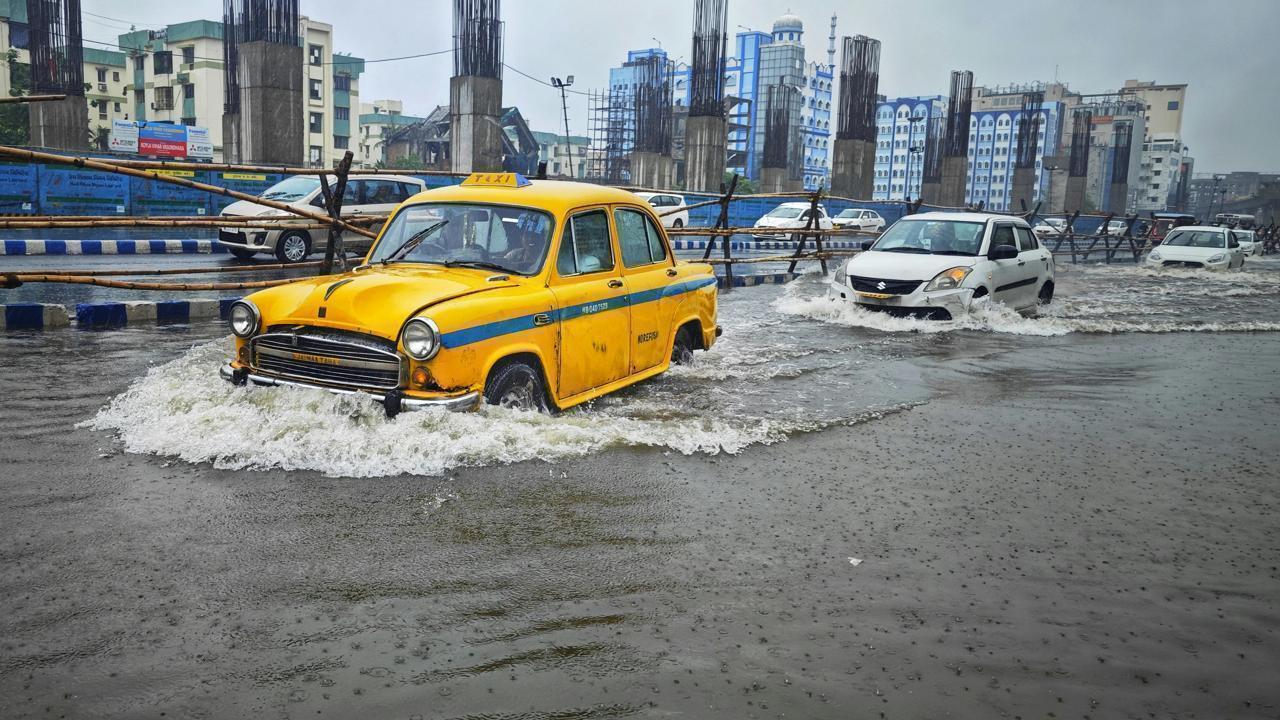
Mumbai—the city that never sleeps—came to a virtual standstill as torrential rains pounded the city early this week, paralysing nearly every mode of transportation. In one of the most intense rainfall events of the season, waterlogged roads, stalled local trains, flight delays, and Metro slowdowns pushed the metropolis to the brink of a full-scale mobility crisis.
From suburban rail commuters stranded on flooded platforms to airline passengers sleeping on terminal floors, the downpour’s ripple effects exposed the fragility of Mumbai’s transport infrastructure. Despite decades of monsoon preparedness claims, Monday's chaos demonstrated once again how vulnerable India’s financial capital remains when the skies open up.
Disruption on Rails: Mumbai Locals at a Standstill
Mumbai's suburban rail system—often called the city’s lifeline—was among the hardest hit. Heavy waterlogging on tracks at Kurla, Sion, and Masjid stations led to massive delays and suspended services on the Central and Harbour lines. As trains moved slowly or were halted entirely, thousands of office-goers and daily wage workers found themselves stranded or forced to walk long distances.
According to Central Railway officials, services on several stretches had to be run manually at restricted speeds. Multiple trains were canceled or terminated midway. Commuters reported being stuck in carriages for over an hour without ventilation or announcements.
“Train was stuck near Byculla for nearly 45 minutes. No update, no AC, no mobile signal,” said one commuter on X (formerly Twitter). “We were packed like sardines.”
Western Railway fared slightly better but still experienced delays ranging from 20 to 45 minutes, particularly during peak morning and evening hours.
Flights Delayed, Diversions at Mumbai Airport
While the city below was soaked, the skies above weren’t any kinder. Chhatrapati Shivaji Maharaj International Airport (CSMIA) reported significant delays due to poor visibility and excessive crosswinds. At least 7 incoming flights were diverted to Ahmedabad and Hyderabad, while multiple departures were delayed for over an hour.
Passengers complained of long wait times, lack of information, and overcrowding at terminals. Social media was abuzz with videos of irate fliers demanding updates from airline counters.
Airport authorities issued a travel advisory urging passengers to check flight status before leaving for the airport and warned that further weather-related disruptions were likely through the night.
An airline official stated, “We’re doing our best to reschedule passengers, but due to backlog, delays are cascading.”
Roads Under Water: Traffic Crawls Across the City
The city’s overburdened road network bore the brunt of the downpour. Key arterial roads like the Western Express Highway, Eastern Freeway, SV Road, and LBS Marg saw waist-deep water in some patches, leading to bumper-to-bumper traffic.
The Mumbai Traffic Police issued multiple alerts throughout the day, advising commuters to avoid low-lying areas such as Hindmata, King’s Circle, Milan Subway, Kurla, and parts of Chembur and Sion. Traffic diversions were implemented in at least 14 zones.
BEST bus services were also hit, with several routes diverted or delayed. More than 40 buses were stuck in flooded zones for hours. Drivers struggled to navigate submerged roads, while passengers were forced to wade through water to reach stops.
Ride-hailing platforms like Uber and Ola saw surge pricing spike up to 3.5x as demand outstripped availability. Many drivers canceled bookings due to unsafe road conditions or vehicle breakdowns.
Metro Services Slow But Operational
Mumbai Metro services continued to operate, but not without hiccups. Trains on Line 1 (Versova–Ghatkopar) and Line 2A (Dahisar East–DN Nagar) experienced delays due to water ingress near station access points and technical faults in signaling equipment.
While Metro is largely elevated and immune to street flooding, feeder transport—rickshaws and buses connecting stations—were severely impacted, leaving many passengers stranded even if the trains ran.
The Mumbai Metro Rail Corporation (MMRC) released a statement assuring citizens that structural safety had not been compromised and pumping systems were operational, but urged commuters to budget for additional travel time.
Emergency Response Stretched Thin
The Brihanmumbai Municipal Corporation (BMC) activated its disaster response protocol, deploying over 180 water pumps across flood-prone areas. However, complaints of slow drainage, malfunctioning pumps, and unresponsive helplines flooded the BMC's social media pages.
Mumbai Fire Brigade teams were deployed in several zones to rescue citizens from stuck vehicles and remove fallen trees. In Malad, a family of four had to be rescued from their submerged ground-floor apartment. In another incident near Saki Naka, a school van was swept partially by gushing water before locals intervened.
Two BEST buses were towed out from the Gandhi Market underpass after being stuck for over 3 hours. No injuries were reported.
The State Disaster Management Authority confirmed that Mumbai had received over 220 mm of rainfall in 10 hours, with more showers expected over the next 48 hours. Yellow and orange alerts remain in effect.
Digital Chaos: Citizens Take to Social Media
As conventional communication broke down, citizens took to platforms like X, Instagram, and WhatsApp to coordinate help, warn others about flooded zones, and demand accountability. Hashtags like #MumbaiRains, #Waterlogged, and #TrainStuck trended throughout the day.
Several users highlighted the lack of early warning systems, failure of real-time updates from BEST and CR, and questioned whether crores spent annually on monsoon preparedness had made any tangible difference.
One viral post read: “Every year the same story. Kurla floods, trains stop, flights delayed, and officials say they’re surprised. What’s the point of Smart City if we can’t handle rain?”
Officials Respond: “Unprecedented Rainfall”
Civic authorities, however, maintained that the rainfall levels were above average and beyond the city's designed drainage capacity. BMC Commissioner Bhushan Gagrani said, “Our pumping stations are working at full capacity. But when it rains over 200 mm in a few hours, any city will struggle.”
The Commissioner added that over ₹3,000 crore had been spent in recent years upgrading stormwater drains, clearing nullahs, and improving road infrastructure. “But nature has its own plan. We’re improving coordination with the Indian Meteorological Department (IMD) to issue hyper-local alerts earlier.”
The Mumbai Police, meanwhile, issued an appeal to citizens: “Stay indoors unless travel is absolutely necessary. Avoid underpasses, subways, and bridges prone to waterlogging.”
Business, Schools, and Hospitals Hit
Corporate offices in the Bandra-Kurla Complex and Lower Parel reported thin attendance, with many allowing staff to work from home. Several schools issued early dismissal notices or shifted to online classes.
Hospitals, especially in suburbs like Andheri, Kurla, and Dadar, reported staff shortages due to transport breakdowns. At Sion Hospital, junior doctors were stuck overnight after shift change couldn’t occur due to suspended rail services.
Local vendors, street hawkers, and delivery workers saw incomes wiped out for the day as footfall plummeted and movement remained restricted. Swiggy and Zomato temporarily suspended services in several areas due to flooded kitchens and road closures.
Why Mumbai Floods: A Chronic Crisis
Mumbai’s chronic flooding problem isn’t new. Experts point to a combination of outdated drainage systems, shrinking mangroves, encroached floodplains, and unplanned urban development. The Mithi River, which acts as the city’s primary stormwater outlet, remains heavily silted despite repeated clean-up claims.
Environmental activists say infrastructure projects like Metro Line 3 and Coastal Road—while necessary—have altered natural water flows and blocked underground seepage paths.
Urban transport planner Meera Nair says, “The mobility disruption is just a symptom. The real disease is poor urban planning. We build flyovers without thinking of drains, widen roads but don’t invest in water runoff channels.”
What Needs to Change
Experts and citizen groups have proposed several urgent solutions:
Mumbai at a Crossroads
Mumbai’s transport system remains the beating heart of this megacity, moving nearly 10 million people daily across trains, buses, taxis, and private vehicles. But each monsoon tests its endurance. As the climate crisis deepens and rainfall becomes more erratic, the time for cosmetic fixes is over.
Monday's chaos was not just a weather story—it was a wake-up call. A call for climate resilience, smarter infrastructure, and human-centric transport planning that can keep pace with nature’s fury.
Mumbai, Rain, Transport



Advances in Aerospace Technology and Commercial Aviation Recovery
Insights into breakthrough aerospace technologies and commercial aviation’s recovery amid 2025 chall

Defense Modernization and Strategic Spending Trends
Explore key trends in global defense modernization and strategic military spending shaping 2025 secu

Tens of Thousands Protest in Serbia on Anniversary of Deadly Roof Collapse
Tens of thousands in Novi Sad mark a year since a deadly station roof collapse that killed 16, prote

Canada PM Carney Apologizes to Trump Over Controversial Reagan Anti-Tariff Ad
Canadian PM Mark Carney apologized to President Trump over an Ontario anti-tariff ad quoting Reagan,

The ad that stirred a hornets nest, and made Canadian PM Carney say sorry to Trump
Canadian PM Mark Carney apologizes to US President Trump after a tariff-related ad causes diplomatic

Bengaluru-Mumbai Superfast Train Approved After 30-Year Wait
Railways approves new superfast train connecting Bengaluru and Mumbai, ending a 30-year demand, easi




