Post by : Amit
12 Mega Projects to Modernize Central, Harbour, and Western Lines Under MRVC Phase 3
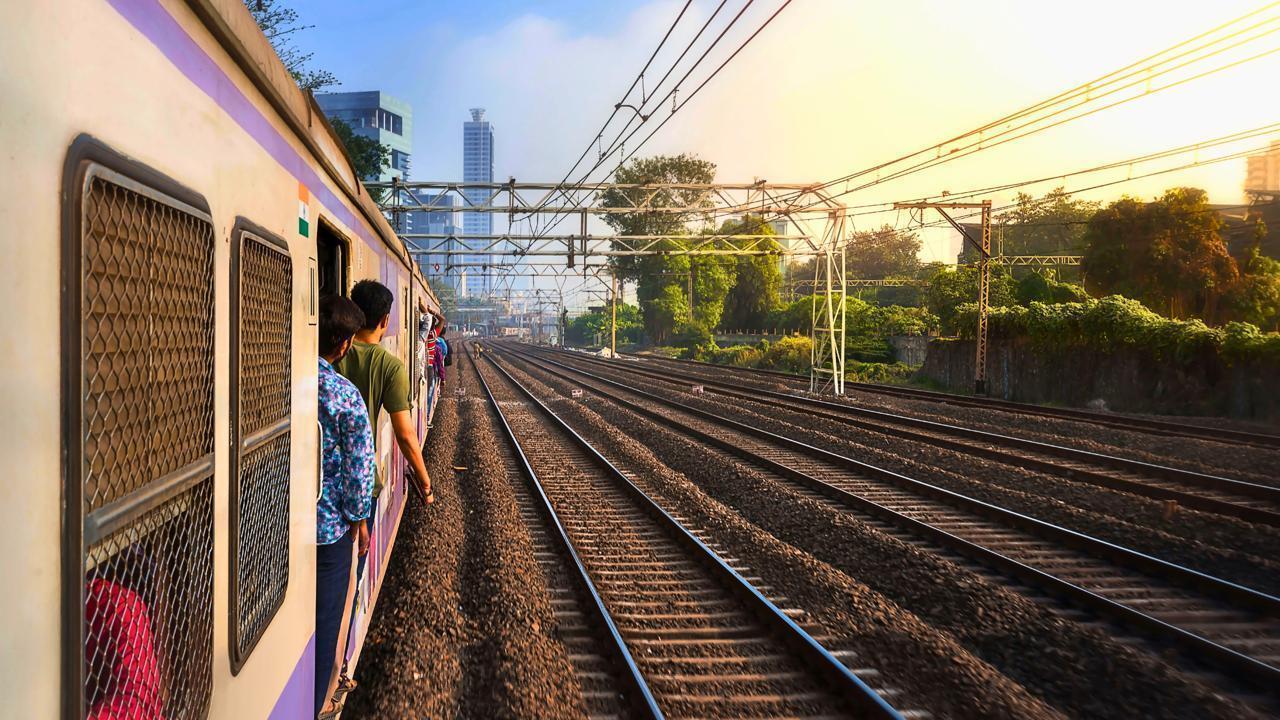
Mumbai — In a move that could significantly enhance one of the world’s busiest urban rail networks, the Mumbai Suburban Railway is set for a massive infrastructure revamp worth ₹16,241 crore. The Ministry of Railways and the Government of Maharashtra have jointly greenlit 12 major railway projects to be executed under Mumbai Urban Transport Project (MUTP) Phase 3, led by the Mumbai Railway Vikas Corporation (MRVC).
This massive upgrade aims to decongest the city’s overstretched rail corridors while bringing long-awaited capacity and safety enhancements to the Central, Harbour, and Western suburban lines. With over 80 lakh daily commuters relying on the suburban railway, the city’s lifeline is overdue for transformation. The approved projects are expected to not only improve efficiency and reliability but also drastically enhance commuter experience.
A Critical Investment in Urban Rail
The Mumbai suburban railway system, spread across 319 km, is the largest in India and among the most densely used worldwide. Yet it has suffered from chronic overcrowding, infrastructure fatigue, and aging systems. Over the years, short-term solutions were attempted, but never at the scale now envisioned under MUTP-3.
According to railway officials and planning experts, this ₹16,241 crore package is not just an infrastructure upgrade—it's a critical investment in the city’s economic resilience, productivity, and urban quality of life.
Under MUTP-3, these 12 projects will focus on increasing train frequency, separating suburban and long-distance train traffic, expanding line capacity, replacing aging infrastructure, and bringing in modern signalling and safety technologies.
The ₹16,241 Crore Investment
The 12 projects include a mix of new line constructions, upgrades to existing corridors, and introduction of new technologies. Some of the most impactful projects include:
While all the projects are being funded jointly by the Indian Railways and Government of Maharashtra, many will also seek soft funding or technical inputs from multilateral institutions like the World Bank and Asian Infrastructure Investment Bank (AIIB), which have supported earlier phases of MUTP.
MRVC at the Helm of Delivery
The Mumbai Railway Vikas Corporation (MRVC), a special-purpose vehicle jointly owned by Indian Railways and the Maharashtra government, is responsible for executing all projects under MUTP.
In an official statement, an MRVC spokesperson said, “These 12 projects are a testament to how serious the authorities are about making Mumbai’s rail infrastructure future-ready. MUTP-3 is not just an expansion—it’s a reimagination of Mumbai’s entire commuter rail system.”
Work on some projects has already begun, while tenders for others are in advanced stages. MRVC has also laid out stringent timelines to ensure completion within the next 3–5 years, with early wins expected by late 2026.
Commuters to See Tangible Benefits
Once implemented, these projects will have a direct impact on daily commuters. benefits include:
Railway planners say the effects will be most visible on the Central line, historically Mumbai’s most burdened corridor.
A Step Toward Sustainable Urban Transit
Transport experts say the MUTP-3 upgrade is also a major step toward sustainable urban mobility. By making suburban rail more efficient and comfortable, authorities hope to reduce road congestion, cut down vehicular emissions, and limit urban sprawl.
Maharashtra Transport Commissioner Vivek Bhimanwar noted, “This is a green mobility solution at its core. With better train services, people will prefer trains over cars and bikes, which is essential to reduce Mumbai’s air pollution and road accidents.”
In parallel, the state is also working on integrating suburban rail with upcoming metro lines, monorails, and BRT corridors for smoother multi-modal transport.
Urban Planning and Regional Impact
The new rail corridors are expected to reshape real estate and housing development across Mumbai Metropolitan Region (MMR). Areas like Panvel, Karjat, Badlapur, and Virar are already witnessing speculative activity, with developers betting on future rail connectivity to boost demand.
Urban planners say this is a chance to promote transit-oriented development (TOD). “We have to avoid the mistakes of unplanned sprawl. If aligned with affordable housing, this can transform Mumbai’s urban footprint,” said Prof. Ramesh Shukla from IIT-Bombay’s Centre for Urban Science & Engineering.
Political Support and Public Sentiment
The announcement of the ₹16,241 crore rail investment has garnered bipartisan political support. Maharashtra Chief Minister Eknath Shinde praised the initiative as “a long-overdue but welcome change,” adding that this will “restore confidence among the working population who rely on suburban rail every day.”
Union Railways Minister Ashwini Vaishnaw echoed the sentiment, calling it a “decisive leap forward for India’s most vital urban rail corridor.”
On the ground, the public response has been a mix of excitement and cautious optimism. While commuters welcome any step to reduce overcrowding and delays, many remain skeptical about execution speed, given past delays in MUTP-1 and MUTP-2.
Execution Risks and Watchpoints
Despite the momentum, experts caution that execution challenges remain. Land acquisition, coordination with local bodies, resettlement of project-affected people (PAPs), and procurement delays could affect timelines.
Former Railway Board Member Subodh Jain remarked, “MRVC must ensure a robust project management structure. Even the best-planned upgrades can run aground without consistent monitoring.”
The use of digital project tracking dashboards and third-party audits has been recommended to keep progress transparent and accountable.
What Lies Ahead?
If implemented on schedule, the projects under MUTP-3 could revolutionize suburban mobility in Mumbai by 2029. Combined with parallel metro expansions and high-speed corridors, the city could become a national model for integrated urban transport.
Already, plans for MUTP-4 are being drawn up, with a focus on enhanced digital ticketing, real-time passenger information systems, and AI-based train scheduling. The idea is to turn Mumbai into a “smart rail city”, offering world-class transit experiences.
Mumbai’s lifeline is finally being rewired for the 21st century. With ₹16,241 crore allocated for major structural and capacity upgrades, the suburban railway network is poised for its most ambitious transformation ever. The next five years will be critical—not just in laying tracks and signals, but in restoring public trust in India’s most vital transit system.
For now, the millions who ride the rails each day have a reason to hope—for faster commutes, fewer delays, and maybe even a seat.
Mumbai, Railways



Advances in Aerospace Technology and Commercial Aviation Recovery
Insights into breakthrough aerospace technologies and commercial aviation’s recovery amid 2025 chall

Defense Modernization and Strategic Spending Trends
Explore key trends in global defense modernization and strategic military spending shaping 2025 secu

Tens of Thousands Protest in Serbia on Anniversary of Deadly Roof Collapse
Tens of thousands in Novi Sad mark a year since a deadly station roof collapse that killed 16, prote

Canada PM Carney Apologizes to Trump Over Controversial Reagan Anti-Tariff Ad
Canadian PM Mark Carney apologized to President Trump over an Ontario anti-tariff ad quoting Reagan,

The ad that stirred a hornets nest, and made Canadian PM Carney say sorry to Trump
Canadian PM Mark Carney apologizes to US President Trump after a tariff-related ad causes diplomatic

Bengaluru-Mumbai Superfast Train Approved After 30-Year Wait
Railways approves new superfast train connecting Bengaluru and Mumbai, ending a 30-year demand, easi




