Post by : Amit
Munich U-Bahn Rolls Out AI Smoke Detection to Reinvent Fire Safety
MVG (Münchner Verkehrsgesellschaft) has officially begun deploying a cutting-edge AI-powered smoke and fire detection system across key stations and tunnels of the Munich U-Bahn network. This initiative—years in planning and now rapidly scaling—is part of the city's broader strategy to modernize surveillance infrastructure and respond faster to potential emergencies in its densely packed metro corridors.
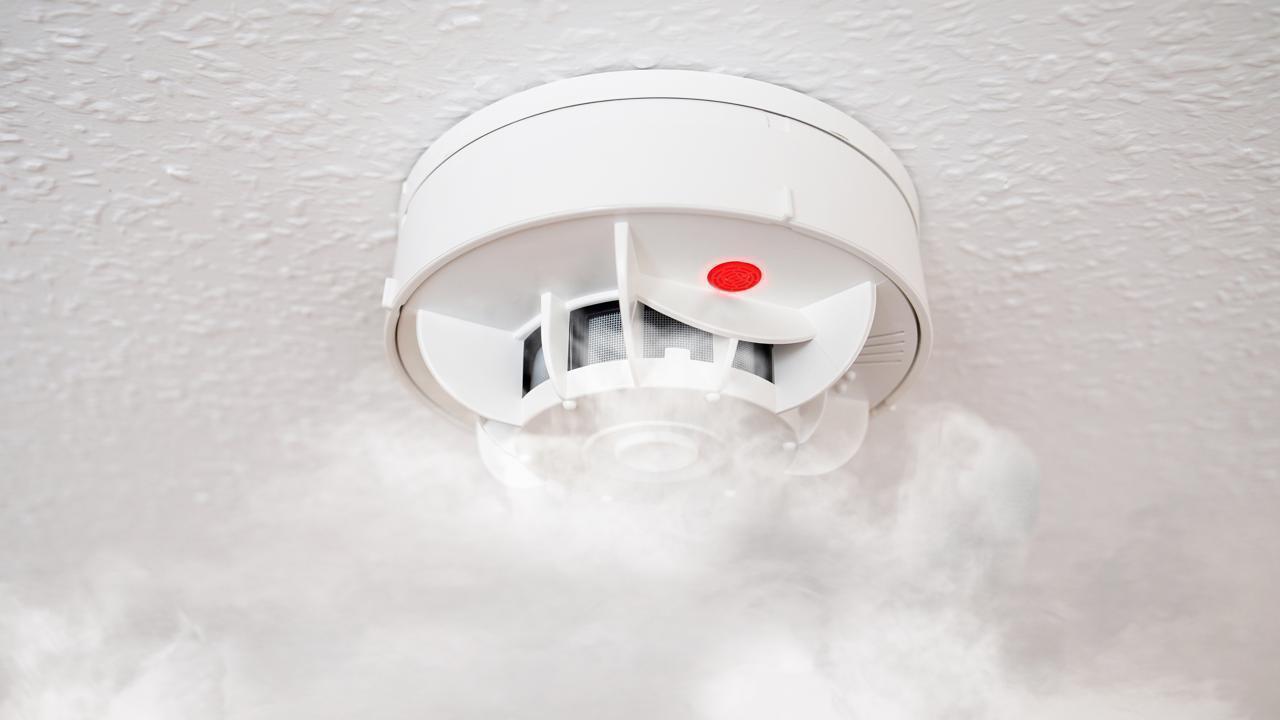
The new system combines thermal imaging, high-definition video feeds, and real-time artificial intelligence to detect smoke and early signs of fire—within seconds—without relying on traditional sensors that often trigger late or false alarms.
A City with Growing Transit Pressure
Munich’s U-Bahn transports over 1.3 million passengers daily, a number that continues to grow amid urban expansion and increased modal shift to public transit. The existing fire safety infrastructure, while compliant with German and EU standards, relied heavily on conventional smoke detectors, thermal sensors, and manual monitoring via CCTV.
But underground fires can escalate in minutes, especially in tight tunnels with limited ventilation and complex evacuation routes. Several minor incidents over the past five years—including smoke-related platform evacuations and electrical short circuits—have pushed city officials to seek smarter, faster alternatives that minimize risk while reducing false alarms.
In response, Munich’s transport authority collaborated with Bosch Building Technologies and Fraunhofer Institute to develop and integrate an AI-powered detection suite tailored to subway environments.
AI Eyes That Never Blink
At the heart of this new system is a convolutional neural network (CNN) trained on thousands of video clips and sensor readings simulating smoke behavior in underground rail settings. Unlike conventional detectors, which wait for particulate matter to reach a threshold, this system "sees" fire risks before smoke even becomes visible to the human eye.
Each camera feed from platforms and tunnels is fed into an edge AI processor equipped with real-time video analytics. The algorithm analyzes subtle pixel changes, thermal anomalies, and air shimmer patterns that may indicate rising temperatures or combustion, alerting control centers almost instantly.
If confirmed by the system’s self-verification layers, an alert is immediately dispatched to the U-Bahn’s central operations command. From there, automated responses—ranging from ventilation activation and localized alarm announcements to targeted train stoppages—can be triggered within seconds.
Pilot Results: Faster Alerts, Zero False Positives
Initial tests ran at Sendlinger Tor and Marienplatz, two of the busiest and deepest stations in Munich’s network. During the 6-month trial, the AI detection system was subjected to dozens of live drills, controlled smoke tests, and simulated emergencies.
Results were startling:
MVG’s safety operations head, Sabine Köller, remarked:
"We’ve never seen a system so precise and fast. It’s like giving our control room eyes that see in all conditions—instantly."
A New Model for Urban Subway Safety in Europe
The success of Munich’s AI smoke detection trial is now attracting attention from transport networks across Germany and neighboring EU cities. While London, Paris, and Vienna have all invested in next-gen surveillance systems in recent years, Munich’s is among the first to integrate AI with real-time edge processing and multi-sensor fusion, offering a blueprint for scalable urban deployment.
Fraunhofer IIS, the research arm behind the AI model’s development, emphasized that the system’s modularity makes it easily exportable.
"We can train and calibrate the model to different subway architectures and environmental conditions," said Dr. Armin Bock, project lead. "What works in Munich can work in Berlin, Prague, or Warsaw with just minor adaptation."
Data-Driven Maintenance and Insights
Interestingly, the AI system doesn’t stop at smoke detection. Its analytical backend also offers a window into infrastructure health. Over time, the system learns to detect anomalies in power conduits, rail heat signatures, and air quality trends, offering predictive maintenance insights.
MVG’s CIO, Henrik Schultz, confirmed that integration with the metro’s asset management system is already underway.
"We’ll soon be able to spot a thermal overload or cable fault hours before it becomes dangerous," he said. "It’s like having thousands of smart inspectors working 24/7 with perfect memory and no fatigue."
Implementation and Cost: Worth the Investment?
Currently, the rollout includes 12 major interchange stations and key tunnel junctions by end-2025, with citywide coverage across all 100+ stations expected by 2028. While exact figures are under wraps, sources indicate an investment of €38–42 million, largely funded through federal infrastructure modernization grants and a special resilience fund from the Bavarian Ministry of Transport.
Though steep, the investment is being justified through a combination of public safety, potential insurance premium reductions, and cost savings from avoided incidents.
Public feedback has also been overwhelmingly positive. A recent commuter survey indicated 87% approval of the new AI fire detection system, with most respondents citing improved confidence in underground safety.
From Smoke Detection to Total Situational Awareness
Munich’s fire safety AI is part of a broader digitization of its metro systems. Already, MVG is planning complementary upgrades, including:
Together, these technologies aim to transform Munich’s U-Bahn into one of Europe’s most advanced urban rail systems—not just in efficiency and connectivity, but in resilience and human-centric safety.
Eyes in the Tunnels, Minds in the Cloud
With the deployment of real-time AI smoke detection, Munich has taken a bold step toward a smarter, safer future beneath its streets. As cities confront growing urban density, aging infrastructure, and climate-driven stress on transit systems, intelligent surveillance solutions like these will define the next era of public safety.
The U-Bahn, long known for its punctuality and design, now adds another badge to its name—proactive intelligence that could save lives before danger fully arrives.
Munich U-Bahn , Fire Smoke Detection AI



Advances in Aerospace Technology and Commercial Aviation Recovery
Insights into breakthrough aerospace technologies and commercial aviation’s recovery amid 2025 chall

Defense Modernization and Strategic Spending Trends
Explore key trends in global defense modernization and strategic military spending shaping 2025 secu

Tens of Thousands Protest in Serbia on Anniversary of Deadly Roof Collapse
Tens of thousands in Novi Sad mark a year since a deadly station roof collapse that killed 16, prote

Canada PM Carney Apologizes to Trump Over Controversial Reagan Anti-Tariff Ad
Canadian PM Mark Carney apologized to President Trump over an Ontario anti-tariff ad quoting Reagan,

The ad that stirred a hornets nest, and made Canadian PM Carney say sorry to Trump
Canadian PM Mark Carney apologizes to US President Trump after a tariff-related ad causes diplomatic

Bengaluru-Mumbai Superfast Train Approved After 30-Year Wait
Railways approves new superfast train connecting Bengaluru and Mumbai, ending a 30-year demand, easi




