Post by : Amit
Photo: Reuters
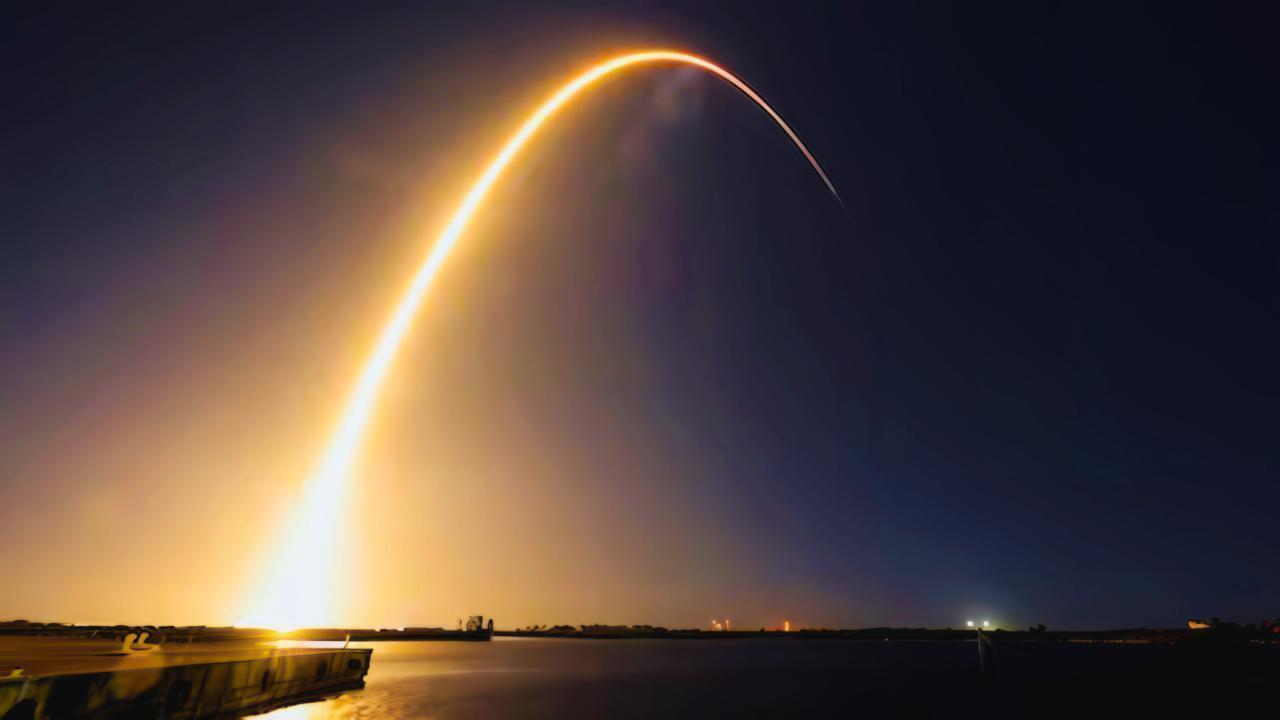
It wasn’t a typical Tuesday for NASA — or for Netflix. In a remarkable blend of science and streaming, a NASA rocket thundered into the skies from Florida’s Cape Canaveral late last week, carrying not just government payloads and scientific instruments, but a surprising commercial hitchhiker: a satellite built to enhance Netflix’s global service infrastructure.
Yes, you read that right. Netflix, the world’s largest streaming service, just hitched a ride to space.
The mission, formally known as NASA’s “CRS-34” cargo resupply launch to the International Space Station, had long been planned as a standard resupply mission. But tucked into one corner of the payload bay was something new — a low Earth orbit (LEO) satellite funded by Netflix’s technology partners and designed to support future streaming capabilities in hard-to-reach regions.
The satellite, nicknamed "StreamSat-1" by engineers close to the project, marks the first time a major entertainment company has participated so directly in a NASA-coordinated launch — a sign of how the lines between aerospace and tech are blurring in this new era of commercial space.
The satellite itself isn’t exactly beaming Stranger Things or Bridgerton from space — not yet, anyway. What Netflix is aiming for is next-gen infrastructure: satellites that can one day improve streaming quality and data delivery speeds in underserved or remote parts of the world, including mountainous regions, rural zones, and even ships at sea.
According to Netflix insiders, StreamSat-1 is an experimental venture developed in collaboration with an unnamed satellite communications firm based in the U.S., and will act as a testbed for edge-caching and low-latency content delivery from orbit. Essentially, it could serve as a mini data hub, reducing the time it takes to buffer or load content — especially in places where terrestrial internet infrastructure is limited or unreliable.
“We’ve always believed storytelling should be for everyone, everywhere,” a Netflix spokesperson said. “This mission is one small but exciting step toward that goal.”
For NASA, this partnership is part of a growing — and intentional — shift toward commercial co-launches. As launch costs decrease and rocket capacity increases, unused cargo space on missions is now being offered to private players. It's a model NASA hopes will fuel a new generation of innovation while also helping subsidize the cost of space missions.
“This kind of payload integration wouldn’t have been considered even a decade ago,” said Dr. Lila Ramos, a senior mission planner at Kennedy Space Center. “But today, with reusable rockets and smarter payload design, we’re able to support everything from agricultural monitoring to streaming services in the same launch.”
The satellite, she added, met all NASA safety and flight-readiness standards and was placed in a deployable container that separated cleanly post-launch into a lower orbit than the ISS.
While Netflix hasn't announced a timeline for a full-scale satellite network, this launch is seen as a symbolic milestone — the kind of moonshot that tech companies used to only dream of. If successful, it could open doors for other consumer tech giants to consider space-based infrastructure for content, cloud computing, or communications.
Industry experts say the implications could be huge, especially for markets in Africa, Latin America, and Asia, where the last-mile digital gap still affects millions. If content can be delivered with minimal delay via orbiting satellites, the future of digital media distribution could fundamentally shift.
Netflix isn’t the first tech company with eyes on the stars — Amazon’s Project Kuiper and Elon Musk’s Starlink are already deep into building orbital broadband networks. But Netflix’s move is different in scope: it’s not about broadband access, but content optimization, tailored delivery, and future-proofing its global streaming empire.
It’s not hard to imagine a future where entertainment companies build their own space-based content farms, or even stream events live from orbit. For now, though, StreamSat-1 is doing slow laps around Earth — silent, experimental, and filled with potential.
And somewhere out there, while you binge your favorite show on a mountaintop or a distant island, the invisible infrastructure to make it all seamless might just be passing overhead.
Nasa, Netflix



Advances in Aerospace Technology and Commercial Aviation Recovery
Insights into breakthrough aerospace technologies and commercial aviation’s recovery amid 2025 chall

Defense Modernization and Strategic Spending Trends
Explore key trends in global defense modernization and strategic military spending shaping 2025 secu

Tens of Thousands Protest in Serbia on Anniversary of Deadly Roof Collapse
Tens of thousands in Novi Sad mark a year since a deadly station roof collapse that killed 16, prote

Canada PM Carney Apologizes to Trump Over Controversial Reagan Anti-Tariff Ad
Canadian PM Mark Carney apologized to President Trump over an Ontario anti-tariff ad quoting Reagan,

The ad that stirred a hornets nest, and made Canadian PM Carney say sorry to Trump
Canadian PM Mark Carney apologizes to US President Trump after a tariff-related ad causes diplomatic

Bengaluru-Mumbai Superfast Train Approved After 30-Year Wait
Railways approves new superfast train connecting Bengaluru and Mumbai, ending a 30-year demand, easi




