Post by : Avinab Raana
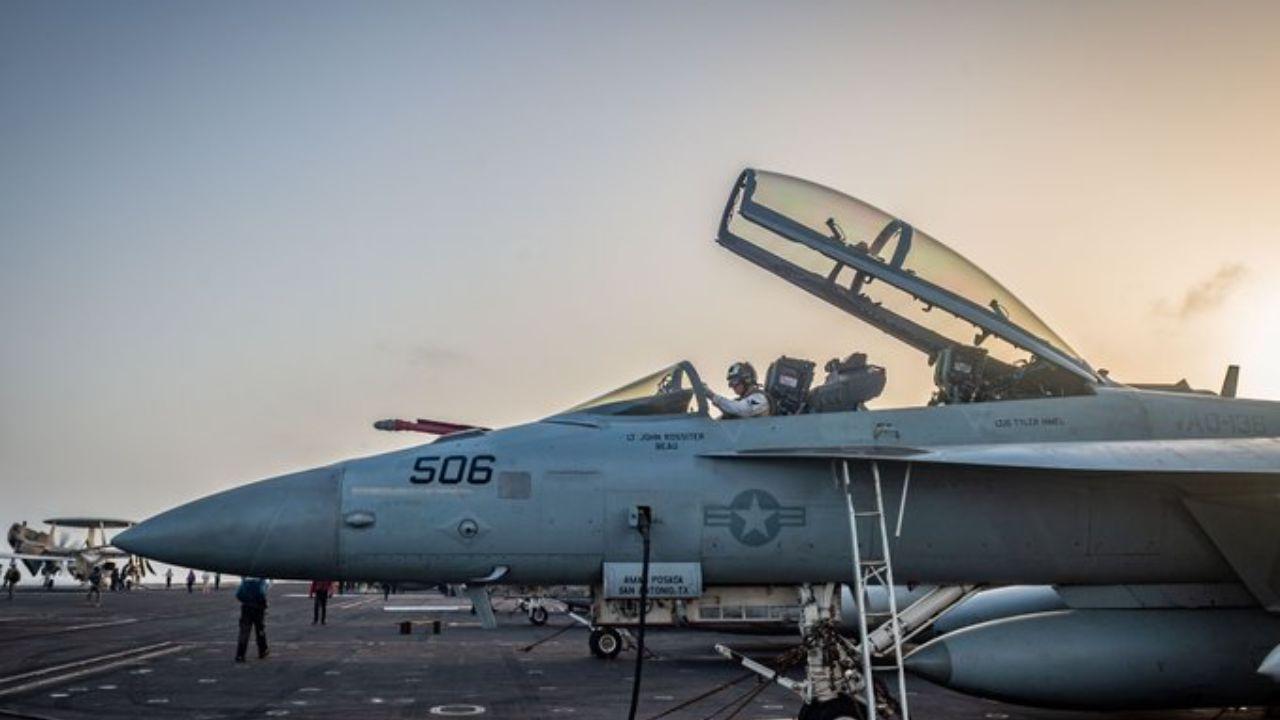
Photo : X / U.S. Navy
The Navy’s Bold Step Into Autonomous Aviation
The U.S. Navy is embarking on a transformative journey in carrier aviation. With the launch of the Collaborative Combat Aircraft (CCA) program, it seeks to integrate unmanned “loyal wingman” drones into carrier air wings, enhancing operational flexibility, reducing risk to pilots, and modernizing the fleet. This initiative signals a new era of naval power projection where autonomous systems play a central role alongside manned aircraft.
The Vision Behind CCAs
At its core, the CCA program aims to deploy drones that operate as intelligent partners to manned fighters. The Navy envisions these Loyal Wingman aircraft performing reconnaissance, electronic warfare, and strike support missions. They are designed to extend the reach of manned platforms, absorb initial threats, and deliver precision capabilities in contested environments—all while being cost-effective enough to use aggressively without jeopardizing human life.
Contracts and Key Players
To accelerate development, the Navy awarded conceptual design contracts to five major defense contractors. Four companies are tasked with designing and building the aircraft, while the fifth focuses on creating a common control architecture. This architecture will allow diverse drone types to operate seamlessly together, communicating with manned aircraft and fleet command structures in real-time. This division ensures both innovation in airframe design and interoperability across platforms.
Dual Approach: Aircraft and Control Systems
The split approach reflects the Navy’s dual priorities: advanced airframe technology and centralized control. Aircraft developers concentrate on carrier suitability, autonomous navigation, stealth, endurance, and payload capabilities. Meanwhile, the control system contractor ensures that mission planning, drone-to-drone communication, and pilot interaction remain streamlined and reliable. This combination of hardware and software is essential for safe and effective operations in the complex carrier environment.
Operational Flexibility on the Carrier Deck
CCAs are engineered to launch and recover from aircraft carriers using existing catapult and arresting systems. They must coexist with manned aircraft like the F-35C, requiring sophisticated deck operations planning. By operating autonomously yet in concert with piloted aircraft, CCAs can dramatically increase sortie rates, cover more territory, and provide real-time tactical information without overburdening human pilots.
Cost-Efficiency: A Strategic Advantage
One of the most compelling aspects of the program is cost efficiency. Each CCA is designed to be significantly less expensive than manned fighters, allowing the Navy to maintain larger numbers in the air without a proportional increase in operational cost. This cost advantage enables the fleet to field drones for high-risk missions or in higher-threat environments, ensuring that manned aircraft are preserved for critical engagements.
Stealth and Survivability
Despite being unmanned, CCAs are expected to employ stealth features, sensor fusion, and autonomous evasive maneuvers to survive in contested airspace. Their expendability allows commanders to undertake aggressive strategies without putting pilots at undue risk. Additionally, modular payloads enable drones to switch roles rapidly—from intelligence gathering to electronic attack—enhancing mission versatility.
Learning From Past Programs
The Navy’s experience with previous unmanned programs, including carrier-capable tankers and early experimental drones, has informed CCA development. Lessons from deck handling, launch and recovery cycles, and integration with fleet operations have shaped the program’s technical specifications. This institutional knowledge ensures that the CCA program progresses with realistic expectations and achievable goals.
Common Control Architecture: The Brain of the Fleet
The centralized control system is a critical component of the Navy’s strategy. By linking multiple drones into a single command network, operators can manage fleets of autonomous aircraft simultaneously. The architecture supports dynamic tasking, mission plan adjustments, and real-time coordination with manned aircraft. It also allows for scalability as additional drones enter service, ensuring the Navy can expand capabilities without significant redesign.
A Force Multiplier for the Carrier Air Wing
CCAs act as force multipliers, enabling carriers to project power more efficiently. They can conduct surveillance over extended distances, perform early warning functions, and even execute targeted strikes. By absorbing risk and extending operational reach, these drones free up manned aircraft for higher-priority missions, ultimately enhancing the overall effectiveness of the carrier strike group.
Rapid Development and Deployment
Speed is a defining feature of the CCA program. The Navy intends to move quickly from conceptual design to prototyping, leveraging agile development practices and iterative testing. This approach allows for rapid refinement based on operational feedback, reducing the risk of delays and ensuring that drones are ready for deployment alongside new fighter platforms.
Integration With Next-Generation Fighters
CCAs are designed to complement the forthcoming F/A-XX fighter. By sharing data, coordinating attacks, and providing electronic warfare support, drones will enable pilots to focus on strategic objectives while unmanned systems handle routine or high-risk tasks. This integration ensures that manned and unmanned elements of the air wing operate as a cohesive unit.
Autonomous Mission Execution
Autonomy is central to CCA capability. Drones will be capable of executing missions with minimal human intervention, adapting to threats, and making tactical decisions in real-time. This level of intelligence allows CCAs to function effectively in complex and dynamic combat environments, providing commanders with flexible and responsive tools to manage engagements.
Multi-Mission Capabilities
CCAs are not limited to a single role. Their modular design allows for multiple payload configurations, enabling rapid transition between reconnaissance, strike, and electronic warfare functions. This flexibility ensures that a single aircraft type can meet a wide range of operational requirements, reducing the logistical burden of maintaining multiple specialized systems.
Enhancing Carrier Survivability
By providing an additional layer of defense, CCAs enhance the survivability of the carrier itself. Drones can serve as forward sensors, electronic decoys, or initial strike assets, keeping manned aircraft and crews at safer distances. In high-threat scenarios, their presence can be decisive, allowing carriers to maintain operational tempo even in contested airspace.
Joint Operations and Interoperability
The Navy envisions CCAs operating alongside Air Force and allied unmanned systems, leveraging common standards for mission planning and data sharing. This interoperability ensures that drones can participate in coalition operations and combined air campaigns, extending the reach and influence of U.S. forces globally.
Future Technological Evolution
The CCA program is designed with growth in mind. Advances in artificial intelligence, sensor technology, and autonomous control systems will allow drones to evolve alongside operational requirements. Upgrades to airframes, software, and payloads can be implemented without disrupting existing fleet operations, ensuring long-term relevance.
Workforce Transformation
The rise of CCAs also changes the nature of naval aviation work. Pilots, controllers, and maintenance personnel must acquire new skills to operate and support unmanned systems effectively. Training programs emphasize data analysis, autonomous system management, and integrated fleet operations, reflecting the increasingly digital nature of naval combat.
Strategic Implications for Global Power
The introduction of carrier-based CCAs positions the U.S. Navy at the forefront of autonomous naval aviation. By combining manned and unmanned platforms, the Navy enhances deterrence, strengthens strike capabilities, and maintains technological superiority in an era of rapid global military modernization. CCAs represent a tangible shift in how naval power is projected and defended.
A Milestone in Naval Aviation
The CCA program represents a milestone in naval aviation history. It demonstrates the Navy’s commitment to innovation, operational flexibility, and strategic advantage. As drones move from concept to carrier decks, they promise to reshape fleet dynamics, mission planning, and the very definition of air power at sea.
Operational Readiness and Testing
The path from design to operational deployment will involve rigorous testing. Prototypes must prove themselves in carrier takeoffs, arrested landings, and complex deck operations. Simulated combat missions will evaluate their autonomy, decision-making, and reliability under stress, ensuring that only fully capable aircraft enter the fleet.
The Road Ahead
Looking forward, CCAs are expected to become integral to carrier air wings. Their ability to perform missions traditionally assigned to manned aircraft, combined with expendability and adaptability, positions them as game-changers in naval strategy. Continuous innovation will refine capabilities, extend mission profiles, and solidify the Navy’s edge in maritime operations.
Loyal Wingmen in Action
The U.S. Navy’s carrier-based CCA program is more than a technological initiative—it’s a strategic transformation. By integrating Loyal Wingman drones into air wings, the Navy amplifies its reach, enhances survivability, and prepares for future conflict environments. Modular, autonomous, and versatile, these carrier-capable drones are set to redefine naval air power for decades to come.
Collaborative Combat Aircraft, Loyal Wingman, Carrier-capable drones



Advances in Aerospace Technology and Commercial Aviation Recovery
Insights into breakthrough aerospace technologies and commercial aviation’s recovery amid 2025 chall

Defense Modernization and Strategic Spending Trends
Explore key trends in global defense modernization and strategic military spending shaping 2025 secu

Tens of Thousands Protest in Serbia on Anniversary of Deadly Roof Collapse
Tens of thousands in Novi Sad mark a year since a deadly station roof collapse that killed 16, prote

Canada PM Carney Apologizes to Trump Over Controversial Reagan Anti-Tariff Ad
Canadian PM Mark Carney apologized to President Trump over an Ontario anti-tariff ad quoting Reagan,

The ad that stirred a hornets nest, and made Canadian PM Carney say sorry to Trump
Canadian PM Mark Carney apologizes to US President Trump after a tariff-related ad causes diplomatic

Bengaluru-Mumbai Superfast Train Approved After 30-Year Wait
Railways approves new superfast train connecting Bengaluru and Mumbai, ending a 30-year demand, easi




