Post by : Amit
Photo : X / EV
Sales Crash Raises Doubts About Nio’s Multi-Brand Strategy
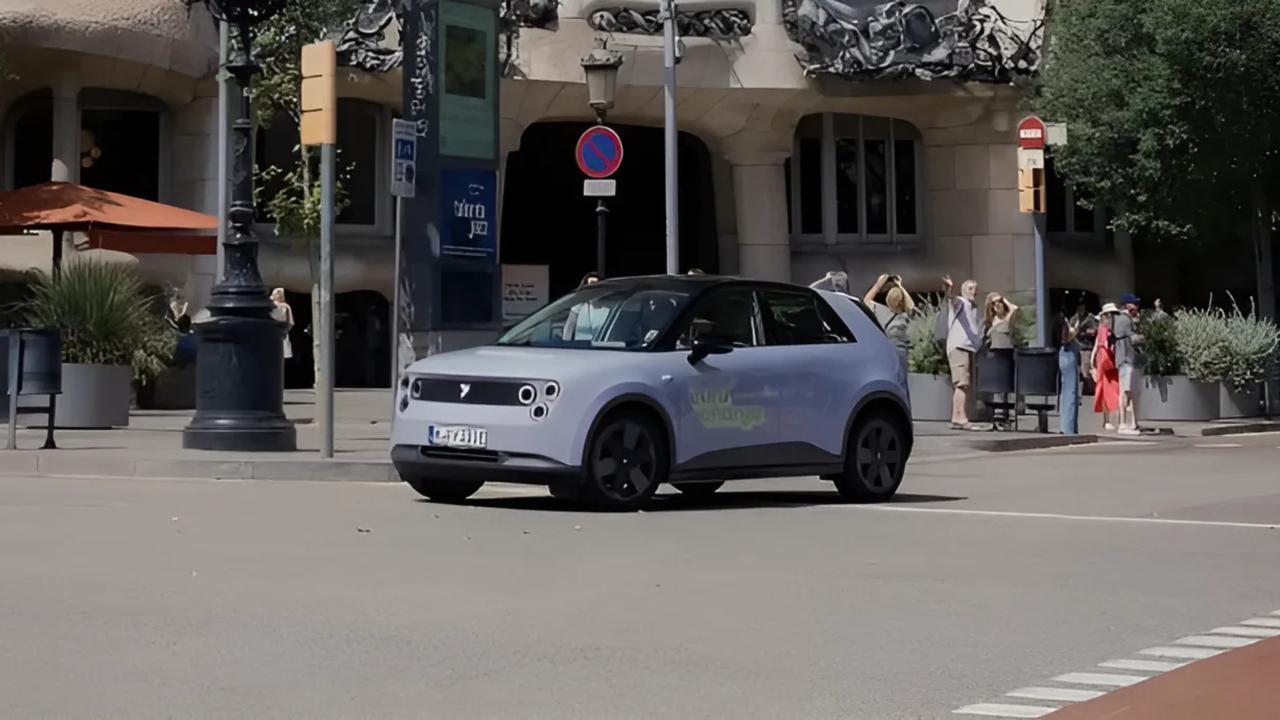
Just as Chinese EV giant Nio prepares to launch its compact electric vehicle sub-brand Firefly in Europe, it faces a critical setback at home: a 58% plunge in weekly sales. For a brand designed to dominate the entry-level urban EV market, the timing couldn’t be more precarious. The stark drop—down from over 6,500 units per week in May to less than 2,800 by early July—is forcing industry analysts and investors to question whether Nio’s multi-brand ambition is now stretching thin.
Initially hailed as a promising disruptor in the budget EV space, Firefly was launched to capture China’s fast-growing pool of price-conscious first-time EV buyers. The compact car, marketed with sleek aesthetics, minimalist tech, and competitive pricing, was aimed at Tier 2 and Tier 3 cities—places where affordability often trumps brand loyalty. But instead of accelerating, Firefly has hit a slowdown—just as Nio readies its European debut, where the stakes, and expectations, are even higher.
Firefly’s Market Entry: A Bold Step That’s Losing Momentum
When Firefly first rolled out, Nio positioned it as a youthful, accessible entry point into the electric future. It wasn’t meant to be premium; it was meant to be practical and aspirational for the everyday commuter. With a price point intentionally kept under 100,000 yuan (around ₹11.5 lakh), it was placed in direct competition with BYD’s Seagull, Wuling’s Bingo, and Leapmotor’s T03—three of the most aggressively priced and widely accepted city EVs in China.
Firefly had all the right checkboxes: clean design, a recognizable brand name behind it, and a compact form ideal for dense cities. Yet, as sales began tapering off after initial traction, the cracks in the foundation began to show. Consumers were either looking for more features at the same price—or more trust in a product that was being eclipsed by more established models in the budget segment.
Cannibalization and Confusion: Nio’s Multi-Brand Juggle
One of the deeper concerns emerging is Nio’s own brand structure. With three active sub-brands—Nio (premium), Onvo (mass market), and Firefly (entry-level)—there’s growing evidence of internal cannibalization. All three vehicles, while aimed at different pricing tiers, often share similar tech platforms, designs, and battery systems. To the average consumer, the distinctions blur, and instead of presenting choices, it risks presenting confusion.
Buyers who may have considered Firefly might instead stretch their budgets to Onvo’s L60, Nio’s latest mass-market release targeting the Tesla Model Y. Or worse, they might exit the Nio ecosystem altogether in favor of a competitor with a simpler, clearer offering. At a time when brand trust is everything, Firefly’s identity crisis is becoming a strategic liability.
China’s Budget EV Market: A Battle of Margins and Mindshare
The Firefly slump also reveals a broader issue across China’s compact EV space: it’s becoming brutally competitive. Dozens of local brands are flooding the sub-100k yuan price point, turning every sale into a margin war. While giants like BYD have the scale to absorb such competition, emerging players or new sub-brands like Firefly find themselves squeezed from all sides.
The challenge is no longer just about being electric—it’s about offering better range, faster charging, more connected features, and better financing deals, all while maintaining razor-thin profit margins. And in a market flooded with innovation, any delay in product updates or brand engagement can result in being instantly outpaced.
Moreover, EV subsidy cuts by the Chinese government have put added pressure on entry-level brands to stand on their own. Without the crutch of incentives, Firefly now needs to prove its worth through pure consumer value—a tough proposition when its rivals are innovating faster and marketing harder.
European Launch: An Opportunity, or an Overreach?
Despite the dip in China, Nio appears unwavering in its commitment to take Firefly international—beginning with Europe later this year. According to insider reports, the company plans a dedicated launch event, followed by a sales rollout in countries like Germany, France, and the Netherlands—all mature EV markets with a growing appetite for compact, eco-friendly urban vehicles.
The strategy, however, raises valid concerns. Can Nio succeed abroad while its domestic foundation remains shaky? Critics argue that without stabilizing Firefly at home, launching it in a more complex and brand-sensitive European environment may be premature. After all, the European EV market doesn’t just evaluate cost and features—it places enormous weight on after-sales service, dealership network, crash ratings, insurance premiums, and brand trust.
Firefly will be entering a space already populated by Volkswagen’s ID.2all, Renault’s Twingo E-Tech, and the Dacia Spring—all backed by legacy automakers with entrenched networks and local know-how. While Firefly may appeal on design and price, Nio will have to work harder to build credibility from scratch in markets where even Tesla took years to gain traction.
Nio’s Larger Ambitions and the Firefly Dilemma
Firefly’s struggles are not isolated—they come at a time when Nio is aggressively expanding across multiple fronts. The brand is investing heavily in battery swap stations, autonomous driving development, overseas manufacturing partnerships, and software integration. In addition to Firefly and Onvo, Nio’s core brand continues to launch premium models, adding to the operational load.
While diversification is key to any tech-forward automaker’s survival, some experts suggest that Nio’s pace of innovation may now be outstripping its internal cohesion. Firefly’s missteps—whether in positioning, pricing, or consumer engagement—may be the first signs that Nio needs to pause and recalibrate.
Another element is investor pressure. As public companies balance growth promises with performance delivery, the temptation to rush new brands into new markets can backfire—especially if early data like Firefly’s sales collapse is ignored.
Can Europe Save Firefly?
Yet all is not lost. Nio still has time—and options. The European rollout could become an opportunity for a brand reset, allowing Firefly to be re-introduced with clearer messaging, better packaging, and stronger local partnerships. If Nio can successfully adapt the Firefly pitch—emphasizing urban efficiency, compact luxury, and superior design—it may still carve out a niche in cities like Amsterdam, Berlin, and Paris.
There’s also the possibility of aligning with shared mobility services, positioning Firefly not just for retail buyers but also for car-sharing platforms, university fleets, or subscription-based models that are rapidly gaining traction in the EU. In doing so, Firefly can still serve its purpose: as the gateway EV for a new generation of urban drivers, both east and west.
A Brand at a Crossroads
Firefly’s sharp sales drop is more than just a bump in the road—it’s a mirror reflecting deeper strategic dilemmas for Nio. As the company juggles multiple brands, global aspirations, and operational complexity, Firefly is quickly becoming a litmus test for whether Nio can manage scale without losing clarity.
The 58% decline has revealed fault lines: a crowded domestic market, unclear brand differentiation, and the risk of launching abroad with unresolved domestic challenges. But it has also presented Nio with an opportunity—to learn, adapt, and return stronger.
In the months ahead, all eyes will be on Firefly’s European debut. If Nio gets the formula right, Firefly could rise from a stalling start to become a symbol of affordable, stylish urban mobility worldwide. But if missteps persist, Firefly could soon join the growing list of EV sub-brands that burned bright for a moment, only to fade away.
Nio Firefly, EV, Electric Car



Advances in Aerospace Technology and Commercial Aviation Recovery
Insights into breakthrough aerospace technologies and commercial aviation’s recovery amid 2025 chall

Defense Modernization and Strategic Spending Trends
Explore key trends in global defense modernization and strategic military spending shaping 2025 secu

Tens of Thousands Protest in Serbia on Anniversary of Deadly Roof Collapse
Tens of thousands in Novi Sad mark a year since a deadly station roof collapse that killed 16, prote

Canada PM Carney Apologizes to Trump Over Controversial Reagan Anti-Tariff Ad
Canadian PM Mark Carney apologized to President Trump over an Ontario anti-tariff ad quoting Reagan,

The ad that stirred a hornets nest, and made Canadian PM Carney say sorry to Trump
Canadian PM Mark Carney apologizes to US President Trump after a tariff-related ad causes diplomatic

Bengaluru-Mumbai Superfast Train Approved After 30-Year Wait
Railways approves new superfast train connecting Bengaluru and Mumbai, ending a 30-year demand, easi




