Post by : Amit
Photo : X / Nissan
Nissan's EV Plans Face Delays, Leaf Gets Extended Life
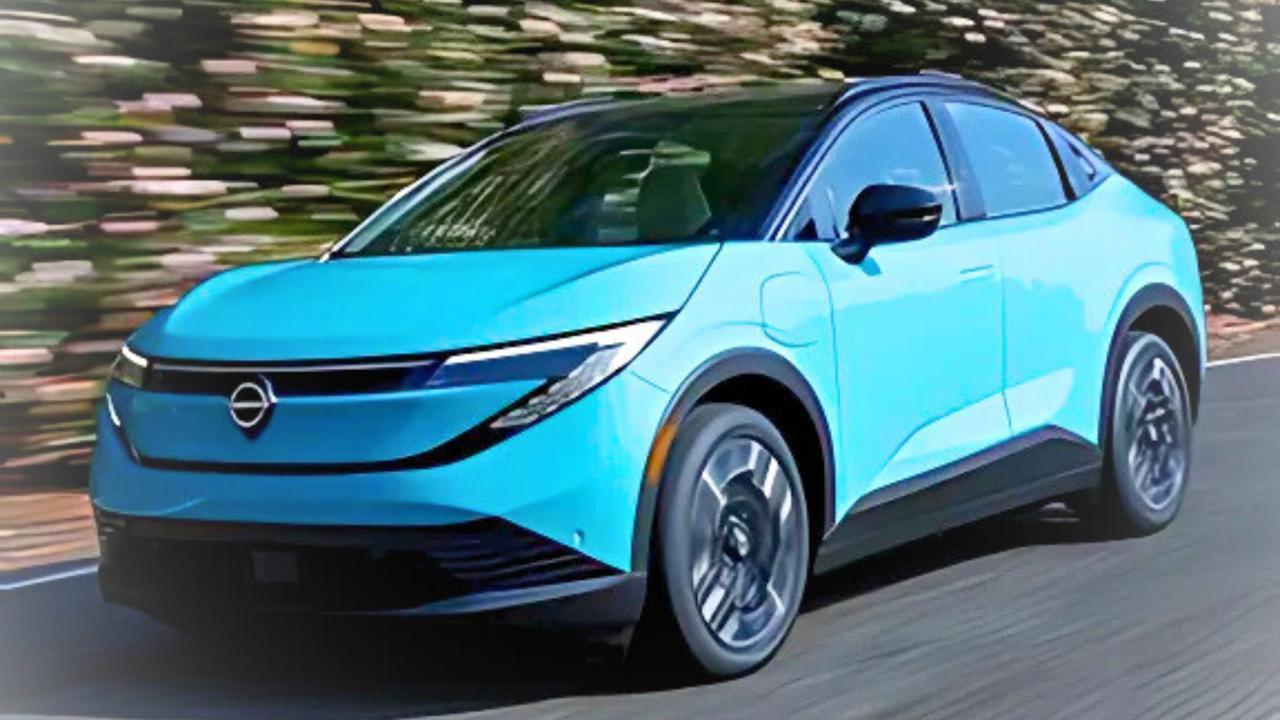
In a surprising development for the electric vehicle (EV) market, Nissan has delayed the launch of its highly anticipated new electric crossover planned for production at its Sunderland plant in the UK. The move has prompted the automaker to extend the life of its iconic Nissan Leaf, one of the world's first mass-market EVs, which will now continue production beyond its initially planned retirement.
The decision underscores the complex challenges facing the global automotive industry as it navigates supply chain constraints, evolving market dynamics, and the push towards electrification.
Sunderland Plant at the Heart of Nissan's Electric Ambitions
The new EV crossover, which was set to be built on Renault-Nissan’s CMF-EV platform, was expected to play a key role in Nissan's broader electrification strategy for Europe. The Sunderland factory, one of the UK’s largest car plants, has been central to Nissan's presence in Europe for decades and was earmarked for transformation into an EV manufacturing hub with significant investment in battery production and green energy.
The delay, however, means that the factory will continue to produce the Nissan Leaf, first launched in 2010 and widely credited with pioneering the modern EV movement. This decision allows Nissan to maintain operations and workforce continuity while reassessing its product rollout strategy.
Global EV Market Uncertainty Influences Decision
Nissan’s choice to delay the new crossover reflects broader uncertainty in the global EV market. While demand for electric vehicles is growing, it is also marked by regional variability, fluctuating consumer incentives, and ongoing supply chain bottlenecks, particularly in battery materials and semiconductor components.
Recent market slowdowns in parts of Europe, combined with intensifying competition from both established automakers and aggressive Chinese EV brands, have made the timing of new model launches more critical than ever. By extending Leaf production, Nissan is buying time to align its new offerings with clearer market signals.
The Leaf’s Enduring Appeal and Role in Transition
The Nissan Leaf, despite its age and more limited range compared to newer models, continues to enjoy popularity in certain markets due to its affordability, reliability, and established reputation. It offers an accessible entry point to electric mobility for cost-conscious consumers, something that remains valuable as the global shift to EVs accelerates unevenly.
By keeping Leaf production active, Nissan can continue to serve markets where price sensitivity is key, while also maintaining its environmental credentials without leaving a production gap at its UK facility.
Impact on UK’s Automotive Sector and Sunderland Jobs
The delay carries significant implications for the UK’s post-Brexit automotive industry, which has been banking on electrification to secure future investment and jobs. Nissan's Sunderland plant employs over 6,000 workers and supports thousands more in the supply chain.
While the continued production of the Leaf ensures job security for now, the delay of the new crossover may raise concerns over the pace of the UK’s transition to EV manufacturing. The British government has been pushing for ambitious EV adoption targets, including a ban on new internal combustion engine vehicles by 2035, and automakers like Nissan are central to achieving this vision.
Nissan’s Broader Electrification Strategy Remains Intact
Despite the delay, Nissan reaffirmed its long-term commitment to electrification. The company plans to introduce multiple new EVs by 2030 as part of its Ambition 2030 roadmap, which includes significant investment in solid-state battery technology, vehicle-to-grid systems, and green manufacturing processes.
The postponed crossover is expected to debut at a later date with more advanced technology and potentially improved market conditions. Nissan's existing EV lineup, including the Leaf and Ariya SUV, will continue to anchor its zero-emission offerings in the meantime.
Industry-Wide Implications: Managing EV Transition Risks
Nissan’s cautious approach highlights a growing trend among global automakers to balance innovation with market pragmatism. Several major carmakers, including Ford, Volkswagen, and General Motors, have also adjusted their EV timelines amid inflationary pressures, supply chain challenges, and shifts in government policies on subsidies.
The EV transition, while inevitable, is proving to be more complex than early forecasts suggested. Companies that manage this shift with agility—delaying when necessary, accelerating when feasible—are likely to emerge stronger in the long run.
Consumer Perspective: Waiting for the Next Big EV
For consumers, the delay of Nissan's new crossover may come as a disappointment, particularly for those awaiting fresh, competitively priced EV options in Europe. However, the extended availability of the Leaf provides continued access to affordable electric mobility while the industry navigates these transitional phases.
As battery costs fall and infrastructure improves, the next wave of EVs, including Nissan’s future models, is expected to offer better value, performance, and sustainability.
Nissan Balances Patience with Progress in EV Shift
Nissan’s decision to delay its new electric crossover while extending the life of the Leaf reflects the realities of today’s volatile automotive landscape. By safeguarding jobs, maintaining production, and avoiding premature market entry, the company is positioning itself to stay resilient in the face of ongoing change.
As the EV revolution continues, Nissan’s careful strategy signals that in this fast-evolving sector, sometimes the key to long-term success lies in knowing when to pause, recalibrate, and move forward at the right moment.
EV, Nissan, Electric Car



Advances in Aerospace Technology and Commercial Aviation Recovery
Insights into breakthrough aerospace technologies and commercial aviation’s recovery amid 2025 chall

Defense Modernization and Strategic Spending Trends
Explore key trends in global defense modernization and strategic military spending shaping 2025 secu

Tens of Thousands Protest in Serbia on Anniversary of Deadly Roof Collapse
Tens of thousands in Novi Sad mark a year since a deadly station roof collapse that killed 16, prote

Canada PM Carney Apologizes to Trump Over Controversial Reagan Anti-Tariff Ad
Canadian PM Mark Carney apologized to President Trump over an Ontario anti-tariff ad quoting Reagan,

The ad that stirred a hornets nest, and made Canadian PM Carney say sorry to Trump
Canadian PM Mark Carney apologizes to US President Trump after a tariff-related ad causes diplomatic

Bengaluru-Mumbai Superfast Train Approved After 30-Year Wait
Railways approves new superfast train connecting Bengaluru and Mumbai, ending a 30-year demand, easi




