Post by : Amit
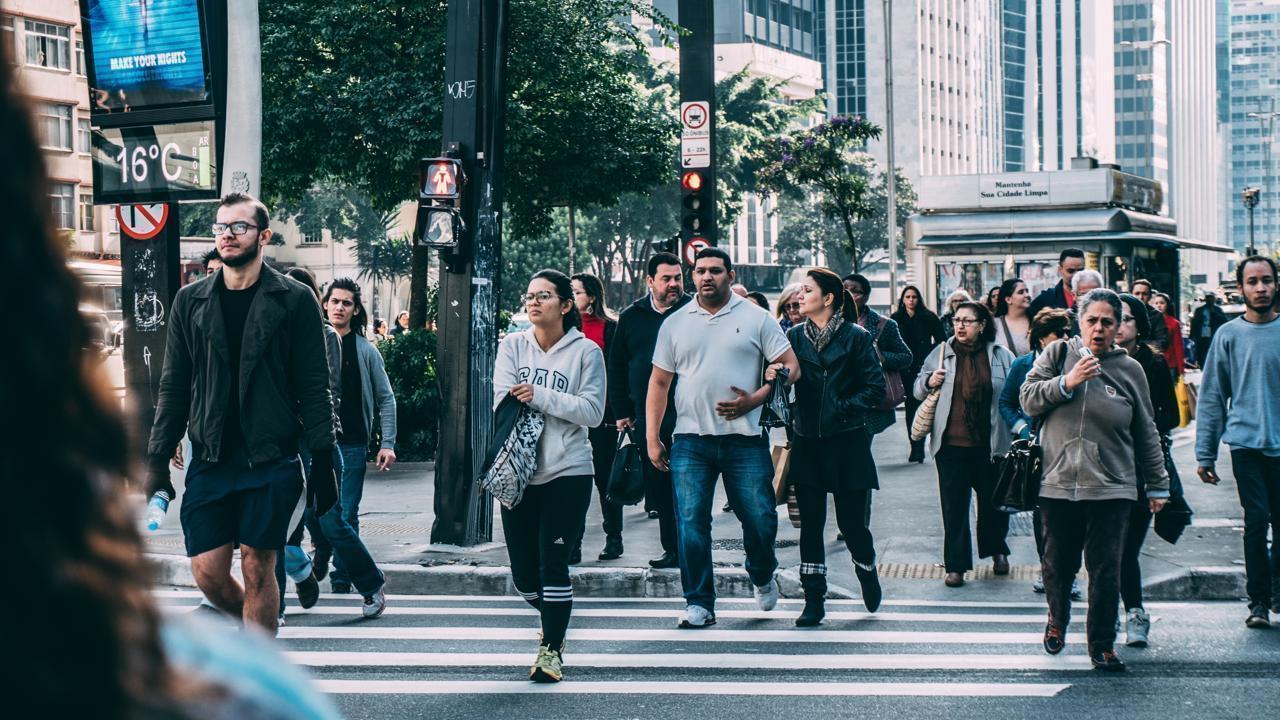
In the ever-changing rhythm of city life, people are now walking faster and pausing less. That’s the key takeaway from a groundbreaking study by MIT, which signals a subtle but profound transformation in the way we move through urban spaces.
In a world increasingly shaped by smartphones, social algorithms, time anxiety, and the residual aftershocks of the COVID-19 pandemic, even the simple act of walking has changed. A new study conducted by MIT’s Department of Urban Studies and Planning has found that pedestrians in modern cities walk significantly faster and spend less time lingering, chatting, or interacting with their environments than in the past.
It’s a discovery that carries wide-ranging implications for city planning, transit infrastructure, social interaction, and mental health. While a faster pedestrian pace may indicate increased efficiency, it also raises deeper questions about how our cities are influencing—perhaps even dictating—our behaviors.
The Research: What Did MIT Find?
The study, led by Professor Andres Sevtsuk, used high-resolution pedestrian tracking data gathered over several years across multiple urban centers, including sites in Boston, Singapore, and select European cities. Researchers combined modern computer vision techniques, location-based data, and time-lapse street photography to analyze pedestrian behavior.
Their key finding? People are walking 10–20% faster on average than they were a decade ago. Not only that, but they’re also stopping less frequently to interact with public spaces—be it park benches, street performers, store displays, or even one another.
According to Sevtsuk, this behavioral acceleration is both surprising and consistent. “Our data shows a notable shift in walking speeds and social interaction. The trend is observable globally in dense urban environments,” he said.
Pandemic as a Catalyzing Force
The researchers believe this transformation accelerated in the wake of the COVID-19 pandemic. The lockdown era introduced people to more private, controlled routines, and even after restrictions lifted, many carried those behavioral changes with them.
Avoidance of public gatherings, a preference for efficiency, and heightened concern over personal space contributed to a lasting hesitancy to linger in urban settings. Though people returned to streets and transit systems, they did so with a newfound sense of urgency and caution.
“There’s still a shadow of the pandemic on our streets,” noted co-researcher Max Hensley. “The social friction that once made cities vibrant—random chats, unplanned detours, open-air leisure—is being replaced by directed movement.”
Smartphones, Screens, and Speed
Beyond the pandemic, the role of smartphones and mobile tech can’t be ignored. With digital lives often taking precedence over physical environments, pedestrians are increasingly absorbed in devices, heads down, earbuds in.
Many urban dwellers now move through cities while listening to podcasts, responding to messages, or following GPS routes—all of which encourage faster, task-focused walking and discourage exploratory detours.
“The city has become a backdrop rather than a destination,” said Sevtsuk. “We’re not stopping to smell the proverbial roses—we’re walking through them while ordering groceries on our phones.”
This tech-driven tunnel vision has led to what some researchers call “non-space transit”: people using streets as passageways rather than places to experience.
Cities That Aren’t Built for Pause
Another factor influencing pedestrian behavior is the design of the cities themselves. In many urban areas, particularly those with high real estate pressures, public seating is scarce, green spaces are limited, and streets are optimized for speed and throughput—of both vehicles and people.
MIT’s study highlights how even subtle design choices, like a lack of shaded rest areas or pedestrian bottlenecks, can discourage lingering. If a person doesn’t feel welcome to stop—or can’t find a comfortable place to do so—they’re more likely to keep moving.
This has profound implications for urban mobility systems like Mobility-as-a-Service (MaaS), which rely on seamless integration between walking, cycling, and public transit. If cities aren’t pedestrian-friendly, adoption of sustainable transit suffers.
Impacts on Public Life and Mental Health
The consequences of these behavioral shifts go beyond mobility metrics. Social scientists warn that fast-paced pedestrian movement and minimal street-level interaction can weaken community bonds and reduce overall well-being.
Streets and sidewalks have long served as informal social infrastructure—spaces where people could meet, observe, relax, and feel part of a community. The move away from these slower rhythms may be increasing urban loneliness and reducing opportunities for spontaneous socialization.
“There’s a kind of urban exhaustion that sets in when everything is transactional,” said urban sociologist Dr. Lena Ortega. “Lingering is essential to a city’s soul. When it disappears, we lose more than time—we lose texture.”
Additionally, studies have shown that slow, exploratory walking boosts creativity and reduces stress. A faster, more goal-oriented pace may deprive people of those restorative benefits.
What This Means for Urban Planners and Mobility Designers
The findings are already resonating with city planners and mobility tech firms. Companies designing MaaS apps, for instance, are rethinking how to balance speed with environmental engagement. Some are incorporating augmented reality features that nudge users to explore nearby attractions or historical landmarks.
Meanwhile, planners in cities like Paris and Copenhagen are doubling down on “slow streets” programs—pedestrian-prioritized zones that encourage relaxation and exploration rather than efficiency.
MIT researchers hope their data can inspire a reevaluation of how we structure pedestrian environments. Instead of simply facilitating movement, cities must consider how to foster presence.
“Urban space must be more than a conduit,” said Sevtsuk. “It should invite participation, not just passage.”
Reimagining Pedestrian-Centric Infrastructure
Some cities are already leading by example. Barcelona’s superblocks and Milan’s open-street programs are designed to calm traffic and slow people down, encouraging them to stay, play, and engage. These programs work by reducing vehicle access and repurposing roads into community spaces.
In Singapore, smart lamp posts and benches are being installed that offer Wi-Fi, charging ports, and even air quality updates—subtly encouraging pedestrians to rest and interact.
In the U.S., New York City’s Department of Transportation is investing in “street seats” and parklets—mini public spaces carved out of curbside zones previously used for parking. These simple interventions have shown measurable increases in foot traffic, dwell time, and local business revenue.
Can We Reverse the Rush?
Ultimately, the question is whether these trends can be reversed—or whether they’re now a permanent feature of digital urban life.
Sevtsuk remains optimistic: “The data doesn’t show an irreversible decline in urban joy—it shows a warning. If we’re intentional about how we design public space, we can absolutely rekindle the slower, more sociable city.”
That may mean introducing subtle cues to pause, like interactive art, shaded seating, or sidewalk gardens. Or it could mean rethinking city zoning to ensure more mixed-use developments where work, leisure, and community collide.
A New Urban Consciousness?
The MIT study closes with a provocative insight: modern urbanites are not just walking faster—they’re moving through life faster. The speed of the sidewalk may be a symptom of broader cultural acceleration, driven by tech, stress, and the commodification of time.
But the street remains a space of possibility. With the right interventions, it can slow us down, ground us, and reconnect us to the world outside our screens.
In an era when every second counts, perhaps it’s time to count the seconds we don’t use—and find value in the pauses we’ve forgotten how to take.
Pedestrians



Advances in Aerospace Technology and Commercial Aviation Recovery
Insights into breakthrough aerospace technologies and commercial aviation’s recovery amid 2025 chall

Defense Modernization and Strategic Spending Trends
Explore key trends in global defense modernization and strategic military spending shaping 2025 secu

Tens of Thousands Protest in Serbia on Anniversary of Deadly Roof Collapse
Tens of thousands in Novi Sad mark a year since a deadly station roof collapse that killed 16, prote

Canada PM Carney Apologizes to Trump Over Controversial Reagan Anti-Tariff Ad
Canadian PM Mark Carney apologized to President Trump over an Ontario anti-tariff ad quoting Reagan,

The ad that stirred a hornets nest, and made Canadian PM Carney say sorry to Trump
Canadian PM Mark Carney apologizes to US President Trump after a tariff-related ad causes diplomatic

Bengaluru-Mumbai Superfast Train Approved After 30-Year Wait
Railways approves new superfast train connecting Bengaluru and Mumbai, ending a 30-year demand, easi




