Post by : Amit
Importers Race Against Tariff Clock
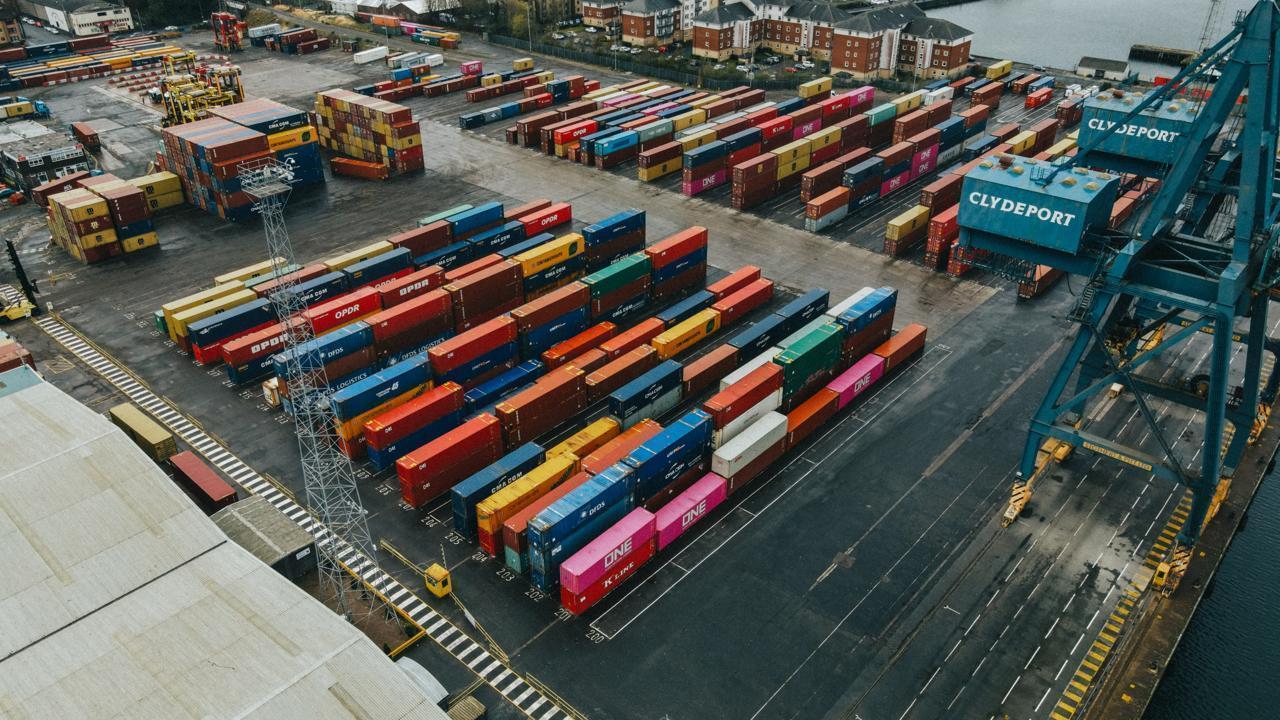
The Port of Los Angeles, the busiest maritime gateway in the United States, has entered a period of intensified activity as importers accelerate shipments to shield themselves from looming tariff hikes. Retailers, distributors, and manufacturers are bringing in goods weeks or even months earlier than planned, a strategy commonly referred to as “frontloading.”
At the heart of this scramble is uncertainty surrounding U.S. trade policy. As Washington signals tougher measures on certain imports—particularly from Asia—companies are moving quickly to secure goods before higher duties inflate costs. The effect is visible on the ground: longer queues of vessels, busier terminals, and an unusual spike in container volumes well ahead of the traditional peak shipping season.
For importers, the calculation is straightforward. By stockpiling before tariffs take effect, they can delay passing costs down the chain to wholesalers and consumers. Yet for the broader logistics ecosystem, this rush sets off a cascade of challenges—ranging from clogged distribution centers to stressed trucking and rail capacity.
Port Volumes Reflect Changing Behaviors
Data from the Port of Los Angeles underscores the scale of the shift. Containerized imports of consumer goods, electronics, and machinery have risen significantly in recent months, outpacing seasonal expectations. Port Executive Director Gene Seroka, who has steered the facility through both pandemic-era surges and downturns, noted that shippers are deliberately frontloading to create a cushion against economic shocks.
“Importers are adjusting strategies to deal with the uncertainty of tariffs,” Seroka said during a recent briefing. “It’s not just about duties—it’s about creating stability in a supply chain that has been anything but stable over the last five years.”
The ripple effects are already being felt inland. Southern California’s vast network of warehouses, distribution hubs, and trucking fleets is struggling to absorb the additional volumes. With space tight near the port complex, shippers are pushing storage further east—to Nevada, Arizona, and Texas—adding complexity and cost to logistics operations.
A Double-Edged Sword for Businesses
While frontloading may offer immediate cost relief, the strategy is not without drawbacks. Companies that import early must contend with elevated warehousing costs, higher insurance premiums, and the risk of overstocking. In industries with fast-changing consumer trends, excess inventory can quickly turn from a shield into a liability.
Retailers of fashion and consumer electronics, for instance, often face rapid product cycles. Bringing in goods too early could mean holding items that are outdated by the time demand peaks. Smaller businesses are particularly vulnerable: unlike global retail giants, they often lack the financial flexibility to absorb warehousing expenses or tie up capital in surplus inventory.
In effect, frontloading creates a tiered system of resilience. Large corporations with deeper pockets can protect themselves from tariffs more effectively than small and medium-sized enterprises, exacerbating competitive imbalances in an already challenging retail landscape.
Consumers Caught in the Middle
Ultimately, consumers stand at the end of this supply chain equation. While frontloading helps delay price hikes, it does not eliminate them. Once the stockpiled inventory is sold, businesses must replenish at higher post-tariff costs. Analysts warn that households should prepare for price increases in categories ranging from furniture to electronics, even if the impact is staggered over several months.
“Frontloading buys time, not immunity,” said Sarah Li, a trade economist at UCLA. “Eventually, the costs work their way into the retail system, whether through higher shelf prices, reduced product variety, or slimmer margins for sellers.”
Consumers may also face shortages in certain categories if smaller retailers are squeezed out or if logistics bottlenecks slow replenishment. The experience echoes previous tariff cycles, where prices rose unevenly across product categories, creating pockets of scarcity and inflationary pressure.
From “Just-in-Time” to “Just-in-Case”
The current rush at the Port of Los Angeles highlights a broader shift in how companies think about inventory. For decades, lean supply chains ruled the global economy. “Just-in-time” logistics kept costs low by minimizing excess stock and relying on fast, predictable transport. That model began to unravel during the COVID-19 pandemic, when sudden demand spikes and shipping delays left retailers and manufacturers stranded without critical goods.
Since then, a “just-in-case” approach has gained traction. Companies now prefer to hold more stock on hand as insurance against disruptions. The tariff-driven surge adds another layer to this evolution, showing how trade policy can directly shape corporate risk management.
Hybrid strategies are emerging. Some firms are stockpiling critical goods with long lead times—such as semiconductors, machinery, or medical supplies—while maintaining leaner operations for goods with flexible sourcing. This balance aims to mitigate the costs of overstocking while reducing vulnerability to external shocks.
The Global Ripple Effect
The implications of frontloading stretch far beyond California. Exporters in Asia are seeing surges in orders as U.S. companies rush to lock in shipments. Chinese manufacturers, in particular, are working overtime to meet accelerated deadlines. Southeast Asian exporters, from Vietnam to Malaysia, are also capturing business as companies diversify away from China to hedge against geopolitical risks.
Carriers, sensing the spike in demand, have responded by raising freight rates and imposing surcharges on popular Asia–U.S. routes. This has further inflated costs for importers and highlights the delicate power balance between shippers and carriers in global trade.
Alternative gateways are also feeling the ripple. East Coast ports such as New York/New Jersey and Savannah are attracting cargo diversions, partly to spread risk and partly due to space constraints on the West Coast. The Panama Canal’s water-level challenges add another wrinkle, pushing some importers to rethink routes and transit times.
Historical Echoes of Tariff Surges
The current scenario is not without precedent. During the 2018–2019 U.S.–China trade war, similar frontloading surges overwhelmed ports on both coasts. Importers rushed to beat tariff deadlines, leading to short-term spikes in cargo volumes followed by lulls once inventories were saturated.
Those cycles created whiplash effects in supply chains: warehouses overflowed, trucking demand soared temporarily, and then activity slumped as businesses paused new orders. Many economists fear a repeat pattern today, with unpredictable cycles of boom and bust disrupting long-term planning.
“The lesson from 2019 is clear: frontloading is a short-term fix that creates volatility,” said John Morales, a senior logistics consultant based in Long Beach. “The challenge for companies is figuring out how to manage that volatility without burning cash or alienating customers.”
Pressure on Infrastructure and Workforce
For the Port of Los Angeles, the surge is both a sign of resilience and a stress test. Terminal operators, crane crews, and longshore workers are facing heightened workloads, while trucking companies struggle to recruit drivers fast enough to keep pace with cargo volumes.
Warehousing in Southern California is already among the most expensive in the country, with vacancy rates at historic lows. The latest rush has only tightened the market, forcing some companies to rent temporary space at premium rates. Labor shortages in logistics further complicate operations, as companies must balance efficiency with rising wage demands.
These challenges underscore the importance of ongoing infrastructure investments. Projects to expand rail connections, digitize cargo handling, and increase port automation could play a crucial role in easing bottlenecks if such surges become more common.
Beyond Tariffs: The Policy Puzzle
While tariffs are the immediate trigger, experts warn that businesses must prepare for a more complex policy environment. Trade disputes, geopolitical tensions, and industrial policy shifts—from semiconductor subsidies to electric vehicle incentives—are all reshaping global supply chains.
Some companies are accelerating reshoring or nearshoring efforts to reduce reliance on volatile trade lanes. Mexico, for example, has seen growing interest as a manufacturing hub, thanks to its proximity to U.S. markets and free-trade agreements. Others are investing in digital tools that provide real-time visibility into supply chains, allowing faster adjustments when disruptions occur.
“Tariffs are just one variable in a much bigger equation,” noted Li. “Companies that build flexibility into sourcing and logistics will fare better than those who rely on old playbooks.”
On the Horizon
The rush of cargo through the Port of Los Angeles is unlikely to sustain indefinitely. Once the tariff deadlines pass, volumes may dip as companies work through their stockpiled inventories. That lull could provide temporary relief for logistics networks, but it may also expose vulnerabilities for firms that overextended themselves.
The bigger question is whether cycles of tariff-driven surges become a recurring feature of global trade. If trade policy remains unpredictable, importers will need to develop structural solutions rather than temporary fixes. That could mean diversifying suppliers, investing in regional production, or forming stronger partnerships with logistics providers to secure guaranteed capacity.
For now, the bustling docks of Los Angeles reflect the real-time consequences of economic policy decisions. Behind every container unloaded lies a calculation made by a company weighing cost, risk, and survival in an uncertain global economy. As tariffs loom, the port has once again become the stage where global trade tensions play out in containers, cranes, and crowded warehouses.
A Cautionary Tale for Supply Chains
The story unfolding at the Port of Los Angeles is not simply about tariffs. It is about the fragility of a global system in which political decisions reverberate through warehouses, factories, and households. For consumers, it means potential price hikes and fewer choices. For businesses, it means navigating a maze of shifting rules while trying to stay profitable.
The lesson is clear: resilience in today’s supply chains requires more than efficiency. It requires foresight, flexibility, and a willingness to adapt strategies on the fly. Whether companies can achieve that balance will determine not just their bottom line, but the stability of the trade system itself.
Marintime, Shpping



Advances in Aerospace Technology and Commercial Aviation Recovery
Insights into breakthrough aerospace technologies and commercial aviation’s recovery amid 2025 chall

Defense Modernization and Strategic Spending Trends
Explore key trends in global defense modernization and strategic military spending shaping 2025 secu

Tens of Thousands Protest in Serbia on Anniversary of Deadly Roof Collapse
Tens of thousands in Novi Sad mark a year since a deadly station roof collapse that killed 16, prote

Canada PM Carney Apologizes to Trump Over Controversial Reagan Anti-Tariff Ad
Canadian PM Mark Carney apologized to President Trump over an Ontario anti-tariff ad quoting Reagan,

The ad that stirred a hornets nest, and made Canadian PM Carney say sorry to Trump
Canadian PM Mark Carney apologizes to US President Trump after a tariff-related ad causes diplomatic

Bengaluru-Mumbai Superfast Train Approved After 30-Year Wait
Railways approves new superfast train connecting Bengaluru and Mumbai, ending a 30-year demand, easi




