Post by : Amit
Photo : X / Shiro
A New Frontier in Military Aviation Propulsion
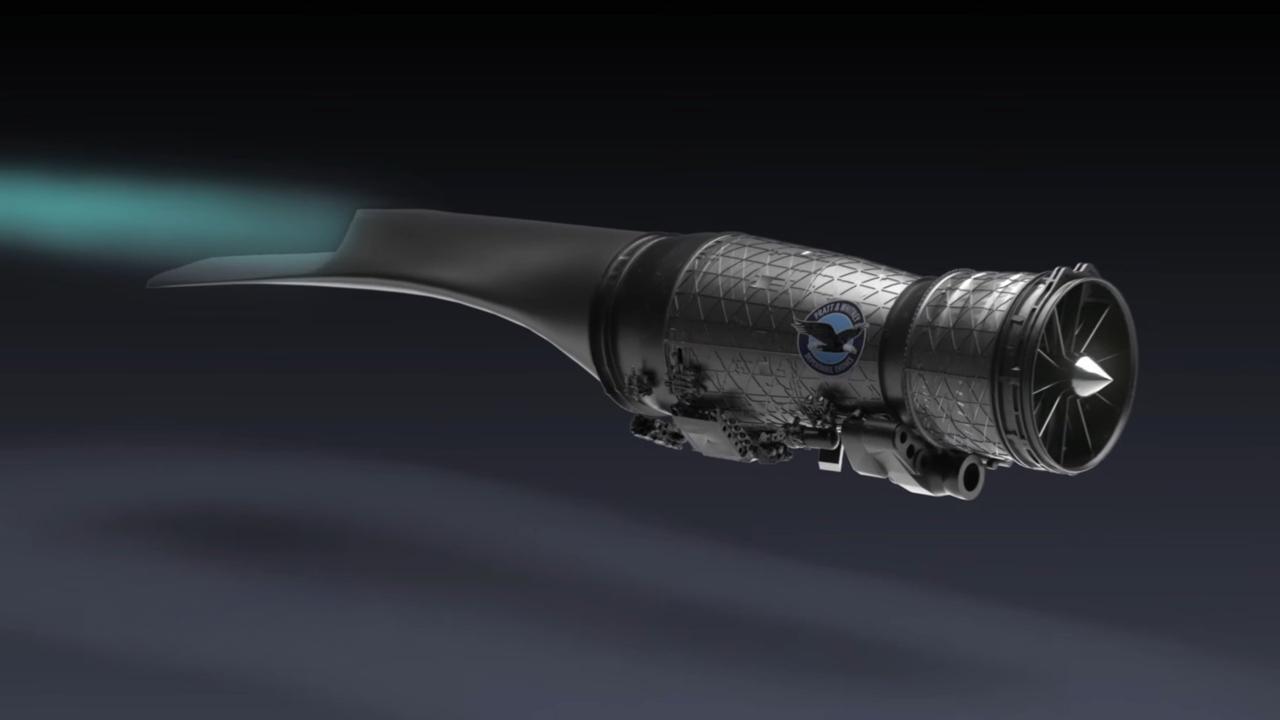
In a defining moment for future air combat capabilities, Pratt & Whitney has released significant new details about its adaptive cycle combat engine—the XA103. This next-generation propulsion system, developed under the U.S. Air Force’s Adaptive Engine Transition Program (AETP), is designed to power the future of American aerial dominance, particularly for sixth-generation fighters. As the geopolitical landscape continues to evolve and air superiority becomes increasingly dependent on technological agility, adaptive cycle engines are rapidly emerging as the cornerstone of tomorrow’s aerial warfare strategies.
This revelation marks a major turning point in the U.S. military's propulsion roadmap. For the first time, Pratt & Whitney is offering a deeper look at the XA103’s core architecture, thermodynamic design principles, and strategic intent. The engine isn’t just an upgrade—it represents a complete rethinking of what combat aircraft propulsion should be in an era dominated by long-range threats, advanced electronic warfare, and data-centric operations.
The Evolution of the Adaptive Engine Vision
The concept of an adaptive cycle engine isn’t new, but its realization has taken more than a decade of rigorous development, prototyping, and system-level rethinking. Traditional jet engines face a trade-off: high thrust typically requires high fuel consumption, while extended range and endurance come at the cost of raw power. Adaptive engines aim to reconcile this contradiction by altering their performance characteristics in real time.
At the heart of the XA103 is a revolutionary three-stream architecture, allowing the engine to switch modes based on mission requirements. Pratt & Whitney’s Vice President of Advanced Programs, Jennifer Latka, explained that the engine “delivers transformative capabilities by enabling an aircraft to toggle between high-thrust and fuel-efficient configurations seamlessly.” This ability to dynamically adapt to varying flight conditions offers a game-changing level of operational flexibility.
Whereas traditional engines feature a two-stream bypass system—one core stream for combustion and a secondary bypass stream—the XA103 introduces a third stream that can be used to either cool components or increase bypass for range and fuel savings. Alternatively, this third stream can be redirected into the core to deliver extra thrust when needed, such as in high-speed engagements or rapid evasive maneuvers.
Design Secrets of the XA103
Pratt & Whitney's decision to release more technical insight into the XA103 comes as competition intensifies with GE Aerospace's rival XA100 engine. According to company officials, the XA103’s key innovation lies in its variable-cycle fan system, which actively controls airflow between the three streams to optimize performance for different flight envelopes.
Latka described the fan as “the most complex component we’ve ever built in a fighter engine,” emphasizing that its active mechanical adjustments are driven by onboard sensors and AI-enhanced logic. This allows the engine to ‘sense’ mission demands and adjust airflow distribution in milliseconds, much like adaptive suspensions in high-performance vehicles react to road conditions.
The engine also incorporates advanced thermodynamic materials—including ceramic matrix composites (CMCs)—to withstand higher core temperatures while reducing weight. These materials allow for more efficient combustion and greater durability, essential for long-duration missions and lower lifecycle costs.
Another standout feature is the integrated power and thermal management system (PTMS), which not only reduces the cooling burden on aircraft avionics and mission systems but also frees up space for onboard energy weapons or advanced radar. “The XA103 is designed with a full aircraft in mind,” Latka emphasized. “It’s not just about propulsion; it’s about making the entire platform smarter, lighter, and more lethal.”
A Strategic Contest Between Engine Giants
The new revelations come amid ongoing debates within the Pentagon over whether to pursue a clean-sheet adaptive engine for the F-35 or stick with the upgraded F135 core engine through the Enhanced Engine Package (EEP). Pratt & Whitney has aggressively pushed its EEP path, arguing it’s the most cost-effective and low-risk solution for the F-35. However, with the XA103, the company is now clearly signaling its ambition to go beyond incremental improvements.
This is where the competition with GE Aerospace becomes particularly intense. GE’s XA100 has already undergone extensive ground testing and is pushing hard for a spot on future platforms—perhaps even the F-35 if Air Force leaders choose a bold leap forward.
Pratt & Whitney, meanwhile, is betting that the XA103 will align more seamlessly with Next Generation Air Dominance (NGAD) requirements. Latka made clear that while the F-35 engine debate is important, the real battle lies ahead in shaping propulsion for sixth-generation aircraft. “This engine is our vision for NGAD and beyond. We’re building it with modularity and mission adaptability at its core,” she said.
Beyond Thrust: Tactical and Strategic Implications
First, the adaptive engine’s fuel efficiency could extend the combat radius of future fighters by 30–50%, significantly reducing the need for forward-deployed refueling assets in contested environments. With adversaries like China developing long-range anti-aircraft capabilities and anti-access/area denial (A2/AD) strategies, reducing reliance on tankers could be a critical advantage.
Second, more thrust-on-demand means superior agility and acceleration, particularly important for survival in near-peer engagements where reaction times are shrinking. In a dogfight or missile-dodging scenario, the ability to call up extra power instantly could make the difference between life and death.
Third, and perhaps most subtly, the enhanced thermal management unlocks future possibilities in terms of high-powered sensors, directed energy weapons, and AI battle systems—all of which place massive power and cooling demands on next-gen platforms.
Ground Testing and Readiness Roadmap
Pratt & Whitney confirmed that the XA103 has completed its core design phase and is now undergoing component-level and subassembly testing. The company expects full engine ground tests to begin in late 2025, with flight test readiness expected between 2027 and 2028, depending on the Air Force’s procurement timelines for NGAD.
What makes this timeline especially interesting is its overlap with the Air Force’s broader NGAD development strategy, which includes a family of systems—a manned fighter at its center, but flanked by collaborative combat aircraft (CCAs) or loyal wingmen. The XA103 could potentially serve as a propulsion solution not just for a manned platform but for high-end CCAs as well.
“We’re designing XA103 as a scalable architecture,” said Latka. “Its core can be adapted to different thrust classes, making it suitable for the full NGAD ecosystem.”
A Broader Role in Defense Innovation
The Pentagon’s Office of the Under Secretary for Research and Engineering has flagged adaptive propulsion as a key priority for sustaining technological superiority. With increasing emphasis on modular open systems architecture (MOSA) and digital engineering, Pratt & Whitney has taken a page from software development by designing the XA103 with upgradeability in mind.
This means future iterations of the engine may include machine learning models for predictive maintenance, or cloud-synced diagnostics that allow for fleet-wide health monitoring in real time.
Additionally, the company is exploring sustainability strategies for the engine lifecycle, including the use of synthetic fuels and advanced recycling techniques for high-performance alloys. As military forces become more conscious of carbon footprints and long-term logistical sustainability, these factors are gaining importance—even in defense circles traditionally focused solely on performance.
Industry Response and Future Expectations
Reaction from defense analysts and industry insiders to Pratt & Whitney’s new disclosures has been largely positive. Richard Aboulafia, managing director at AeroDynamic Advisory, called the XA103 “a bold but necessary step,” while Air Force Magazine editor John Tirpak described it as “a propulsion philosophy that finally aligns with 21st-century warfare.”
In the months ahead, observers will be watching closely for updates from both Pratt & Whitney and GE Aerospace as the adaptive engine race intensifies. Congressional committees have already raised questions about funding continuity for AETP as budgets shift toward near-term readiness. However, defense leaders appear increasingly aligned on the need to support future capabilities—especially those that enable the U.S. to retain air superiority in 2030 and beyond.
The Future is Adaptive
Pratt & Whitney’s XA103 isn’t merely a marvel of mechanical engineering—it’s a strategic enabler. With its ability to shift between fuel-saving and high-performance modes, withstand extreme thermal environments, and scale across multiple airframes, it represents the propulsion equivalent of a smart weapon: adaptable, predictive, and mission-driven.
In a world where the pace of innovation may decide the outcome of conflicts, this engine is designed not just to keep up—but to lead. The age of adaptive air power has arrived, and Pratt & Whitney is determined to be at the forefront.
Pratt & Whitney, Combat Engine Tech, Aviation



Advances in Aerospace Technology and Commercial Aviation Recovery
Insights into breakthrough aerospace technologies and commercial aviation’s recovery amid 2025 chall

Defense Modernization and Strategic Spending Trends
Explore key trends in global defense modernization and strategic military spending shaping 2025 secu

Tens of Thousands Protest in Serbia on Anniversary of Deadly Roof Collapse
Tens of thousands in Novi Sad mark a year since a deadly station roof collapse that killed 16, prote

Canada PM Carney Apologizes to Trump Over Controversial Reagan Anti-Tariff Ad
Canadian PM Mark Carney apologized to President Trump over an Ontario anti-tariff ad quoting Reagan,

The ad that stirred a hornets nest, and made Canadian PM Carney say sorry to Trump
Canadian PM Mark Carney apologizes to US President Trump after a tariff-related ad causes diplomatic

Bengaluru-Mumbai Superfast Train Approved After 30-Year Wait
Railways approves new superfast train connecting Bengaluru and Mumbai, ending a 30-year demand, easi




