Post by : Amit
Photo:RTX
Paris, June 2025 — In a significant development that could reshape the landscape of military propulsion systems, RTX’s Pratt & Whitney has announced a pivotal contract to supply its cutting-edge TJ150 turbojet engines for the new Small Cruise Missile program known as Black Arrow, spearheaded by Dynetics, a Leidos company. The announcement, made at the prestigious Paris Air Show, highlights not only technological innovation but also the growing demand for affordable, scalable, and high-performance propulsion solutions in the evolving world of defense systems.
The agreement marks a crucial milestone for both companies as they work together to develop a new generation of cost-effective and rapidly deployable cruise missile capabilities. With rising geopolitical tensions and a renewed focus on national defense modernization, nations across the globe are increasingly prioritizing investments in systems that offer speed, precision, and flexibility—qualities that the Black Arrow missile, powered by the TJ150 engine, aims to deliver.
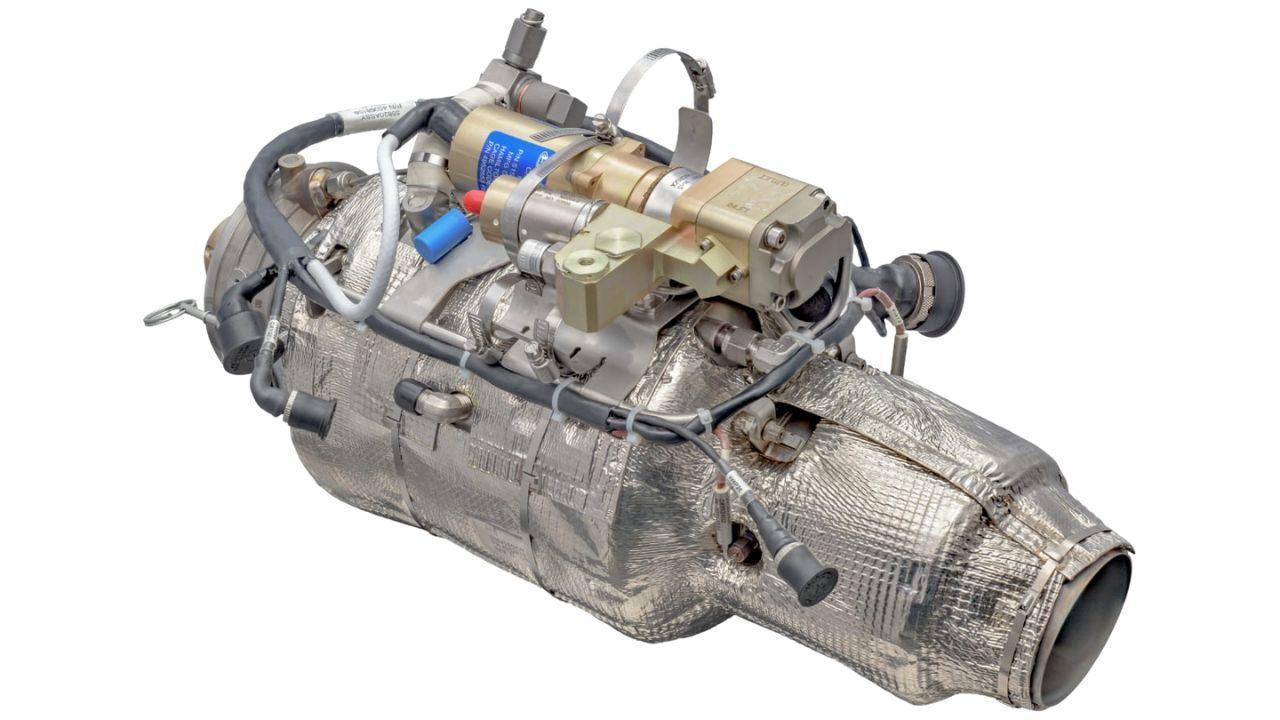
At the heart of this ambitious project lies the TJ150 turbojet, a compact yet powerful engine that delivers 150 pounds of thrust. It is specifically designed for small, autonomous, high-altitude cruise missile platforms, where size, efficiency, and reliability are paramount. What sets the TJ150 apart from conventional propulsion units is not just its performance metrics, but its lightweight design, energy efficiency, and cost-effectiveness—all vital characteristics for military forces that need scalable solutions to meet unpredictable and rapidly changing battlefield requirements.
The TJ150’s proven track record adds weight to its selection for the Black Arrow program. With over 2,700 units already delivered worldwide for various applications, the TJ150 has earned a reputation for reliability in the field. Its compact size allows it to be integrated into small missile bodies, while its robust power output ensures the necessary range and speed for mission success. Additive manufacturing techniques play a key role in the engine’s production, allowing for rapid scaling, customization, and reduced costs—a decisive factor in an era where mass production of smart weapons is increasingly critical to national security strategies.
The Black Arrow missile, developed by Dynetics, represents a next-generation tactical weapon system designed for high precision and affordability. Intended for a variety of missions, including defense suppression, time-sensitive targeting, and anti-access/area denial (A2/AD) scenarios, Black Arrow offers a cost-effective alternative to more expensive legacy missile systems without sacrificing performance. Its modular design allows for payload adaptability, while its long-range capability ensures strategic versatility.
Pratt & Whitney’s TJ150 is the engine that will power this vision into reality. The integration process began in 2023, and the program has already achieved several key milestones. A major breakthrough came in late 2024 when the first successful flight test of the Black Arrow prototype, equipped with the TJ150 engine, validated its performance in real-world conditions. The missile demonstrated not only its range and precision but also the engine’s reliability under operational stress, paving the way for the current contract award.
The program is now under contract through the first quarter of 2026, with manufacturing capacity primed for mass production. This ensures that the U.S. military, along with its allies, will have access to a scalable supply of advanced cruise missiles ready for deployment on short notice—a critical factor in maintaining readiness in today’s rapidly shifting global security environment.
Speaking on the announcement, Chris Hugill, Executive Director of Pratt & Whitney Gatorworks, expressed pride in the TJ150’s role in the program, stating: “Our TJ150 engines are ready to meet the mission. We’ve built a solution that’s proven, cost-effective, and scalable—ready ahead of demand.” Hugill emphasized the importance of delivering propulsion systems that not only meet performance expectations but also align with budget constraints and manufacturing flexibility.
Mark Miller, Senior Vice President of Missile & Aviation Systems at Leidos, echoed similar sentiments, highlighting how the collaboration allows Dynetics’ engineering teams to focus on enhancing the missile’s overall capabilities while relying on Pratt & Whitney for propulsion excellence. “Using a reliable engine like the TJ150 allows our engineers to focus on enhancing missile adaptability and mission capabilities,” Miller said, underlining the importance of trusted industrial partnerships in delivering cutting-edge defense systems.
The broader implications of this development are far-reaching. The TJ150’s cost-efficiency and scalable production model align with the U.S. Department of Defense’s push for affordable mass production of precision-guided munitions. In conflicts characterized by drone swarms, saturation attacks, and electronic warfare, the ability to deploy large numbers of precision strike weapons at reasonable cost is increasingly seen as a strategic necessity.
Additionally, this partnership highlights the growing importance of additive manufacturing—also known as 3D printing—in modern aerospace and defense industries. By using these advanced production techniques, Pratt & Whitney can accelerate manufacturing timelines, adapt quickly to design changes, and maintain tight cost controls, all while ensuring consistent quality. This innovation not only enhances the TJ150 program but sets a precedent for future propulsion and weapons development across the defense sector.
From a geopolitical perspective, the Black Arrow missile, powered by the TJ150, is poised to strengthen the United States and its allies’ deterrent capabilities. In an era marked by rising tensions in Eastern Europe, the Indo-Pacific, and the Middle East, the ability to deploy cost-effective yet advanced cruise missile systems offers a significant tactical edge. Furthermore, as defense budgets globally face scrutiny, the focus on affordability and scalability in programs like Black Arrow may influence procurement strategies well beyond the U.S.
For RTX’s Pratt & Whitney, this contract represents a reaffirmation of its leadership in propulsion technology. Known globally for powering everything from commercial airliners to military fighter jets, the company’s expansion into small-engine cruise missile markets reflects a broader shift towards diversified defense offerings. It also strengthens RTX’s position as a key supplier to the U.S. Department of Defense, ensuring continued revenue streams and strategic influence.
Looking ahead, the TJ150-powered Black Arrow is expected to undergo further operational testing and evaluation before entering full-scale production and deployment. The timeline suggests initial operational capability could be achieved as early as late 2026 or early 2027, depending on procurement decisions and testing outcomes. In parallel, Pratt & Whitney is investing in expanding production facilities and supply chains to ensure readiness for large-scale manufacturing when the demand materializes.
The international reception to the announcement at the Paris Air Show has been overwhelmingly positive, with defense analysts praising the combination of affordability, technological sophistication, and production readiness. It also underscores a broader trend where Western defense industries are moving towards faster, more agile development cycles—lessons drawn from recent conflicts where traditional slow-moving procurement processes have been challenged by the need for rapid response capabilities.
In conclusion, the partnership between Pratt & Whitney and Dynetics signals a transformative moment in the field of defense propulsion. The TJ150 turbojet engine, with its blend of performance, affordability, and scalability, is not just powering a missile—it is powering a strategic shift towards smarter, faster, and more flexible military capabilities. As the Black Arrow moves closer to mass production, it is clear that the future of warfare will increasingly rely on such innovative, cost-effective solutions that can be deployed at scale, ensuring that the tactical advantage remains firmly in the hands of those who innovate first.
#trending#latest#PrattWhitney#TJ150Engine#BlackArrowMissile#LeidosDefense#AerospaceTechnology#TurbojetInnovation#DefensePropulsion#AffordableMassPropulsion#MilitaryAviation#NextGenMissiles



Advances in Aerospace Technology and Commercial Aviation Recovery
Insights into breakthrough aerospace technologies and commercial aviation’s recovery amid 2025 chall

Defense Modernization and Strategic Spending Trends
Explore key trends in global defense modernization and strategic military spending shaping 2025 secu

Tens of Thousands Protest in Serbia on Anniversary of Deadly Roof Collapse
Tens of thousands in Novi Sad mark a year since a deadly station roof collapse that killed 16, prote

Canada PM Carney Apologizes to Trump Over Controversial Reagan Anti-Tariff Ad
Canadian PM Mark Carney apologized to President Trump over an Ontario anti-tariff ad quoting Reagan,

The ad that stirred a hornets nest, and made Canadian PM Carney say sorry to Trump
Canadian PM Mark Carney apologizes to US President Trump after a tariff-related ad causes diplomatic

Bengaluru-Mumbai Superfast Train Approved After 30-Year Wait
Railways approves new superfast train connecting Bengaluru and Mumbai, ending a 30-year demand, easi




