Post by : Amit
Photo : X / PAVE_naught
Russia’s Helicopter Revival Gains Momentum
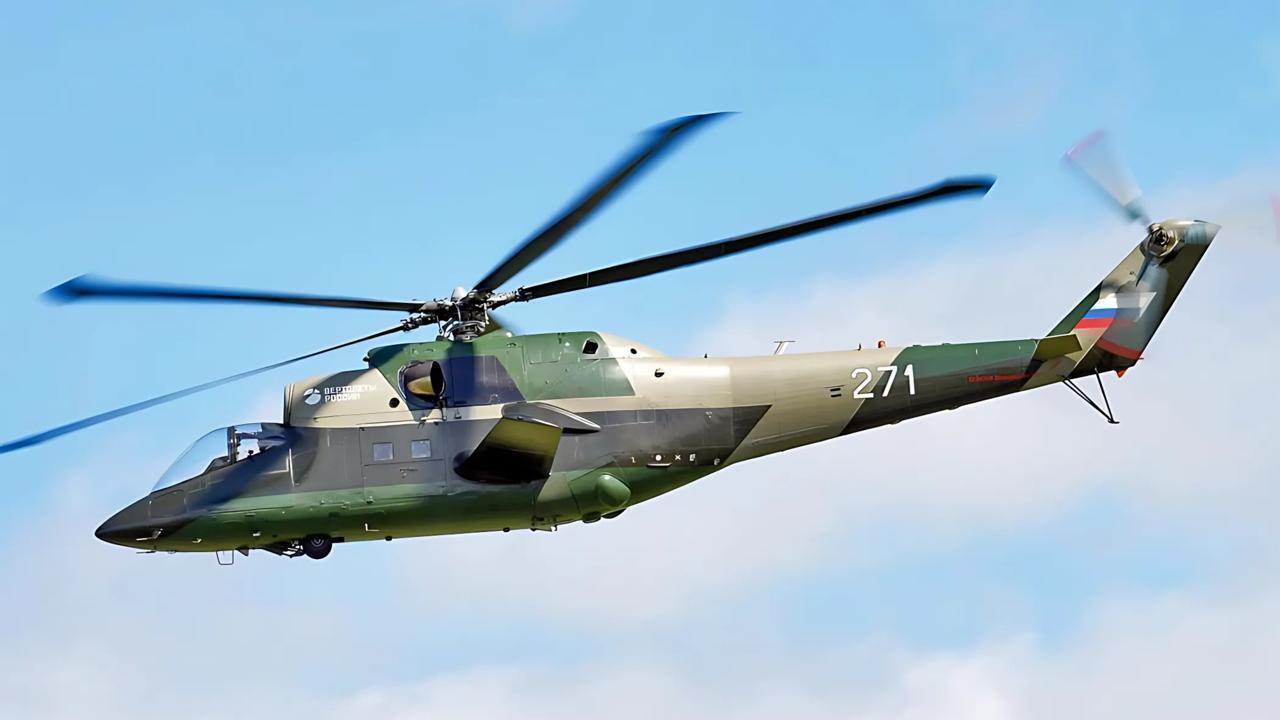
For years, the Kamov Ka-50 attack helicopter was little more than a relic of past ambitions, often overshadowed by its more successful counterparts. Nicknamed the “Black Shark,” it was developed in the late Soviet era as a single-seat rotorcraft designed to outperform the Mil Mi-24 Hind. Yet after limited production and deployment in the 1990s, the program all but disappeared from Russia’s modern arsenal. Now, in a surprising turn, Russia has revived this seemingly dormant platform, equipping it with new propulsion systems and modern avionics that hint at broader goals for its helicopter fleet.
The decision reflects Moscow’s urgent need to replenish and modernize its airpower amid mounting operational pressures, particularly in the Ukraine conflict. With Western sanctions straining Russia’s aerospace supply chains, a revival of indigenous, legacy platforms with updated engines and parts is emerging as a strategic necessity.
The Legacy of the Ka-50
The Ka-50’s story is unique in modern military aviation. Developed by Kamov in the 1980s, it featured a coaxial rotor system instead of a traditional tail rotor, giving it agility and power unmatched at the time. Its single-seat design was bold, relying heavily on advanced avionics to ease pilot workload—a daring move in an era dominated by two-seat attack helicopters.
Yet despite its innovations, the Ka-50 never fully entered mass service. Russia’s financial crisis in the 1990s crippled defense spending, leaving only a small number built. Instead, Moscow shifted focus toward the twin-seat Ka-52 “Alligator,” which has since become a mainstay of Russian forces. For years, the Ka-50 was relegated to demonstrations, airshows, and museum collections. Its sudden return now signals both practical and symbolic intent.
Why Now? Russia’s Strategic Calculus
The timing of this revival is not accidental. Russia’s ongoing operations in Ukraine have strained its rotary-wing assets, with Ka-52s and Mi-28s heavily engaged and facing high attrition. Reintroducing the Ka-50 allows Russia to leverage existing airframes and manufacturing know-how without starting from scratch.
Moreover, upgrades in propulsion technology have given the helicopter new life. Reports suggest the revived Ka-50s are being fitted with Klimov VK-2500 engines—powerplants already used in other Russian helicopters like the Mi-28 and Ka-52. These engines replace older, less reliable models, offering greater thrust, reliability, and high-altitude performance. The propulsion upgrades represent not only a tactical improvement but also a signal of Moscow’s commitment to sustaining domestic aerospace capability under sanctions.
New Avionics for a New Era
Equally important is the avionics overhaul. The original Ka-50 relied on 1990s-era navigation and targeting systems that are now obsolete. The revived variant reportedly incorporates digital cockpits, modernized night-vision capabilities, and updated targeting pods compatible with precision-guided munitions.
For Russia, this is more than cosmetic. In modern battlefields—particularly Ukraine, where drones, electronic warfare, and precision strikes dominate—the ability of a helicopter to network with other systems and strike effectively is critical. By bringing the Ka-50 up to near-parity with the Ka-52 in terms of avionics, Russia is expanding its tactical flexibility.
Propulsion as the Heart of the Upgrade
The most crucial transformation lies in propulsion. The VK-2500 engine, designed to replace aging TV3-117 units, is a workhorse of Russian rotorcraft modernization. With higher takeoff power, digital engine controls, and improved resilience in hot-and-high conditions, it ensures the Ka-50 can perform in demanding environments.
Sanctions have severely limited Russia’s ability to import components, making self-sufficiency in propulsion technology essential. The modernization of the Ka-50 thus doubles as a test case for Russia’s engine industry. If successful, it reinforces confidence that Russian manufacturers can continue to sustain and upgrade helicopter fleets despite global restrictions.
Lessons from the Battlefield
In Ukraine, helicopters have faced severe challenges. From man-portable air-defense systems (MANPADS) to long-range surface-to-air missiles, rotary assets are vulnerable in contested skies. The Ka-52 has proven valuable but also exposed. Reports suggest dozens of Ka-52s have been destroyed or damaged, making attrition a real concern.
The Ka-50’s re-entry could help fill this gap. Its smaller size and coaxial agility may allow it to perform roles where survivability hinges on maneuverability. However, experts caution that no matter how advanced the upgrades, helicopters remain vulnerable against modern air-defense networks. The Ka-50’s revival should be seen as a tactical supplement, not a strategic game-changer.
Industry Implications and Manufacturing Strain
Reviving the Ka-50 is not just about field performance—it’s also about industrial capability. Russia’s aerospace sector is under immense strain. Western sanctions cut off access to components, maintenance services, and export markets. By upgrading older airframes, Moscow can keep production lines active and workers employed without the costs of developing a brand-new design.
The modernization project also provides a morale boost for Russia’s defense industry. Showcasing the return of a storied platform like the Ka-50 allows Moscow to project resilience, reinforcing the message that it can innovate despite isolation. This carries weight both domestically and among potential export partners, particularly nations in Africa and Asia that have previously purchased Russian helicopters.
Export Prospects and International Attention
Although the Ka-50 was never widely exported, its revival could generate renewed interest among countries seeking affordable attack helicopters. Nations unable to purchase Western equipment due to political or financial barriers may look at a modernized Ka-50 as an alternative.
However, export prospects face hurdles. Many countries now prefer two-seat configurations like the Ka-52, which allow division of labor between pilot and weapons operator. Still, for nations seeking cost-effective, rugged solutions, the Ka-50 could find a niche. The propulsion upgrades and avionics modernization enhance its attractiveness, particularly if offered at competitive prices.
Symbolism in Russian Military Aviation
The return of the Ka-50 carries symbolic weight beyond the battlefield. It represents Russia’s determination to preserve and revive its aerospace legacy despite global headwinds. By dusting off a platform once considered obsolete, Moscow is signaling that no resource will go untapped in its quest for military resilience.
In some ways, the Ka-50’s rebirth mirrors broader trends in Russian defense strategy—leaning on legacy systems, adapting them with modern technology, and deploying them in new roles. This pragmatic approach reflects the reality of sanctions and war: innovation under constraint.
The Future of the Ka-50 Program
Looking ahead, much will depend on how effectively the modernized Ka-50 performs in operations. If the upgrades prove successful, Russia could expand the program, refurbishing more airframes or even restarting limited production. If not, the effort may remain symbolic—a stopgap measure to ease pressure on the heavily burdened Ka-52 fleet.
Either way, the Ka-50’s return underscores a fundamental truth: propulsion upgrades and avionics modernization are at the core of Russia’s aerospace survival strategy. The Ka-50 may never dominate skies as originally envisioned, but its revival illustrates how old platforms can be reimagined to meet new realities.
Old Shark, New Waters
The Black Shark’s reappearance is more than a curiosity—it is a statement. Russia’s aerospace sector, under siege from sanctions and operational attrition, is demonstrating adaptability by reviving legacy assets with modern propulsion and systems.
The Ka-50’s coaxial rotors, once seen as a radical design, now serve as a reminder of Russia’s distinct engineering approach. Coupled with new VK-2500 engines and digital cockpits, the helicopter’s second life is both a tribute to past ingenuity and a hedge against present challenges.
As the world watches, the question remains: will the Ka-50 revival prove a tactical boost or a symbolic gesture? Either way, its return underscores the enduring importance of propulsion innovation in sustaining military aviation power.
Attack helicopter, Propulsion upgrade, Ka-50 Black Shark



Advances in Aerospace Technology and Commercial Aviation Recovery
Insights into breakthrough aerospace technologies and commercial aviation’s recovery amid 2025 chall

Defense Modernization and Strategic Spending Trends
Explore key trends in global defense modernization and strategic military spending shaping 2025 secu

Tens of Thousands Protest in Serbia on Anniversary of Deadly Roof Collapse
Tens of thousands in Novi Sad mark a year since a deadly station roof collapse that killed 16, prote

Canada PM Carney Apologizes to Trump Over Controversial Reagan Anti-Tariff Ad
Canadian PM Mark Carney apologized to President Trump over an Ontario anti-tariff ad quoting Reagan,

The ad that stirred a hornets nest, and made Canadian PM Carney say sorry to Trump
Canadian PM Mark Carney apologizes to US President Trump after a tariff-related ad causes diplomatic

Bengaluru-Mumbai Superfast Train Approved After 30-Year Wait
Railways approves new superfast train connecting Bengaluru and Mumbai, ending a 30-year demand, easi




